



On 16 November Situational Awareness signed its first 13F for a quarter that ended after Citadel took its book. The holdings report put US-listed holdings at $1.58bn; CNBC said the fund “made AI bets again before October rout”.
The label is half right: the calls are new money, though on old names, and SharonAI, an AI data centre company and the largest line at $441m, was paid for by June.
My call is that the label merges two books, September calls on names the fund had sold and a SharonAI block it never sold; the 13F due 16 February 2027 shows whether the fund still holds the block.
The paid half settles how much of the book October took, and where from.
It names which did more damage, the new calls or the old block. It gives my odds on the SharonAI filing that would overturn that answer, and names the Nebius count that also could. The deciding number is October’s modelled loss as a share of the money at work: the shares plus what the calls were worth.
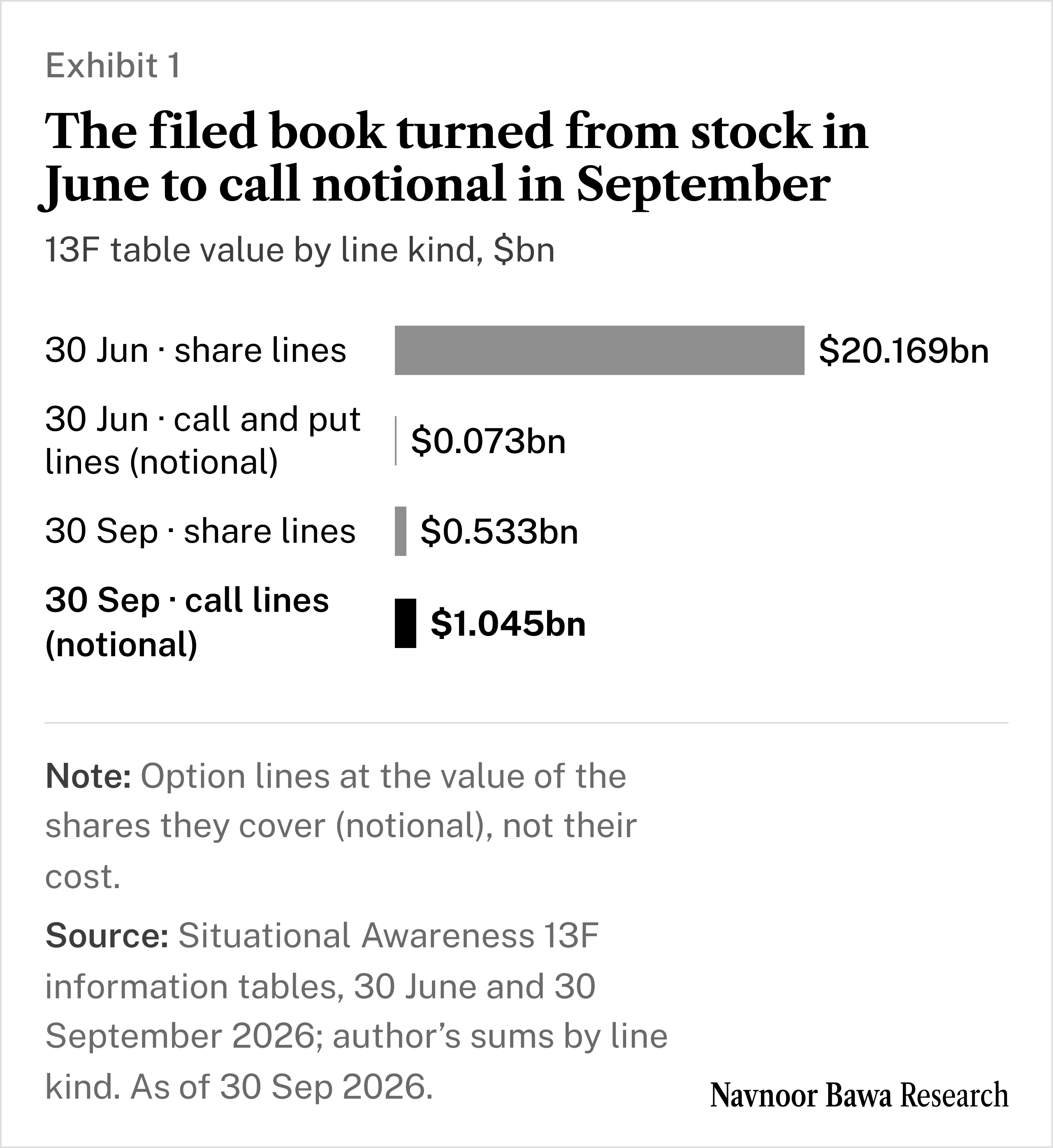
Exhibit 1 · The filed book turned from stock in June to call notional in September
Source: Situational Awareness 13F information tables, 30 June and 30 September 2026; author’s sums by line kind, option lines at the value of the shares they cover · as of 30 Sep 2026
Citadel took the July book
The press dates the call buying of the fund Leopold Aschenbrenner runs as managing partner to September, and most of the calls sit on names it held as shares in June. The 30 September information table splits cleanly in two: call lines covering $1.045bn of stock and share lines worth $0.533bn. Together they make the cover’s $1.58bn to the dollar.
I divided every line of the fund’s 30 September filing by its share count and matched all nine prices to that day’s close, then priced the calls myself, because the filing records what the options cover and never what they cost. The parts reconcile; what the calls cost is the gap the filing leaves. Closing it decides whether October’s damage sat in the bets the press counted or in the stock the fund chose to keep.
In July Citadel bought “the lion’s share of Situational’s $16 billion holdings in public companies at a 10% discount”, as The Daily Upside reported on 6 August; no filing holds that price. Ken Griffin, Citadel’s founder, explained the trade in a letter of 21 August. Reuters reported that Citadel had shed more than 80% of the aggregate risk in nearly 100 block trades,1 and quoted the letter: “Our ability to distribute this risk was central to our investment thesis.”
Citadel was the dealer on the other side. Reuters wrote that heavy losses forced the fund to unwind. Griffin’s letter gives Citadel’s side: it bought the book to pass the risk on, in blocks.
Citadel’s own filings bear that out. Between its 30 June and 30 September 13Fs it cut its Bloom Energy and SanDisk share lines, and its largest share addition among the fund’s five largest June share lines, about 808,000 Nebius shares, was under a fifth of the 4.46m Nebius shares Situational Awareness held in June. In none of those five did Citadel’s share line rise by a fifth of the fund’s June holding, so the rebuild we said in August would prove us wrong never came: Citadel passed the book on.
That test reads share lines only. Citadel’s SanDisk call line rose by 1.17m shares, 47% of the fund’s June holding, and in IREN, a smaller June name, its share line rose by more than a fifth of the fund’s stake.
Citadel passing the book on settles the fall in the totals, from $20.24bn in June to $1.58bn in September, 92%. Most of that drop was the July sale: the five largest share lines in the June filing, Bloom alone 6.27m shares, were not share lines by September. Read as a crash, the 92% is mostly a sale. Exhibit 1 shows what changed in kind: in June the table was almost all stock, share lines worth $20.169bn beside call and put lines covering $0.073bn; in September the calls’ $1.045bn of notional was twice the $0.533bn of stock.
The 13F counts US-listed holdings only, and the documents about the whole fund are older or gross. The adviser’s registration form, its Form ADV, put assets at $9.28bn across two accounts in an amendment of 11 June, before the Citadel sale. The Form D notices of the master fund, Partners LP, and its offshore feeder, filed when a private fund sells interests, show $9.53bn sold to 187 investors by September (Partners LP, Offshore LP), a cumulative gross raise that nets out no redemption and no loss and may count the feeder’s money twice.
The same names, now as calls
A 13F call line counts the shares underneath it, not what the option cost: Form 13F’s Special Instruction 10 asks for option columns “in terms of the securities underlying the options”, the rule that makes a call line look larger than the bet. So the filing’s $1.04bn is the stock the calls could buy, their notional, and not the money in them.
Bloom Energy shows the size of that gap. The September filing carries six Bloom call rows on 1,405,000 shares, valued at $389m, which is $276.98 a share, Bloom’s close on 30 September. In June the same name was a share line of 6,272,808 shares, worth $1.90bn, beside calls on 145,800 shares.
The money in those calls is new. CNBC’s David Faber said the fund made the option trades late the previous week and early that week, as IBTimes reported on 11 September, naming AMD, Bloom, CoreWeave, SK Hynix, SanDisk and a memory chip fund. Protos wrote that “CNBC sources dated those purchases between September 2-10”, calling them “’flex options,’ i.e. fully paid contracts that cap losses at the premium paid”.
The filing carries none of the AMD, CoreWeave or SK Hynix legs, though all three are on the SEC’s 13(f) list for the quarter, the securities a 13F must report. A 13F shows no trade date and only US-listed options still held at quarter end. Every listed call is one the fund holds, since the SEC’s Form 13F FAQ says “You should not report put or call options that you write.” Short sales and swaps go unreported too: a written call or a short would shrink the loss, an unlisted long call or a written put would add to it.
The filing prints no strike and no expiry, so any price rests on stated assumptions. Price the six rows with Black-Scholes, the standard option pricing formula, as if bought and struck at the 10 September close of $258.49, the end of that buying window, and expiring three months later. At Bloom’s volatility up to that day of 121%, they cost about $87m and were worth about $93m on 30 September. The filing’s $389m is roughly four times what the Bloom calls were worth that day.
Every call line here is priced on those terms, at each stock’s volatility over the 53 daily returns from 25 June and a zero rate, then marked at the 30 October closes, reading a filed book through the month after its quarter end.
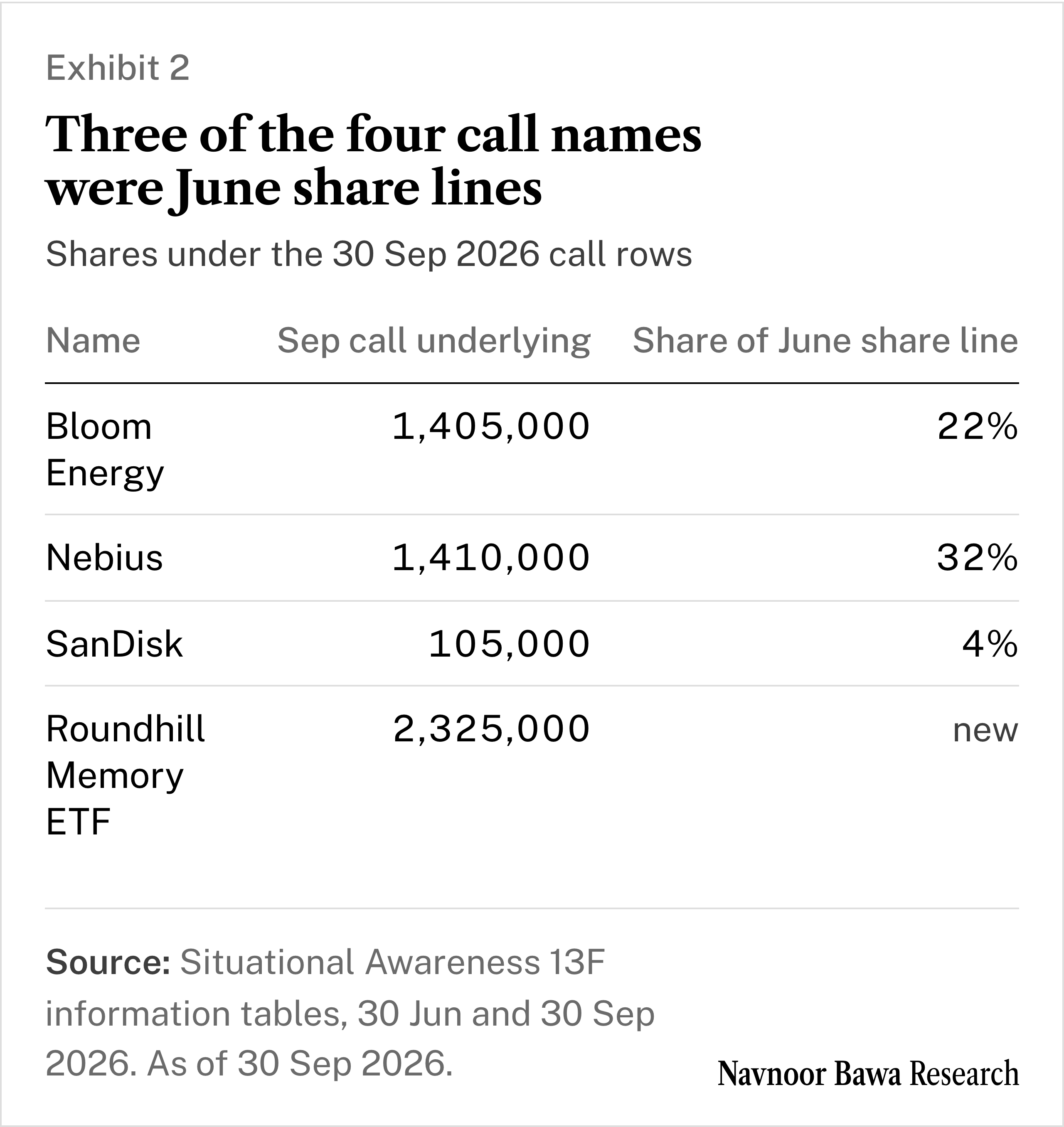
Exhibit 2 · Three of the four call names were June share lines
Source: Situational Awareness 13F information tables, 30 June and 30 September 2026 · as of 30 Sep 2026
Against the June share lines, SanDisk’s 2,495,344 shares among them, the calls cover between a twenty-fifth and a third of what the fund owned outright before July. The memory ETF is the only new call name and Fermi, at $11m, the only new share line; Micron and TSMC, the other two of June’s five largest share lines, are gone.
SharonAI was never a new bet
SharonAI Holdings is the one June share line the fund did not cut, and the fund owns 21.1% of it. It is the largest line on the 13F, which has no row for Fluidstack, the private AI cloud company our 30 October call named the fund’s biggest live bet. The fund held 796,108 shares on 31 March and 8,070,950 by 15 September, the 30 September 13F line exactly. It got there by exercising warrants it had paid for up front under a June agreement, as a Form 4 (the insider trade report) and a second Form 4 show. The block is economically a June position.
The 13D/A of 17 September, an amendment to the longer ownership report an active holder, or one above 20%, must file, prints the cost in Item 3: $523,883,130.66, or $64.91 a share, against a 30 September close of $54.60. The cost line surprised me most: on 30 September the one line the fund never cut was already $83m below the $524m it paid. It was 83% of the five share lines; without it they come to $92m.
The filings also name who decides. A footnote to the June Form 4 calls Aschenbrenner “the managing partner and control person” of the adviser and its general partner, and Carl Shulman “the co-portfolio manager of Fund”. Their reason is in Item 4 of the 13D, filed on 28 August and repeated on 17 September: the shares were bought “for investment purposes based on their belief that the Stock, when purchased, was undervalued and represented an attractive investment opportunity.”
That is a holder’s language, not a trader’s. Item 4 says no shares were bought to change or influence control, and it keeps a hedging door open: the fund “may from time to time enter into or unwind hedging or other derivative transactions with respect to the Stock”. No filing reports a hedge, so every figure here is unhedged. No filing gives a reason for the calls either; no document states a process for the option book.
No filing reports a sale. None of the fund’s seven SharonAI filings since 22 June, the date of its Form 3, the first insider report, records one. They are the Form 3, two 13Gs (the short report a passive holder of more than 5% files), two Forms 4, the 13D and the 13D/A, each filed by its deadline.
EDGAR, the SEC’s filing system, shows no ownership report by the fund on SharonAI (a Form 4, 13D/A or 13G/A) under either registration after 17 September, read on 18 November, and a holder of more than 10% reports a sale on Form 4 before the end of the second business day after it.
All nine underlyings fell between the 30 September and 30 October closes, and the exchange closes from two vendors, Nasdaq and Yahoo Finance, agree on every one. The mildest fall was the Roundhill Memory ETF’s, 20.5%. Bloom lost 26.6%, SanDisk 33.9% and Nebius 34.7%. The four smaller share lines fell between 36% and 41%. SharonAI fell 58.5% at those closes, the worst of the nine, from $54.60 to $22.68. What that cost each book turns on what the calls were worth.
The press got part of the way. Techi priced the five share lines at the 16 November close, 61% down, with SharonAI $361m below cost, and wrote that the calls’ cost “would be a fraction of $1.04 billion. The filing does not say what fraction”. Hedgeweek, citing GuruFocus, put the buying at “hundreds of millions of dollars in option premiums”. None of the coverage read here prices the calls through October or sets their loss beside SharonAI’s.
If the new calls were October’s damage, which is how a reader of CNBC’s headline would take it, their October loss should exceed the share lines’. A call held from 30 September can lose at most what it was worth that day, a figure the filing never prints. A rough sum cannot settle it, because the order between the two books turns on strikes and expiries the filing never prints. The answer also says how far the “% down” on any 13F heavy with call notional overstates the money a fund lost.
→ Situational Awareness’s 2025 Intel calls, rebuilt from its 13F filings, a separate note on Patreon.
Pricing the calls at what they could have cost decides which book to watch in February: which took more of October’s loss, the new calls or the old SharonAI block?
Below the paid line:
The verdict: which book took more of October’s loss, with my odds and the filing that would overturn them.
The model: every call line priced on the reported buying window, then across ten strike and expiry cases.
The reconciliation: the filed book quarter by quarter, and the Nebius count that could reverse the verdict.
The watch list: three dated filings with thresholds, and a test in four steps to run on another fund.