


The numbers tell a dramatic story. In 2021 and 2022, monthly average weather derivatives trading on the Chicago Mercantile Exchange hovered around 11,500 contracts. By 2023, that figure exploded to 42,052 contracts — a staggering 260% increase that signals a fundamental shift in how businesses approach climate risk.
This isn’t just another derivatives market experiencing routine growth. Weather derivatives, with an estimated $25 billion in notional value outstanding, represent a new paradigm in risk management where meteorological uncertainty becomes tradable financial exposure.
The Market That Climate Built
Weather derivatives are index-based financial instruments that pay out based on specific meteorological parameters — temperature, precipitation, wind speed — rather than demonstrated losses. Unlike traditional insurance, these contracts settle automatically based on objective weather data, eliminating lengthy claims processes.
The recent surge reflects a confluence of factors reshaping corporate risk management:
Climate Volatility Intensification Extreme weather events have become more frequent and financially disruptive. The CME Group attributes growth to “companies like utilities and commodity producers” needing to “manage the risks associated with unexpected anomalous weather events.”
Regulatory Pressure While not directly driving trading volumes, increased climate disclosure requirements have heightened corporate awareness of weather-related financial risks, creating systematic demand for hedging solutions.
Renewable Energy Expansion The shift to renewable energy sources creates new supply-side fluctuations, as “solar panels, wind farms and hydropower generation are at the mercy of sunlight, wind speed and rainfall.”
Star Group: A Case Study in Weather Risk Management
The most documented example of weather derivatives in action comes from Star Group LP, a US heating oil distributor that has systematically used temperature-based contracts to manage revenue volatility.
Fiscal 2023 Performance Star Group “recorded a full benefit under the weather derivative contract in Q1, of $12.9 million” when temperatures exceeded parametric triggers. For the full fiscal year 2023, the company received “positive income of $12.5 million from the weather derivatives arrangement.”
Fiscal 2024–2025 Results The pattern continued: fiscal 2024 produced a “$7.5 million” receivable from weather derivatives. However, fiscal 2025 saw the hedge work against the company, with Star Group recording “an expense of $3,100,000 under our weather hedge compared to a benefit of $7,500,000 recorded in fiscal twenty twenty four.”
Contract Structure Star Group’s arrangement demonstrates typical weather derivative mechanics:
Coverage Period: November through March (winter heating season)
Maximum Payout: $12.5 million annually (increased to $15 million for 2025)
Risk Transfer: Protection against warmer-than-normal temperatures that reduce heating oil demand
Settlement: Based on degree day measurements, not demonstrated losses
This multi-year track record illustrates both the effectiveness and variability inherent in weather-based risk transfer.
The Institutional Shift
What makes the current growth remarkable isn’t just corporate hedging demand — it’s the entrance of sophisticated financial institutions into weather risk.
Hedge Fund Participation Nephila Capital’s Barney Schauble described how “some hedge funds treat weather derivatives as an investment class.” Traditional financial players including “investment banks, hedge funds, and commodity trade houses” are increasingly “looking to increase the diversification of their portfolios by trading new types of derivatives such as weather.”
The appeal is structural: “Weather derivatives provide a pure non-correlated alternative to traditional financial markets” because meteorological events operate independently of financial market cycles.
Market Structure Evolution Industry estimates suggest publicly traded derivatives “could make up as little as 10% of all activity,” with the majority of transactions occurring over-the-counter. This bifurcated structure creates opportunities for sophisticated participants to provide liquidity across different market segments.
Geographic Expansion The CME responded to growing demand by expanding coverage. In 2023, “traders and companies can buy options that cover Philadelphia, Houston, Boston, Burbank, Paris and Essen, Germany, in addition to established contracts covering locations like Chicago, New York, London and Tokyo.”
Market Structure and Mechanics
Contract Types Weather derivatives typically structure around measurable indices:
Heating Degree Days (HDD): Cumulative daily temperature departures below 65°F
Cooling Degree Days (CDD): Cumulative daily temperature departures above 65°F
Rainfall Contracts: Total precipitation over specified periods
Wind Speed Derivatives: For renewable energy applications
Settlement Process “Settlement is objective, based on the final value of the chosen weather index over the chosen period. If a payout is due, it is usually made in a matter of a few days.”
Pricing Complexity “There is no standard model for valuing weather derivatives similar to the Black–Scholes formula” because “the underlying asset of the weather derivative is non-tradeable which violates a number of key assumptions of the Black-Scholes Model.”
The Temporary Spike: What 2023 Reveals
The 2023 surge to 42,052 monthly contracts proved temporary. Trading volumes “reverted to 20,660 last year” in 2024, with “the 2023 spike being a result of six new contracts being launched in the U.S. along with several hedging programs coming to market.”
This pattern suggests that while underlying demand for weather risk transfer continues growing, the explosive 2023 numbers reflected specific market developments rather than sustained exponential growth.
Investment Implications and Market Dynamics
Uncorrelated Returns Weather derivatives offer portfolio diversification benefits that traditional asset classes cannot provide. As one industry participant noted, “Whatever goes on in the equity or bond markets is not going to make it rain or sunny. There are true noncorrelation benefits with weather derivatives.”
Capacity Providers Specialized funds like Nephila Capital allocate significant resources to weather risk, with “90% of the firm’s business related to catastrophe risk, with roughly 10% devoted to weather derivatives.” As of 2015, Nephila’s assets under management were “approximately $9.5 billion.”
Market Maturity Challenges Despite growth, weather derivatives face structural limitations. Market participants note that “few accept OTC trades” due to “asset valuation challenges, special audit treatment and additional regulatory requirements.”
The Path Forward
The weather derivatives market stands at an inflection point. Climate volatility continues intensifying, corporate risk awareness is growing, and regulatory frameworks increasingly require climate risk disclosure. Yet the market remains fragmented between exchange-traded standardized products and bespoke OTC arrangements.
Key Market Drivers:
Renewable Energy Growth: As clean energy deployment accelerates, volumetric risks from wind and solar variability create systematic hedging demand
Climate Adaptation: Businesses increasingly recognize weather risk as manageable financial exposure rather than uncontrollable operational risk
Data Infrastructure: Improved meteorological modeling and satellite technology enable more sophisticated contract structures
Structural Questions:
Will OTC markets consolidate toward standardized exchange products?
Can pricing models evolve to handle non-tradeable underlying assets?
Will institutional adoption reach critical mass for sustained liquidity growth?
Conclusion: Weather as an Asset Class
The 260% trading surge in weather derivatives reflects more than market opportunism — it represents a fundamental recognition that climate risk requires active financial management. While specific trading strategies and profit mechanisms remain opaque, the documented growth in corporate hedging, institutional participation, and geographic expansion suggests weather derivatives are transitioning from niche risk management tool to established financial infrastructure.
For quantitative researchers and risk managers, the weather derivatives market offers a laboratory for understanding how non-traditional risks become financialized. The challenge lies not in identifying the opportunity — the $25 billion market speaks for itself — but in developing frameworks to value, trade, and manage exposures that operate outside conventional financial theory.
As climate volatility intensifies and corporate risk management evolves, weather derivatives may prove to be not just a hedge against nature’s uncertainty, but a window into the future of risk transfer itself.
Sources: CME Group trading data, Artemis ILS market analysis, Star Group LP financial filings, industry participant interviews
Disclaimer: This analysis is based on publicly available market data and regulatory filings. Weather derivatives involve complex risks and should be evaluated by qualified financial professionals.
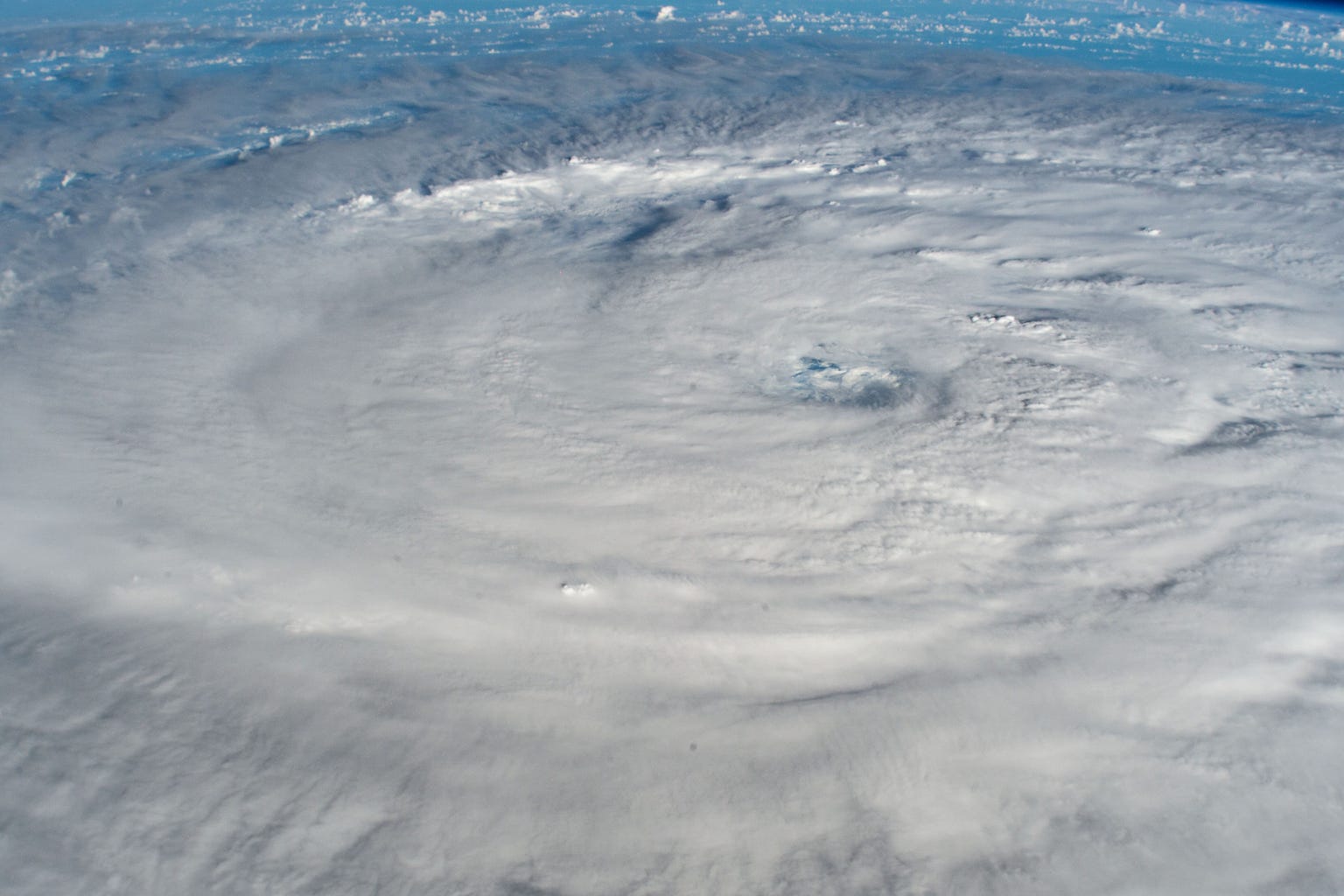
Cover photograph: NASA, public domain, via Wikimedia Commons.
Cover photograph: NASA, public domain, via Wikimedia Commons.