


Forensic analysis of four proven strategies: J.Crew’s $250M IP trapdoor, Burford’s $16B Petersen judgment, STOLI principal protection trades, and Hipgnosis’s 26.3% valuation collapse. With verified court documents and primary sources.
The most profitable trades never hit a ticker tape. While retail investors track Nvidia and Bitcoin, sophisticated capital hunts in the dark corners of the financial system — harvesting the illiquidity premium available only to those with locked capital, aggressive legal teams, and the patience to mark their own homework.
This isn’t about buying thinly-traded stocks. It’s about manufacturing alpha from assets that cannot be traded, structuring deals that trap counterparties, and engaging in “judicial arbitrage” where the payout is a court order, not a dividend.
This article examines four distinct illiquidity arbitrage strategies through real case studies: covenant arbitrage in distressed credit (J.Crew’s trademark transfer), litigation finance secondary markets (Burford Capital’s Petersen monetization), actuarial floor trades in life settlements (STOLI principal protection), and discount rate manipulation in Level 3 assets (Hipgnosis Songs Fund’s collapse). Each strategy demonstrates how sophisticated investors extract returns from structural inefficiencies in unmarketable assets.
About the Author: Navnoor Bawa is a Quantitative Research. He publishes institutional-grade quantitative research analyzing hedge fund strategies.
📺 Subscribe on YouTube | 💼 Connect on LinkedIn
The “Control” Trade: The Unrestricted Subsidiary Trap
In public markets, debt is a yield instrument. In distressed credit, it’s a weapon. The illiquidity premium here emerges from a fundamental asymmetry: while public bondholders can exit positions, private credit lenders are locked in. This creates opportunities for borrowers to restructure obligations through legal maneuvers that exploit covenant loopholes — maneuvers that would be impossible in liquid markets where creditors could simply sell.
The modern playbook relies on liability management exercises (LMEs) — sophisticated legal maneuvers to strip value from existing lenders.
The core mechanic is the “trapdoor” or “drop-down”: transferring a company’s most valuable assets into an “unrestricted subsidiary” not bound by the debt covenants of the parent company. Once unleashed, these assets can secure new debt, leaving original lenders holding an empty shell.
Case Study: The J.Crew Trapdoor
In 2017, J.Crew faced a wall of expiring debt. To survive, they executed a transfer of their crown jewel — the J.Crew brand IP, valued at $250 million.
The Transfer: J.Crew utilized a provision allowing investments in non-guarantor restricted subsidiaries to move 72.04% of its trademark collateral to a Cayman Islands entity.
The Unleashing: From there, they transferred it to an unrestricted subsidiary (J.Crew Brand Holdings). Once “unrestricted,” the IP was unencumbered by the original debt covenants.
The Refinancing: J.Crew then used this “free” IP to secure new debt, effectively subordinating the original term lenders who sued but were outmaneuvered by the “strictly legal” interpretation of the contract.
The Alpha Source:
Covenant Arbitrage: Identifying “baskets” (allowances regarding investment capacity) that can be stacked to leak assets
Collateral Stripping: Legally removing the collateral backing a loan while keeping the loan in place
The maneuver became so notorious that lenders now include “J.Crew protections” as standard in credit agreements — language specifically designed to prevent intellectual property transfers to unrestricted subsidiaries.
📊 Want Deeper Quantitative Analysis?
This research took weeks of data collection, court document verification, and forensic analysis. If you found value in this deep-dive, I publish exclusive quantitative research, trading strategies, and institutional-grade analysis on Patreon — including:
Hedge fund strategy teardowns with verified P&L
Systematic trading backtests with code
Alternative data analysis and alpha generation
Early access to research before public release
By joining, you’ll be supporting my work and motivating me to publish more content like this.
→ Join the Patreon community here
The “Binary” Trade: Litigation Finance Secondary Markets
If distressed debt exploits contractual illiquidity, litigation finance exploits temporal illiquidity. Legal claims cannot trade on exchanges. Verdicts take years. This creates a pricing disconnect: investors who can wait extract premiums from those who cannot.
Litigation finance is the purest form of uncorrelated alpha. It turns a lawsuit into an asset class. But the real edge isn’t funding the lawsuit — it’s trading the risk in the secondary market before the verdict is read.
Case Study: Burford Capital and the Petersen Claim
Burford Capital funded the Petersen case against Argentina following the 2012 nationalization of YPF. It was a massive bet on a sovereign default outcome. While waiting for the verdict, Burford created a secondary market for the claim to lock in realized gains.
In June 2019, Burford sold 10% of its entitlement for $100 million, implying a $1 billion valuation for its entire original entitlement. This allowed them to monetize $236 million in total proceeds long before the final verdict.
In September 2023, the final judgment came: Judge Loretta Preska ruled that Argentina owed approximately $16 billion. The judgment included approximately $7.67 billion in total pre-judgment interest ($6.85 billion for Petersen, $817 million for Eton Park) calculated from May 2012. The judgment effectively represented a complete win at the high end of the possible range of damages.
The Alpha Source:
Asymmetry: Selling partial risk at a premium to lock in realized gains while retaining the “lottery ticket” upside in the final judgment
Pricing Power: Being the market maker for a unique, Level 3 asset that no one else can accurately price
The case remains in active litigation with enforcement proceedings pending in the United Kingdom, France, Ireland, Canada, Australia, Luxembourg, Brazil, and Cyprus, with Argentina resisting each proceeding vigorously.
The “Actuarial” Trade: Life Settlements and STOLI
If litigation finance bets on legal outcomes, life settlements bet on actuarial outcomes. The illiquidity here is permanent: life insurance contracts cannot be securitized or traded on exchanges. This creates a structural mispricing between what insurance carriers offer (surrender value) and what the policy is worth to an investor willing to pay premiums until death.
In the standard life settlement market, policies typically sell for 20–30% of face value. The arbitrage: insurance carriers price surrender values far lower than the “fair market value” of the death benefit.
However, the real alpha emerges in the distressed segment. In 2010, Fortress acquired a $6.2 billion portfolio of distressed life settlements at roughly 5–6 cents on the dollar — potentially yielding outsized gains compared to standard life settlement returns.
Case Study: The STOLI Floor Trade
The alpha comes from a brutal legal fight over “Stranger-Originated Life Insurance” (STOLI). Insurance carriers like Phoenix Companies argued that policies taken out by investors were “void ab initio” (void from the start) and refused to pay death benefits. But — and here’s the trade — investors argued that even if the policy is void, the premiums paid must be returned.
In the landmark Sun Life Assurance Co. of Canada v. Wells Fargo Bank, N.A., the New Jersey Supreme Court in 2019 ruled that STOLI policies are indeed void ab initio — they violate public policy by lacking insurable interest.
However, the court famously ruled that a refund of premiums may still be required to prevent unjust enrichment of the insurer, particularly for later purchasers who were not involved in any illicit conduct.
This created a “floor” on the trade:
Scenario A: Policy valid → Collect Death Benefit (10–15% IRR)
Scenario B: Policy void → Collect Returned Premiums (Principal Protection)
The Alpha Source:
Regulatory Arbitrage: Exploiting the legal definition of “insurable interest”
Principal Protection: Structuring the trade so that even a “loss” (void policy) results in a return of capital
The court emphasized that trial courts should balance equitable factors including a party’s level of culpability, participation in the illicit scheme, and failure to notice red flags.
The “Valuation” Trade: The Discount Rate Lever
The previous strategies exploit illiquidity in contracts, legal claims, and insurance policies. But the darkest source of alpha exploits something more fundamental: the absence of market prices entirely.
In Level 3 assets — assets with no observable market data — valuation is not discovered, it is constructed. Since these assets don’t trade, their price is purely a model output. And the most sensitive input in any discounted cash flow model is the discount rate. Lower the rate, and the Net Asset Value (NAV) soars. Raise it, and billions evaporate.
This is valuation arbitrage in its purest form: the ability to mark your own homework.
Case Study: Hipgnosis Songs Fund
Hipgnosis bought music rights (illiquid assets) and valued them using a Discounted Cash Flow (DCF) model. For years, their independent valuer (Citrin Cooperman) used a static discount rate of around 8.5%, even as global interest rates skyrocketed.
The Effect: This kept the operative NAV artificially high ($2.62 billion as of September 2023) while the share price collapsed.
The Reality Check: When a new valuer (Shot Tower Capital) took over in 2024, they raised the discount rate to 9.63% to reflect reality.
The Result: The valuation instantly collapsed by 26.3% — from $2.62 billion to a midpoint of $1.93 billion, wiping out hundreds of millions in perceived value.
Shot Tower also found that approximately 65% of Hipgnosis’s royalty income came from “passive” rights where the company didn’t control administration, distribution, or licensing — assets that deserved lower multiples.
For the “smart money,” the game is to exit before the discount rate is adjusted. Blackstone ultimately acquired the entire fund in July 2024 for $1.584 billion, following the valuation collapse.
Structuring the Beta Out of Alpha
The illiquid asset market is not about picking winners. It’s about structuring deals to extract returns from pricing inefficiencies that exist only because assets cannot trade.
Each strategy operates on a different layer of illiquidity:
J.Crew exploited contractual illiquidity — covenant loopholes that exist because private credit agreements cannot be renegotiated in real-time like public bonds can be sold.
Burford exploited temporal illiquidity — the years-long gap between filing a lawsuit and receiving a verdict, during which legal claims cannot be marked-to-market or traded on exchanges.
Fortress exploited structural illiquidity — the permanent non-tradeability of life insurance contracts, which creates a pricing gap between what carriers offer (surrender value) and what investors will pay (actuarial value).
Hipgnosis exploited informational illiquidity — the complete absence of market prices for music catalogs, which allows asset holders to construct valuations through model inputs rather than discover them through transactions.
True alpha in illiquids is found in the fine print of the indenture, the footnotes of the valuation policy, and the dockets of the bankruptcy court. The common thread: these are not bets on asset performance. They are bets on structural advantages that exist only in markets where price discovery has failed.
📊 Support This Research
If this analysis added value to your understanding of institutional strategies, consider supporting my work:
→ Join my Patreon for exclusive quantitative research, trading strategies, systematic backtests with code, and early access to institutional-grade analysis.
This research took weeks of court document verification, data collection, and forensic analysis. Your support directly enables more deep-dives like this.
Connect With Me
📺 YouTube: Subscribe for video breakdowns of hedge fund strategies and quantitative trading
💼 LinkedIn: Follow for daily insights on systematic trading and quant finance
📈 Patreon: Get exclusive research and support future analysis
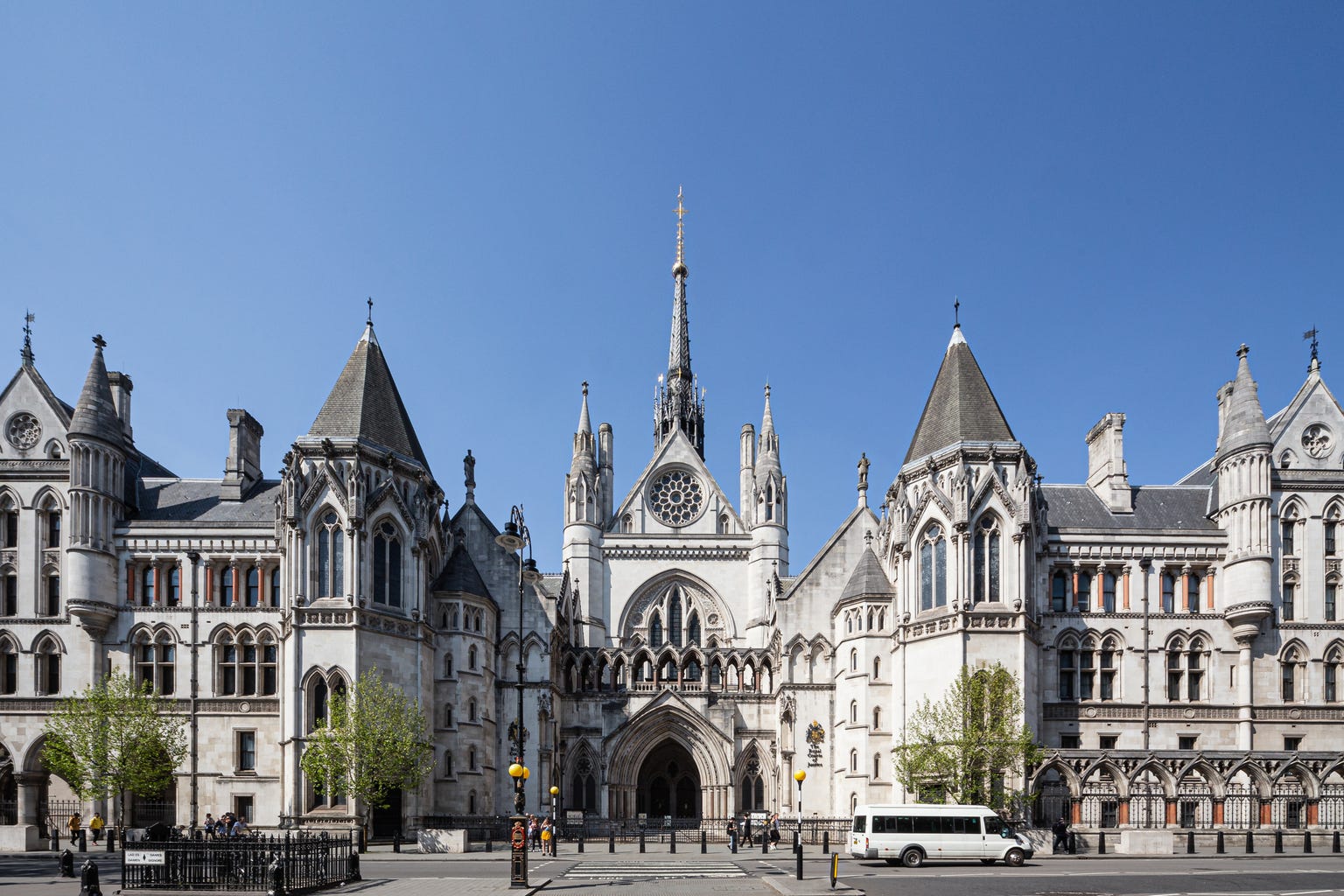
Cover photograph: David Castor, CC0, via Wikimedia Commons.