

A cooling tower was improperly drained in Aurora, Illinois the night before Thanksgiving. By the following morning, the global derivatives spine had been paralyzed. Most participants were helpless. A few — by design — were not.
The Anatomy of the Outage
At 9:41 PM ET on Thursday, November 27, 2025, CME Group sent a one-line email to clients: “Due to technical issues,” its futures and options “markets have been halted.” The cause was a cooling system failure at CyrusOne’s CHI1 data center in Aurora, Illinois, where internal temperatures reportedly surpassed 100°F. The facility CME sold to CyrusOne in 2016 for $130 million and leased back for 15 years was originally approximately 428,000 sq ft; the campus has since expanded to approximately 450,000 sq ft across three data centers. KKR and Global Infrastructure Partners completed a $15 billion acquisition of CyrusOne in March 2022, meaning the critical hub of the world’s largest derivatives exchange is now operated by private equity infrastructure investors.
What was not public knowledge on the day — confirmed by CyrusOne in a Bloomberg statement on December 6, 2025 — is that the outage was caused by human error: onsite staff and contractors failed to follow standard procedures for draining cooling towers ahead of freezing temperatures. The cascade began at 3:40 AM CT on November 27 — a full day before Globex went dark — and by 6:19 PM CT that same day, all chillers at the facility were offline or in faulty condition, fully compromising temperature control hours before markets even opened for Asian trading. This was not an unavoidable hardware failure. It was a preventable operational lapse that had been escalating for approximately 17 hours before CME sent its one-line halt notice.
The outage froze CME Globex entirely. E-mini S&P 500, Nasdaq 100, U.S. Treasury futures, WTI crude, gold, silver, EBS foreign exchange, and palm oil on the Bursa Malaysia exchange were all halted; Bloomberg separately reported that at least four traders noted delays in trading for Treasury futures and options tied to the Secured Overnight Financing Rate (SOFR). CME also has a stake in the Gulf Mercantile Exchange, which separately reported halted trading due to the same cooling issue. S&P 500 options with roughly $600 billion in notional value were expiring that day, and traders use CME-listed futures to delta-hedge those positions. With futures frozen, delta hedging had no clean leg to execute.
Metric Figure Duration of halt ~10-11 hours (9:41 PM ET / 8:40 PM CT to 7:30 AM CT Globex restore) CME daily contracts (Oct avg) 26M+ Daily notional in ES + NQ alone ~$1 trillion SPX options notional expiring that day ~$600 billion Gold bid-offer spread widening ~20x normal Root cause (confirmed Dec 6, 2025) Human error: failure to drain cooling towers before freezing temps
CME had a clear disaster recovery option: a backup data center in the New York area. It chose not to use it. The decision was made because available information at the time indicated the cooling issue would resolve quickly. It did not. Even after Globex nominally restored at 7:30 AM CT, CME Direct remained offline for most of the trading day. The outage was the longest CME disruption in recent memory, surpassing the hours-long outage of 2019.
“It’s a bit like flying dark. When you’re trading cash equity like us, US futures give you an indication of where the market is going before the open. I can only imagine how complicated it must be for derivatives desks.”
— Thomas Helaine, Head of Equity Sales, TP ICAP Europe, Paris
Global Voices: What Market Participants on Four Continents Said in Real Time
Real-time testimony from market participants on four continents creates the most precise picture of what the 10-11 hour outage destroyed — and implicitly, what it created for those on the other side.
In Singapore, Gerald Gan, deputy CIO of Reed Capital Partners, described the derivatives impasse: “It’s pretty annoying. We wanted to price some equity index options. My provider is scouring for alternatives, but I doubt the liquidity would be as ample as CME.”
In London, portfolio manager James Athey of Marlborough Investment Management documented the Treasury market directly: “We’ve had to trade some cash Treasuries today and it was noticeably thinner and wider. Month-end, day after Thanksgiving, CME down. It’s not an ideal combo.”
Amelie Derambure, portfolio manager at Amundi SA, Europe’s largest asset manager, stated the operational blockage plainly: “We typically use derivatives for tactical trades but it’s obviously impossible this morning. Thankfully, it’s a quiet day. It would have been quite a handicap had it been a busy day.”
Ritik Katte, CIO at MCD Capital in London, named the tail risk explicitly: “I’m glad this isn’t happening on a ‘Liberation Day’ type event.” That single sentence is the most important quote of the day — not because anything catastrophic happened, but because it articulates precisely what would have happened if it had.
Five Mechanisms of Alpha Generation: Who Was Positioned and Why It Worked
The outage did not create alpha uniformly. It created alpha selectively — for participants with infrastructure and mandate structures that did not require CME Globex as a prerequisite. Here is the precise mechanics of each mechanism.
1. OTC Spread Capture
When Globex froze, the only counterparties left were OTC desks — and OTC desks price uncertainty with spreads. In gold, bid-offer spreads widened to approximately 20 times their normal size. The mechanism was diagnosed directly by Fawad Razaqzada, market analyst at City Index and Forex.com: “The market impact is quite significant because without the CME, spreads on spot gold prices, for example, would typically widen with spot liquidity providers not having much confidence in pricing without the future.”
In FX, platforms showed elevated bid-offer spreads when London opened at 8 AM. In interest rate swaps, swap markets became more active once London opened, as institutions sought alternative hedges for their Treasury positions. Any desk with live ISDA infrastructure and the balance sheet to warehouse rates risk was, functionally, a monopoly counterparty for several hours.
The profit logic is binary: every institution required to transact — a corporate hedger with a month-end roll, a pension fund rebalancing, a commodity merchant needing coverage — had to cross those spreads. OTC desks on the other side set the price unilaterally.
2. The Precious Metals Dislocation
This is the most vivid, directly verified profit event of the day. Silver spot prices surged to a new all-time record during the session: Mining.com recorded a 4% gain to $55.66/oz, while BullionVault captured London spot peaking at $55.30/oz in the 80-minute window immediately after Comex reopened — the discrepancy reflecting different feeds capturing different moments of the same continuing rally. Three-month silver futures jumped 5%. The move happened during and immediately after the outage, amid erratic price action and thin liquidity as Comex recovered. Christopher Kramer, portfolio manager and senior trader at Neuberger Berman, confirmed the commodity-specific impact: “It impacted a lot of the futures markets globally; it certainly had more of an impact on some of the key industrial metals, some of the commodity-linked futures markets.”
The structural opportunity: any participant holding long spot silver or long silver OTC swaps going into the outage, who maintained that exposure through the CME darkness, captured a pure dislocation premium. Futures — frozen at pre-outage levels — had to gap up upon reopening to converge with where spot had already traded. The sequence of prices rewarded OTC holders and punished participants who could only express their view through CME-listed instruments.
3. The Eurex-CME Basis Trade
European and UK bond futures on Eurex were entirely unaffected. Bund futures, Schatz, and Gilt futures were live throughout. CME’s ZN (10-Year Treasury) and ZB (30-Year Treasury) were frozen. The spread between Eurex Bunds and CME Treasuries — normally arbed in milliseconds — was allowed to drift freely for the entire duration of the halt. A rates desk that understood the historical regression between Bund yields and Treasury yields could hold Eurex duration exposure while knowing that when CME reopened, Treasury futures would need to mechanically catch up to wherever Eurex rates had moved. No directional macro prediction was required — only the certainty that the two legs would ultimately reconverge.
4. ETF-Futures Dislocation
With ES and NQ frozen, premarket ETF trading continued — SPY was up 0.3%, QQQ up 0.4%, DIA up 0.3% per Reuters — with no futures reference prices to anchor them. This broke the core arbitrage loop. Authorized participants who normally hedge by creating or redeeming ETF shares against the underlying futures could not execute clean hedges. Oliver Deutschmann, head of equity derivatives EMEA at Liquidnet, confirmed the problem directly: neither ETFs nor Euro Stoxx futures provide a “clean hedge” for SPX delta. Market makers pulled screen quotes. ETF prices floated free from where futures would have been. For a participant with a view on where ES would reopen and access to the live ETF market, this was a pre-positioning opportunity with mechanical convergence guaranteed on Globex restart.
5. The Reopen Microstructure Event
When Globex restored at 7:30 AM CT, a reopening volatility spike hit as roughly 10-11 hours of resting orders flooded the market simultaneously. In gold, spot and futures realigned within seconds, closing the arbitrage gap but leaving behind distorted candles and confused positions. In Treasuries, erratic yield swings hit as traders rebalanced.
This is a known microstructure event: when resting orders activate simultaneously, the first print overshoots fair value as market orders consume the order book, then mean-reverts as limit orders fill the void. A fund positioned long gamma or on the correct side of that flush before 7:30 AM CT collected a volatility premium entirely independent of macro direction — purely a mechanical artifact of the reopening event. The direction of the initial move was reasonably forecastable from ETF price action during the outage.
Who Extracted Value vs. Who Was Neutralized
Extracted Value Neutralized OTC desks with live ISDA infrastructure HFT firms paying co-location fees at Aurora Multi-venue macro funds (Eurex + CME basis) Trend-following CTAs requiring live futures signal Long spot/OTC silver holders Stat arb strategies spanning CME contract pairs ETF pre-positioning into Globex reopen Month-end mandated rebalancers with forced flows Long gamma before reopening spike SPX options delta-hedgers needing ES futures Discretionary funds with no forced flows Single-venue prop desks dependent on Globex
What Failed Completely: The Other Side of the Ledger
It would misrepresent the day to imply a broad profit opportunity existed. The opposite is true for most sophisticated participants.
Every algorithmic strategy dependent on live CME price feeds was dark for the duration of the halt. Trend-following CTAs had no signal. Statistical arbitrage between CME contract pairs — TU/FV/TY spread trades, CL/RB/HO crack spreads — had no legs to trade. Most significantly: the Aurora co-location advantage that HFT firms have spent a decade and hundreds of millions of dollars to secure was worth exactly nothing. CME’s Aurora facility is famous among HFT firms, who have jostled for positions around the site to gain advantages by shaving fractions of a second off trade execution times. On November 28, proximity to a powered-off server is not a speed advantage. The entire HFT value proposition at that site was neutralized for the full length of the outage.
The key distinction between who extracted value and who did not is not intelligence, size, or sophistication. It is venue independence: the ability to price, hedge, and transact across OTC instruments, Eurex, ICE, and ETF markets without requiring CME Globex as a prerequisite.
The Structural Problem CME Would Prefer You Not Examine
Thomas Texier, group head of clearing at Marex, articulated the core structural issue: “Today’s disruption shows how concentrated futures markets really are — there just aren’t many alternative venues for the main products.”
CME handles more than 26 million contracts daily across futures tied to interest rates, Treasuries, energy, and equities — with $1 trillion in notional value trading each day in the E-mini S&P and Nasdaq alone, and open interest in US Treasury futures and options setting an all-time high of 35.1 million contracts as recently as November 20. All of it runs on one platform. That platform depends on a cooling system in one building in Aurora, Illinois — a building CME does not own, and which we now know from CyrusOne’s own December 2025 disclosure was allowed to fail because maintenance staff did not follow cold-weather preparation protocols on November 27. CME sold the Aurora facility to CyrusOne in 2016 and agreed to rent space back for 15 years, essentially outsourcing the day-to-day operations of the world’s most critical derivatives exchange to a third-party data center operator subsequently acquired by private equity in March 2022.
The failover question is more complicated than it appears. While CME’s disaster recovery plan includes a New York data center, many customers lack sufficient infrastructure to access that facility, meaning a failover would itself create a two-tier market — participants with New York connectivity would have real-time price information while those without it would be trading blind. There is no clean solution, only the choice between one failure mode and another.
Four Operational Imperatives: What Remains Unfixed and What Every Fund Manager Must Do
The event was low-impact only because it fell on a post-Thanksgiving half-day with light volumes and no macro catalysts. Ritik Katte’s “Liberation Day” reference is not hyperbole. The structural vulnerabilities are unchanged.
1. Multi-venue connectivity is a risk asset, not overhead. The funds operational during the outage had pre-existing OTC relationships, live Eurex and ICE connectivity, and ISDA master agreements in place before November 28. The funds that couldn’t transact had built single-venue dependencies. That infrastructure gap is a live P&L risk, not an IT budget question.
2. Month-end execution protocols need CME contingency built in. Athey’s “month-end, day after Thanksgiving, CME down” compression captures the risk clearly. Month-end brings mandatory flows in concentrated windows. Any execution protocol that assumes CME availability at those moments is structurally incomplete.
3. Model the Globex restart as a discontinuity, not a normal open. The correct model is pent-up flow concentrating into a single print, producing a measurable overshoot followed by rapid mean-reversion as the order book normalizes. A fund that treats a Globex restart like a standard market open will be materially wrong about price behavior in the first 60 seconds. That structure is repeatable and learnable.
4. Staying flat under impaired conditions is positive-carry alpha. Rajeev De Mello at Gama Asset Management stated it directly: “I am wary about trading on such an illiquid day, so I would not have wanted to trigger trades anyway.” The gap between what a discretionary fund paid on November 28 and what a mandated rebalancer paid at 20x normal spreads is real alpha transfer, without a single trade.
The November 28 outage was a test run under ideal conditions. The post-mortem confirmed what made it worse: the cascade did not begin when temperatures spiked — it began at 3:40 AM CT the previous day, when maintenance staff failed to drain cooling towers correctly, and escalated for 17 hours before markets were ever halted. The lesson is not only about data center resilience. It is that a single preventable human error — not a sophisticated cyberattack, not a geopolitical shock — is sufficient to neutralize the infrastructure investments of the most sophisticated market participants on earth for an entire trading session. Knowing which category your fund falls into before the next outage is not optional risk management. It is survival-level preparation.
📊 Extended Research: The Full Trade-by-Trade Breakdown
The full post-mortem — every trade that won, every trade that was neutralized, the exact mechanisms, and a complete evidence classification separating documented facts from logical inference — is available for Patreon subscribers.
→ Read the Full CME Outage Trade Reference on Patreon
📊 Want More Research Like This?
I publish exclusive quantitative research, trading strategies, and institutional-grade analysis for Patreon subscribers. If you found value in this piece, supporting the work helps me publish more of it.
→ Join the Patreon community here
Primary Sources
Yahoo Finance / Bloomberg — Traders Around the World Left Hanging
Mining.com — Silver Price Soars to Record Following Comex Outage
Yahoo Finance / Bloomberg — CME Partially Restores Operations (SOFR confirmation)
Reuters / US News — U.S. Stock Futures Frozen (ETF premarket figures)
CNBC — CME Halts FX, Commodities, Futures Trading (CHI1 facility confirmation)
Crain’s Chicago Business — Timeline: Problems Started 12 Hours Before Markets (3:40 AM / 6:19 PM CT)
Crain’s Chicago Business — CME Outage Exposes Infrastructure Flaw
CME Group Press Release — 2016 Aurora Sale ($130M, 428,000 sq ft, 15-year leaseback)
GIP — KKR/GIP Acquisition of CyrusOne Completed March 2022 ($15B)
Advisor Perspectives / Bloomberg — Frustration and Confusion Across Markets
The FI Desk — CME Group Outage Boosts FMX’s Case (SOFR rate update timeline)
Follow the author for more quantitative finance research and institutional market analysis:
📺 YouTube: The Mathematical Trader
💼 LinkedIn: Navnoor Bawa
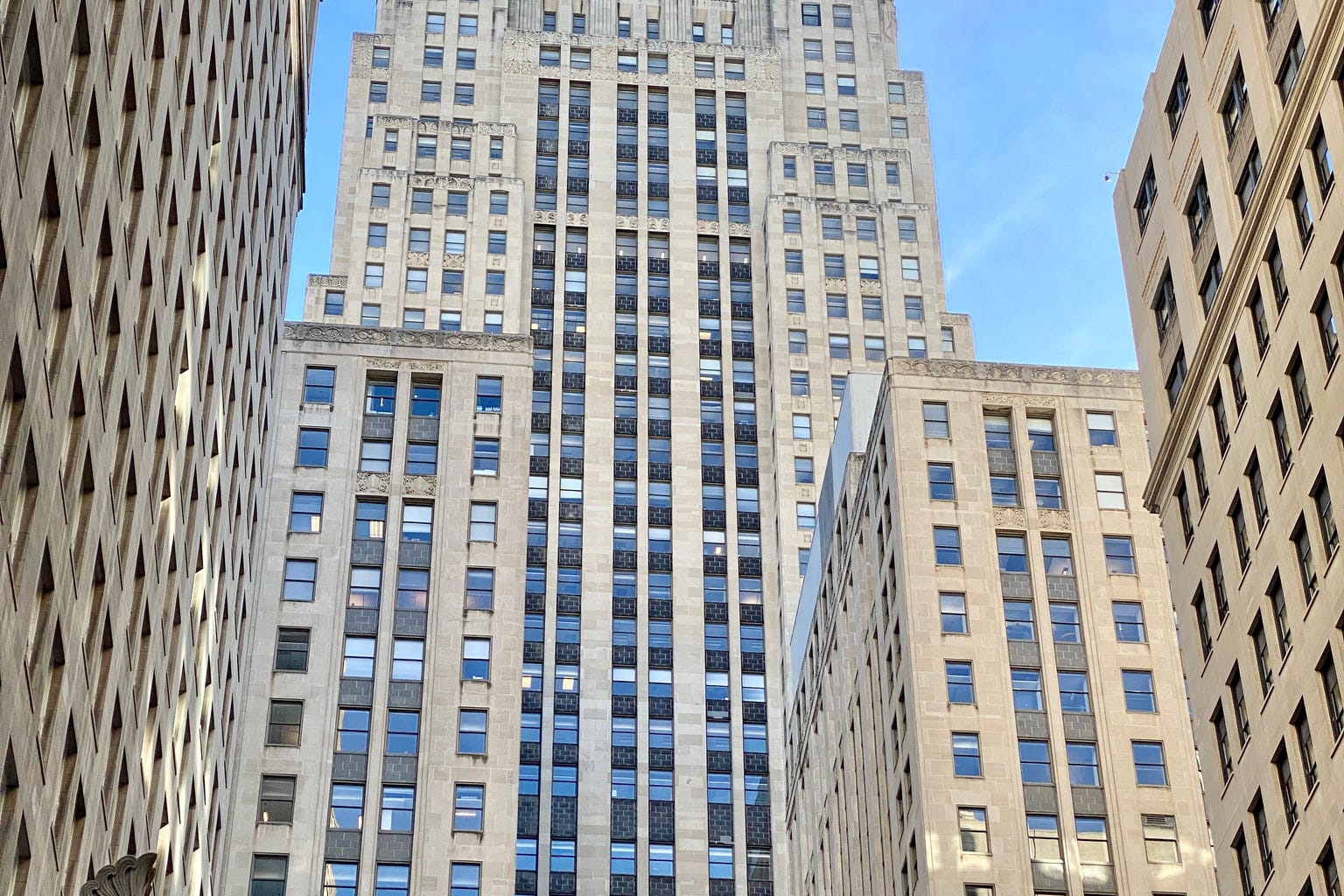
Cover photograph: Warren LeMay, CC BY-SA 2.0, via Wikimedia Commons.