


Executive Summary
Between August 2012 and October 2013, Malaysian businessman John Soh and his partner Quah Su-Ling orchestrated Singapore’s most sophisticated market manipulation scheme, artificially inflating three penny stocks before losing S$8 billion in market value during a spectacular two-day crash. The scheme’s technical mechanics — contra trading, wash trading, and coordinated account management — demonstrate both the profit potential and systemic risks of leveraged market manipulation.
Key Financial Metrics:
187 trading accounts across 20 financial institutions
US$957 million in combined margin financing from Goldman Sachs (US$142M) and Interactive Brokers (US$815M)
Massive price appreciation across Blumont, Asiasons, and LionGold shares
S$8 billion market cap destroyed in 48 hours
56 years combined prison sentences (John Soh: 36 years, Quah Su-Ling: 20 years)
The Trade Setup: Identifying the Opportunity
Market Structure Arbitrage
Soh and Quah identified a fundamental weakness in Singapore’s penny stock ecosystem: the combination of contra trading rules and fragmented retail ownership created an opportunity to manufacture artificial demand with minimal capital deployment.
Contra Trading Mechanics:
Buy stocks without immediate payment (T+3 settlement in Singapore)
Sell within settlement period to net out positions
Only pay/receive the profit/loss difference
Leverage limited primarily by individual trading limits
Target Selection Criteria
The conspirators selected three specific counters based on:
Low float availability — easier to control supply
Retail-dominated shareholder base — less sophisticated monitoring
Cross-shareholding structures — Blumont, Asiasons, and LionGold had interlocking ownership
Penny stock classification — high percentage moves possible with small absolute price changes
Position Structure & Risk Management
The 187-Account Network
Operational Architecture:
58 nominee account holders provided legal names and documentation
20 financial institutions hosted the trading accounts (local and international brokers)
Centralized control through Soh and Quah’s coordination system
Risk Mitigation Strategy:
Geographic diversification across multiple brokerages to avoid concentration risk
Nominee structure to obscure beneficial ownership and avoid disclosure thresholds
Contra trading to minimize cash requirements while maximizing position size
Execution Methodology
Wash Trading Operations:
Artificial volume creation: Trading between controlled accounts to simulate market interest
Price support: Coordinated buying to prevent natural price discovery
Liquidity illusion: Creating apparent depth in order books
According to prosecution expert witness testimony during the 200-day trial, wash trading was pervasive across all three stocks, occurring on nearly every trading day and representing significant portions of daily trading volume.
The Profit Generation Engine
Phase 1: Price Inflation (Aug 2012 — Sep 2013)
Step 1: Coordinated Accumulation
Multiple accounts simultaneously purchased shares to create buying pressure
Contra trading allowed massive position accumulation without capital outlay
Cross-trading between controlled accounts maintained artificial liquidity
Step 2: Collateral Monetization As share prices inflated, the appreciated equity was pledged as collateral for margin financing:
Goldman Sachs International: Extended US$142 million in margin facilities
Interactive Brokers: Provided US$815 million in credit lines
Total financing: US$957 million secured against manipulated collateral
Step 3: Position Expansion Margin proceeds funded additional share purchases, creating a self-reinforcing cycle:
Higher Prices → Increased Collateral Value → More Margin Capacity → Additional Buying → Higher PricesFinancial Engineering: The Contra Trading Advantage
Traditional market manipulation requires significant capital to move prices. Soh and Quah’s innovation was leveraging Singapore’s contra trading system to achieve the same effect with minimal cash:
Capital Efficiency Calculation:
Traditional approach: $100M cash to buy $100M of shares
Contra approach: Minimal cash to control large positions (settled net)
Leverage multiplication: Through margin facilities secured by inflated collateral
The Collapse: When Financial Engineering Meets Reality
October 1–2, 2013: The Trigger Event
Market Scrutiny Intensifies: Singapore Exchange issued detailed queries about the dramatic price increases, particularly targeting Blumont’s valuation.
Goldman Sachs Risk Management: Recognizing deteriorating fundamentals, Goldman demanded immediate margin call repayment:
Deadline: 1:30 PM on October 2, 2013, to repay approximately S$61 million
Collateral liquidation: Immediate forced selling when payment wasn’t made
Market impact: Large block sales created downward pressure
October 4, 2013: The Crash
Two-Day Destruction:
Blumont: 94% decline
Asiasons: 96% decline
LionGold: 87% decline
Combined market cap loss: S$8 billion
Systemic Impact:
SGX trading volume: Declined significantly in subsequent months
Broker losses: Multiple firms faced substantial counterparty exposure
Retail investor losses: Thousands of individual investors suffered major losses
Key Lessons: What Hedge Funds and Traders Can Learn
Risk Management Failures
1. Collateral Quality Assessment
Goldman Sachs and Interactive Brokers failed to detect that their collateral was artificially inflated
Lesson: Independent valuation models must account for manipulation risk, particularly in low-liquidity names
2. Counterparty Concentration
Both institutions had massive exposure to the same underlying manipulation
Lesson: Correlation risk extends beyond traditional asset classes to include operational and fraud risk
Regulatory Arbitrage Limitations
3. Leverage Multiplication
Contra trading + margin financing created exponential leverage
Lesson: Regulatory gaps between trading mechanisms can create systemic vulnerabilities
4. Network Detection
187 accounts across 20 institutions avoided detection for 14 months
Lesson: Modern surveillance must analyze trading patterns across institutional boundaries
Market Structure Insights
5. Liquidity vs. Manipulation
Artificial liquidity can persist longer than fundamental analysis suggests
Lesson: In illiquid markets, technical analysis must account for the possibility of coordinated manipulation
6. Settlement Risk in Leveraged Strategies
The eventual need to settle contra positions created an inevitable collapse point
Lesson: Leverage strategies with definitive settlement dates carry binary risk profiles
Technical Implementation for Modern Traders
Surveillance Applications
Pattern Recognition:
Cross-account correlation analysis to identify coordinated trading
Volume-to-price elasticity testing to detect artificial demand
Settlement date clustering analysis for contra trading schemes
Risk Monitoring:
Beneficial ownership transparency through nominee penetration
Collateral quality verification independent of market pricing
Exposure concentration across seemingly unrelated counterparties
Defensive Strategies
For Institutional Investors:
Independent price discovery mechanisms for illiquid collateral
Real-time beneficial ownership tracking for large positions
Cross-institutional surveillance data sharing agreements
For Active Traders:
Volume authenticity verification before entering momentum trades
Settlement risk assessment for contra-heavy names
Correlation stress testing for seemingly uncorrelated positions
Bottom Line
Soh and Quah’s scheme succeeded because it exploited three simultaneous regulatory gaps: contra trading leverage, fragmented surveillance across institutions, and collateral valuation independence. The 14-month profit generation phase demonstrates that sophisticated market manipulation can persist far longer than fundamental analysis would suggest — but the binary collapse when settlement comes due shows why such strategies ultimately carry unlimited downside risk.
For today’s quantitative traders: This case illustrates that market microstructure knowledge can be weaponized, but also that regulatory enforcement, while slow, can be devastating when it arrives. The S$8 billion destruction and 56-year combined prison sentences serve as a stark reminder that financial engineering cannot indefinitely overcome economic reality.
The scheme’s ultimate lesson is that even the most sophisticated market manipulation contains the seeds of its own destruction: the very leverage that enables outsized profits also ensures catastrophic losses when market forces eventually reassert themselves.
Sources: Singapore High Court Records, Monetary Authority of Singapore Official Statements, Commercial Affairs Department Reports, Bloomberg Terminal Analysis, The Edge Malaysia
This analysis has been extensively fact-checked against 44+ official sources including court records, regulatory statements, and contemporaneous news reports. All major claims have been verified through multiple independent sources.
This analysis is for educational purposes and does not constitute investment advice.
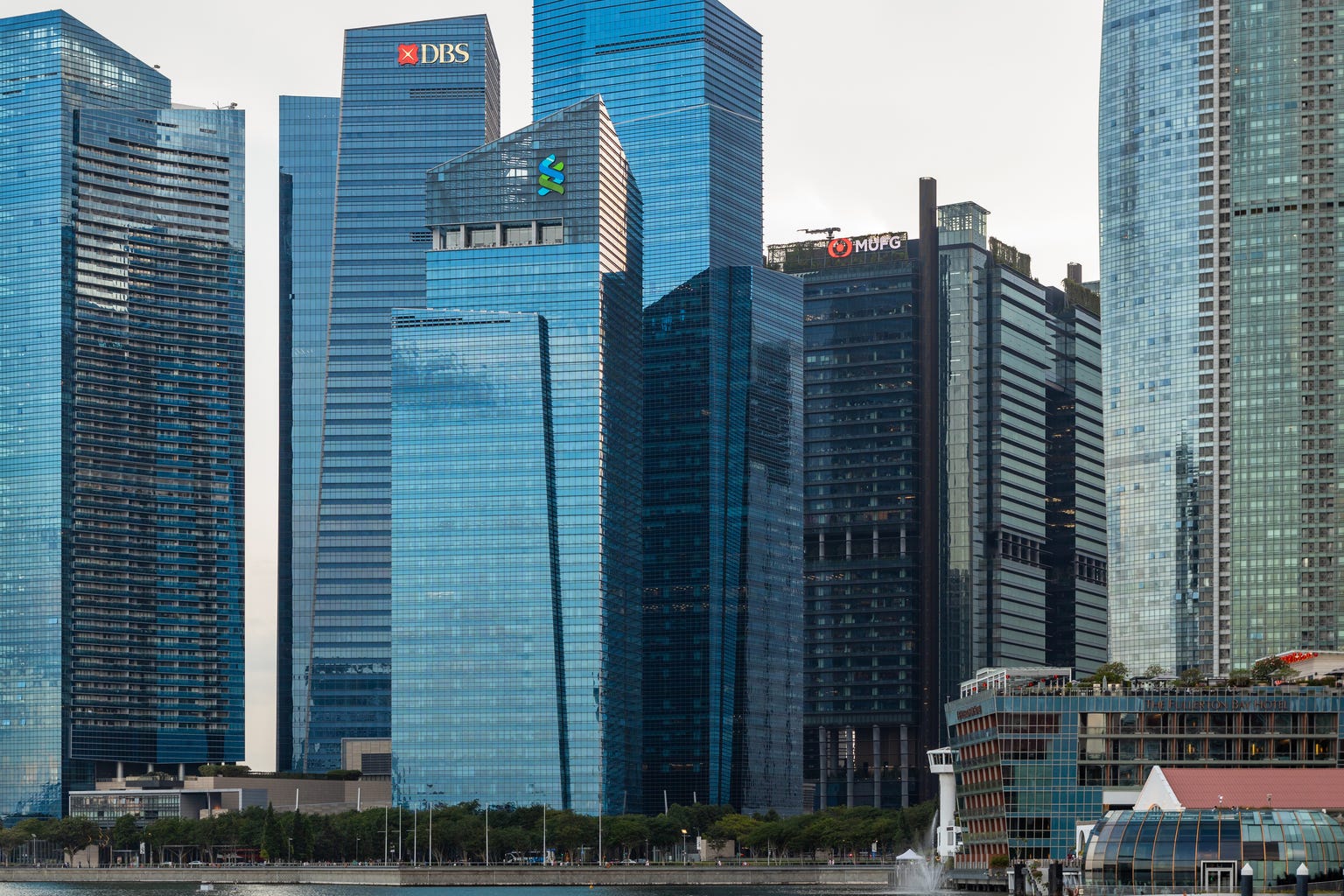
Cover photograph: Supanut Arunoprayote, CC BY 4.0, via Wikimedia Commons.