

Watch the video (10:54): Why Morgan Stanley’s Derivatives Book Jumped $55 Trillion. The video includes corrected bank rankings from the OCC’s Q1 2026 tables.
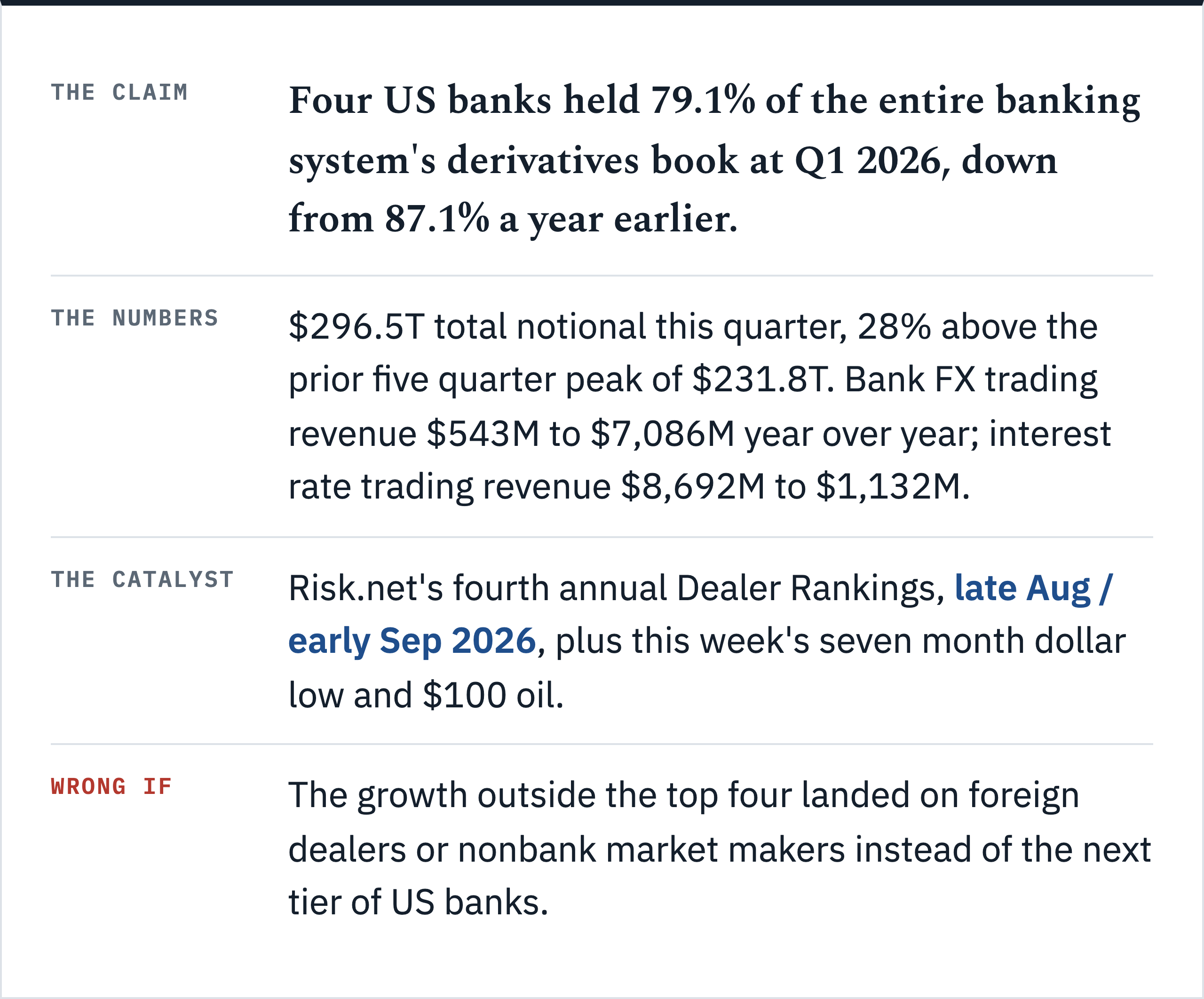
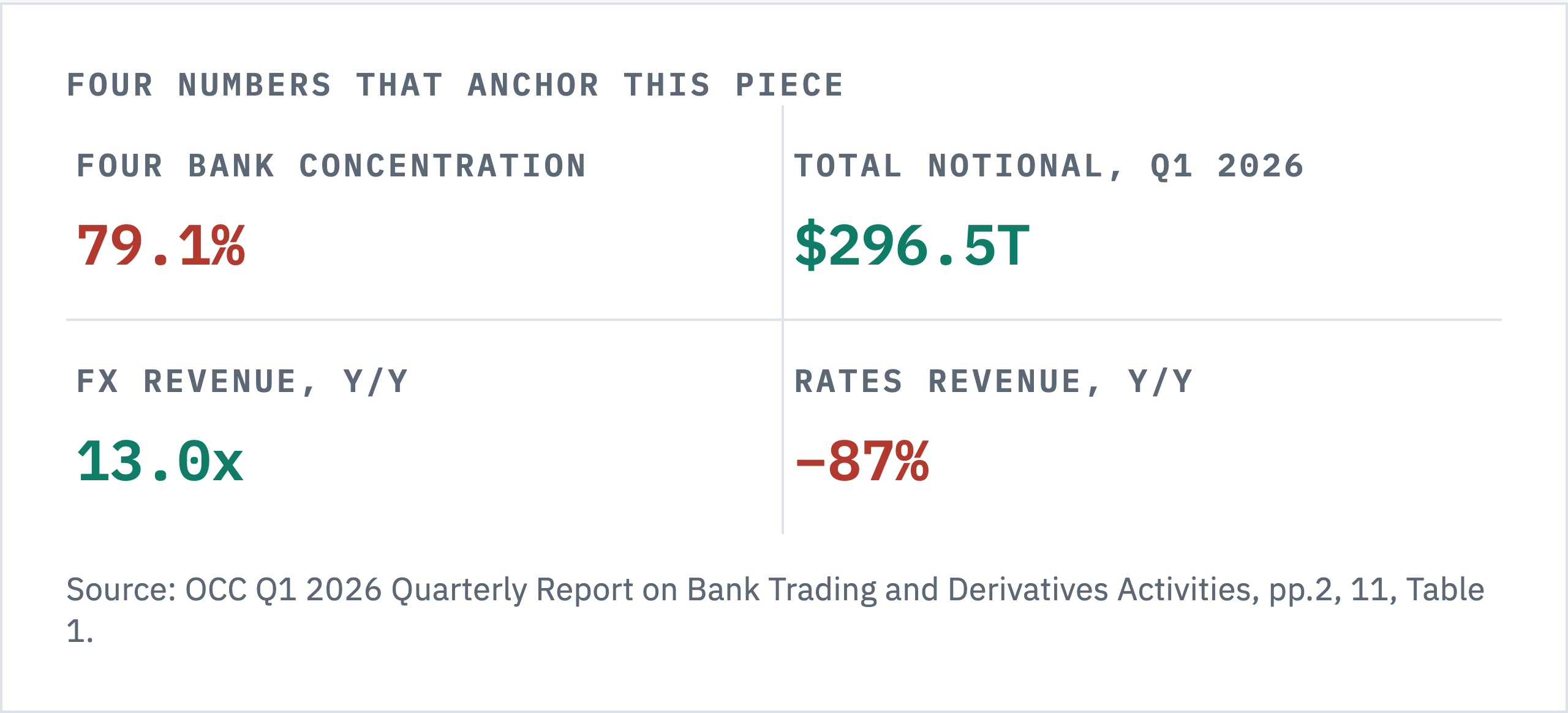
Four US banks, JPMorgan Chase Bank NA, Citibank NA, Bank of America NA and Goldman Sachs Bank USA, held 79.1% of the entire US banking system’s derivatives book at the end of Q1 2026, down from 87.1% a year earlier, while the total book itself exploded 42.5% to $296.5 trillion.
Below the paid line:
The full five quarter concentration and notional series, worked against each other quarter by quarter, including the Q3-to-Q4 peak and drop that a documented capital rule seasonal pattern predicts, and the same quarter year over year check that tests whether that pattern is the whole story.
Which of the four dealer banks carries the highest capital cost per dollar of book, worked from the Fed’s own June 2026 surcharge table against each bank’s OCC reported risk based capital, with the stress buffer and GSIB surcharge shown as separate addends.
The single quarter value at risk move that tells you which of the four actually leaned into this quarter’s volatility, and which three sat it out.
The Federal Register’s own quantitative estimate of how much the pending GSIB surcharge rewrite would cut capital costs at these exact four banks, and what that does to this whole story once it finalizes.
My worked arithmetic for why a thirteenfold FX revenue jump is hard to square with the deliberate pullback story, and the one piece of documented literature about these same banks that argues the other way.
Below the gate: the Fed’s own $23 billion GSIB surcharge estimate, and the per-bank capital math behind Goldman’s $147 million VaR jump.
