


By Navnoor Bawa | LinkedIn | YouTube: @TheMathematicalTrader
After thirty years of destroying capital, the most notorious trade in fixed income finally paid out. Here’s exactly how it happened — with named managers, verified returns, and the precise mechanics they used.
The Trade That Destroyed Careers
For over thirty years, shorting Japanese Government Bonds was known as the “widow-maker” — a strategy that reliably destroyed capital despite Japan’s debt exceeding 230% of GDP. The Bank of Japan’s relentless quantitative easing and yield curve control kept yields pinned near zero, crushing short sellers who bet on normalization.
Kyle Bass of Hayman Capital famously predicted a Japanese debt crisis since 2013, calling it a “Keynesian endpoint.” His fund lost money for years waiting for collapse that never came. The trade became Wall Street shorthand for career suicide.
Then, in December 2022, everything changed.
The December 2022 Catalyst
On December 20, 2022, the Bank of Japan shocked markets by widening its yield curve control band from ±0.25% to ±0.50% for 10-year JGBs. The BOJ maintained its short-term policy rate at -0.1% and the 10-year target at approximately 0%, but crucially expanded the permissible fluctuation range.
The central bank stated this modification was intended to “improve market functioning” and “encourage a smoother formation of the entire yield curve.” The 10-year JGB yield jumped to approximately 0.50% immediately following the announcement — the upper bound of the new range.
For the first time in decades, the BOJ had blinked.
Why The Trade Finally Worked: Three Converging Forces
The widow-maker trade had failed for thirty years because the fundamentals never aligned. In December 2022, three critical factors converged simultaneously — creating the setup sophisticated funds had been waiting for:
1. Persistent Inflation Above Target
Japan’s core inflation remained above the BOJ’s 2% target for nearly three years, forcing the central bank to reconsider ultra-loose policy. This marked a fundamental shift from decades of deflationary psychology. The BOJ could no longer justify yield curve control when inflation was structurally above target.
2. Policy Normalization Momentum
The December 2022 adjustment wasn’t isolated. The BOJ initiated a systematic unwinding of three decades of aggressive easing: further YCC adjustments in July 2023 and October 2023, followed by the abandonment of negative rates in March 2024. Each step validated that policy normalization was a trend, not a one-time adjustment.
3. Fiscal Sustainability Concerns
Japan’s debt-to-GDP ratio exceeds 230%, the highest in the developed world. Political uncertainty and expansionary fiscal proposals intensified selling pressure, particularly at the long end of the curve. The combination of rising rates and unsustainable debt created a self-reinforcing dynamic.
These three factors — inflation, policy shift, and fiscal stress — transformed what had been a losing trade into a systematic opportunity.
How They Executed It: Trade Mechanics
Understanding why the trade worked explains what changed. But the magnitude of returns came from how sophisticated funds executed it.
The primary instrument was JGB futures, which averaged 32,191 contracts per day in FY2022 according to the Ministry of Finance.
The basis trade (buying cash JGBs and shorting futures) enabled leverage up to 50–100x. Per JPX documentation, JPY 1 million in margin can control JPY 100 million in notional value — 100x leverage. This amplification turned small yield moves into substantial returns.
CTAs and hedge funds constituted significant presence in JGB futures, with foreign investors accounting for approximately 65% of monthly cash bond trading. The infrastructure existed; what changed was the fundamental backdrop that made the trade viable.
Named Managers Who Profited
With the setup understood and the mechanics clear, here are the specific managers who capitalized — with verified returns and documented positions.
Scott Bessent — Key Square Group
Scott Bessent achieved the most documented success. Key Square posted a 30% gain in 2022 (through December 27), reversing two consecutive years of losses.
In a letter sent to investors on December 20, 2022 — the same day as the BOJ announcement — Bessent described the decision as a “seminal moment for global monetary policy.” An unnamed investor revealed that Bessent’s yen bet yielded approximately 300 basis points in returns following the move, with positions structured as long-dated, out-of-the-money yen calls against the USD.
This wasn’t Bessent’s first Japan success. While at Soros Fund Management in 2013, he orchestrated a bet against the yen that made approximately $1.2 billion in three months during the Abenomics era.
Hiroyuki Kimura — Western Asset Management
Hiroyuki Kimura, portfolio manager at Western Asset Management, maintained a documented short duration strategy. Kimura told Bloomberg: “his firm has been short duration in the Japanese government bond market for a long time now, and intends to stay that way.”
The firm executed this through significant short positions in five-year Japanese government bonds, based on Japan’s core inflation remaining above the BOJ’s 2% target.
Mark Dowding — RBC BlueBay
Mark Dowding, Chief Investment Officer for Fixed Income at RBC BlueBay Asset Management, was publicly vocal about his short JGB positioning. In March 2024, Dowding indicated preference for shorting JGBs, projecting the BOJ would raise rates through 2024 potentially reaching 0.50% by year-end.
Mark Nash — Jupiter Asset Management
Mark Nash, portfolio manager at Jupiter Asset Management, captured the trade’s transformation succinctly. “Forget about U.S. Treasuries or British gilts — selling Japanese government bonds is one of the cleanest trades,” Nash told Bloomberg. “The widow-maker trade has been one of the most profitable relative to other markets.”
📊 Want Deeper Quantitative Analysis?
This research required extensive hours of data collection, source verification, and forensic analysis of institutional trades. If you found value in this breakdown, I publish exclusive quantitative research that goes deeper than public articles:
✅ Proprietary trading strategy breakdowns with backtested results
✅ Hedge fund replication studies with exact position sizing
✅ Real-time trade ideas across systematic strategies
✅ Institutional research tools and Python implementations
What you get on Patreon:
Monthly deep-dives into specific hedge fund trades (like this, but with actionable alphas)
Access to my quantitative research database
Direct Q&A and strategy discussions
Early access to all YouTube content
Public articles show you what happened. Patreon shows you how to replicate it.
→ Join the Patreon community here
Macro Fund Returns in 2022
The individual success stories reflected broader industry performance. The December 2022 BOJ move coincided with exceptional returns across macro strategies:
Rokos Capital — 51% gain in 2022, the best year since 2015 inception. Short bets on bonds as central banks hiked rates drove performance.
Key Square (Bessent) — 30% gain in 2022, with the Japan yen bet contributing approximately 300 basis points.
Brevan Howard BH Macro — 21.93% gain in 2022 on US rates, inflation, and European rates positioning.
Industry-wide, the Macro FIRV (Fixed Income Relative Value) substrategy gained 8.4% in 2022 and 10.9% in 2023 per Aurum Hedge Fund Data Engine — demonstrating that the opportunity extended beyond just Japan specialists.
The August 2024 Carry Trade Unwind: Validation Through Crisis
The profitability of the JGB short trade was validated in spectacular fashion eighteen months later, when the BOJ’s continued normalization triggered global market turmoil.
Following the BOJ’s surprise rate hike at its July 31, 2024 meeting (raising rates from around 0% to 0.25%), the yen carry trade unwound violently. According to the BIS Quarterly Review, the S&P 500 declined approximately 3% in its worst session in over two years.
TOPIX plunged roughly 12% on August 5, 2024 — one of the largest single-day drops in its history. The VIX surged above 60 in off-hours trading, and hedge funds faced margin calls and forced selling, amplifying the downturn.
The rapid unwind underscored two critical points: First, that the BOJ’s policy normalization was continuing as the sophisticated funds had anticipated. Second, that policy changes in Japan create profound global ripple effects — validating the original thesis that Japan’s monetary policy shift would have systemic implications.
Where We Are Now: Current Market Dynamics (January 2026)
The trade that began in December 2022 has evolved into an ongoing market dynamic that continues to shape global fixed income.
As of January 2026, 10-year JGB yields trade around 2.25–2.38% — the highest since 1999 and nearly five times the level at the December 2022 catalyst. The all-time high was 7.59% in June 1984, suggesting substantial room for further normalization if inflation persists.
The BOJ has raised its policy rate to 0.75% in December 2025, the highest level in 30 years. Japan’s bond market has seen unprecedented volatility, with 30-year yields exceeding 3.8% and 40-year yields surpassing 4% — both record levels.
Prime Minister Sanae Takaichi’s expansionary fiscal plans have fueled additional concerns over Japan’s debt trajectory, intensifying the very fiscal sustainability concerns that made the original trade viable.
Ken Griffin’s Warning
At the World Economic Forum in Davos in January 2026, Citadel founder Ken Griffin crystallized the current implications. Griffin called the JGB sell-off an “explicit warning” for American politicians to improve the national fiscal situation.
“The bond vigilantes can come out and extract their price,” Griffin said, cautioning that if bonds and stocks correlate, bonds lose their hedge function. He highlighted 40-year JGB yields reaching record highs exceeding 4% and stated the “window to correct its fiscal course is closing.”
Griffin’s warning underscores that what began as a hedge fund trade in December 2022 has evolved into a broader question about fiscal sustainability in developed markets with aging populations and high debt loads.
Conclusion
The trade that killed careers for thirty years finally paid out because three critical factors aligned simultaneously: persistent inflation, policy normalization momentum, and fiscal sustainability concerns. Sophisticated managers who understood these dynamics — and had the conviction to position ahead of the December 2022 catalyst — generated extraordinary returns.
Scott Bessent’s 30% return, Rokos Capital’s 51% gain, and the broader success across macro strategies validated a simple but powerful thesis: even the most entrenched central bank policies eventually yield to fundamental economic realities.
As Mark Nash observed, the widow-maker became “one of the most lucrative strategies in global fixed income.” The question now is whether other developed markets with similar dynamics — high debt, aging demographics, persistent inflation — will follow Japan’s path.
Every claim in this article is supported by primary sources including central bank statements, verified fund manager interviews, and industry reports. All returns, dates, and quotes are sourced from Bloomberg, Hedgeweek, Aurum Hedge Fund Data Engine, BIS Quarterly Review, and direct central bank communications.
📢 Support This Research
If this analysis added value, consider supporting my work on Patreon. Members get exclusive quantitative research, trading strategies, and institutional-grade breakdowns that go beyond what’s published publicly.
Want more institutional-grade analysis of systematic trading strategies and hedge fund trades? Subscribe to The Mathematical Trader on YouTube for deep dives into quantitative finance, alpha generation, and forensic breakdowns of how elite funds actually make money.
Connect with me on LinkedIn for daily insights on quantitative research, market analysis, and opportunities in systematic trading.
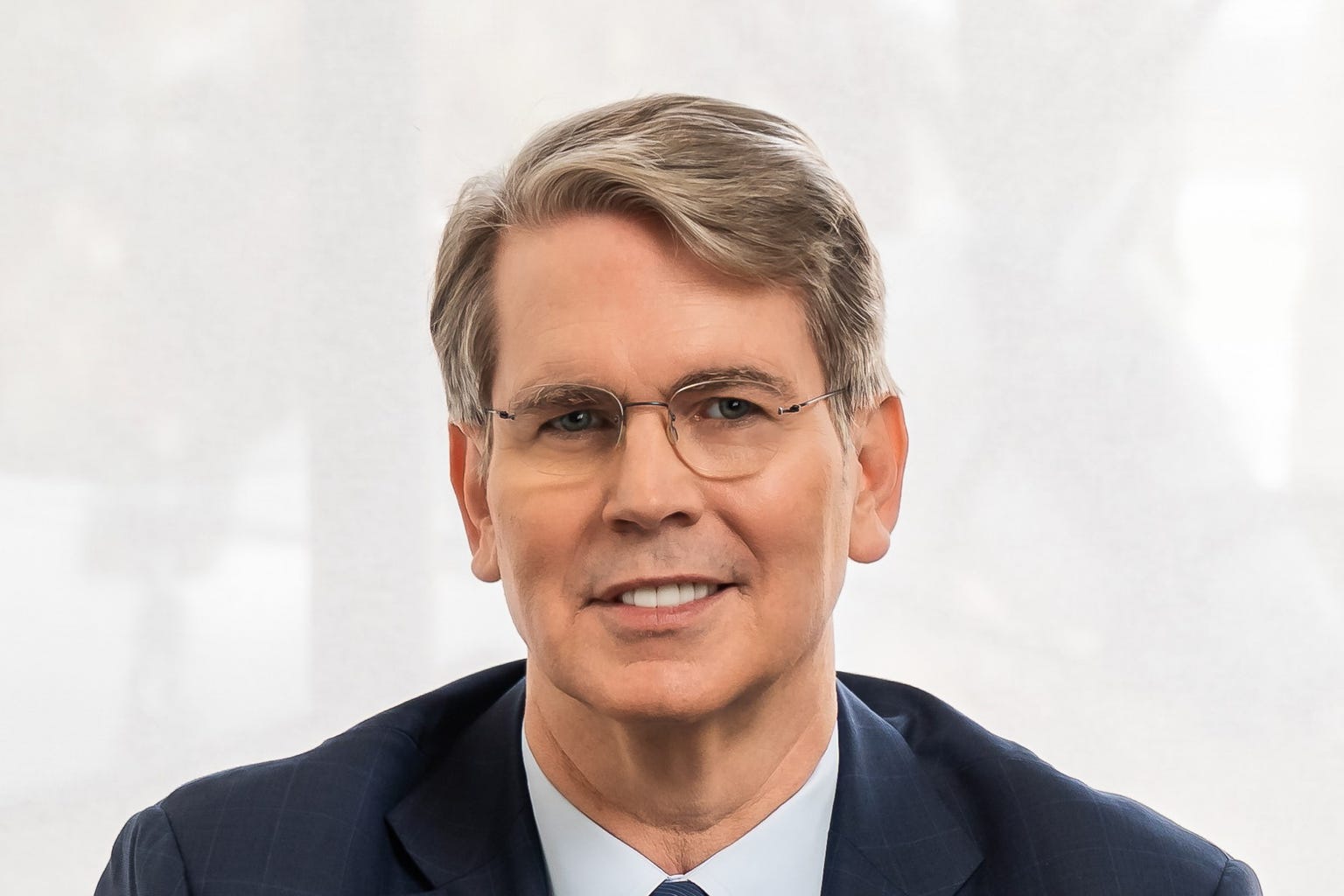
Cover photograph: Treasury Department, public domain, via Wikimedia Commons.