


This is a detailed research piece. If you find value in institutional-quality hedge fund analysis, support this work on Patreon.
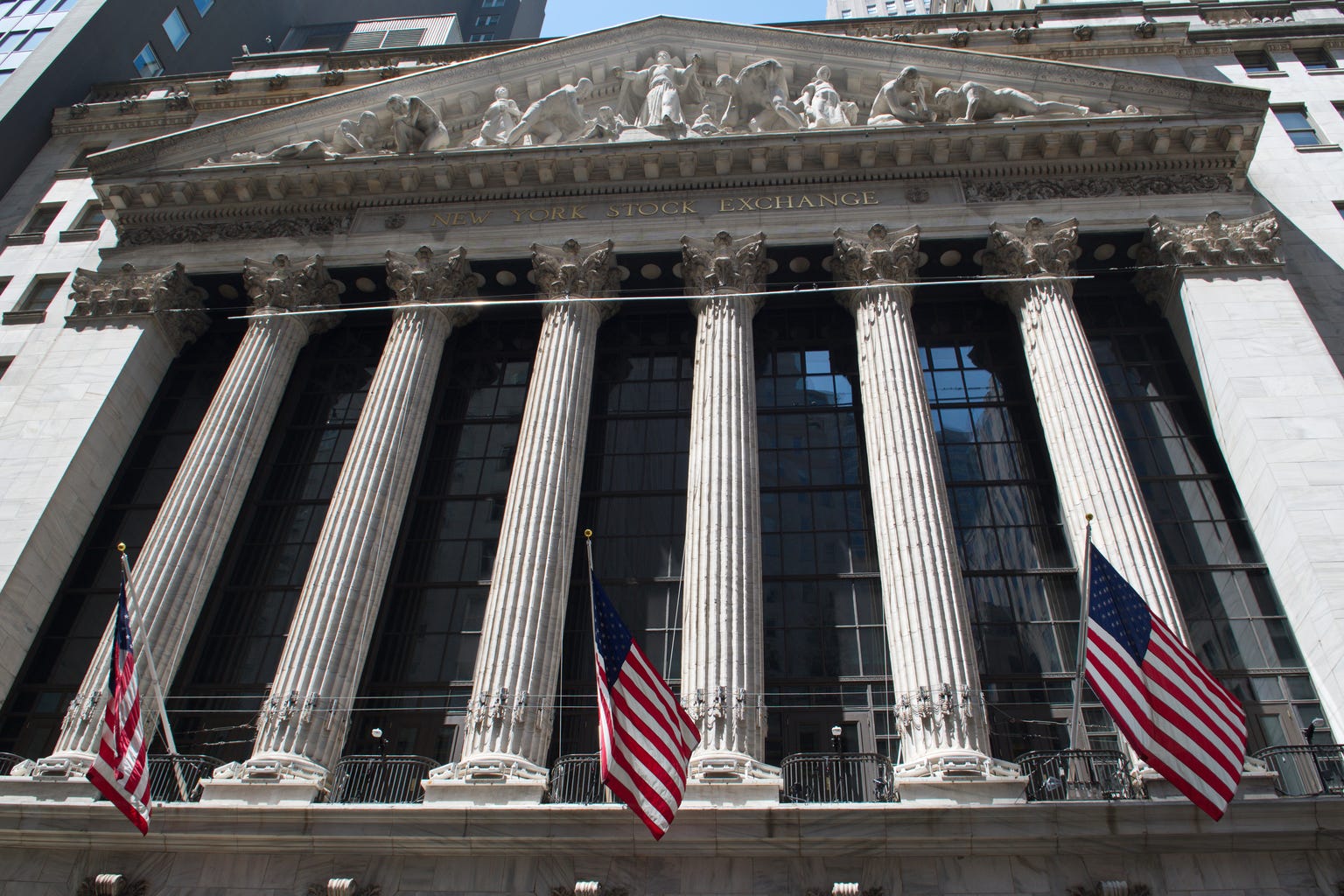
Intercontinental Exchange’s October 2025 investment in Polymarket will compress prediction market spreads from 10¢ to sub-1¢ within 12–18 months, mirroring cryptocurrency exchange arbitrage elimination timelines. IMDEA research documents $39.59M retail extraction from structural mispricings — but institutional market maker infrastructure will destroy profitability for undercapitalized participants. Deploy capital aggressively in Q1-Q2 2026 or accept opportunity closure.
Verified Arbitrage Opportunity (April 2024–April 2025)
IMDEA Networks analyzed 86 million Polymarket bets, documenting $39,587,585 total arbitrage extraction across three strategies:[¹]
Single-condition arbitrage (YES + NO ≠ $1.00): $10.58M from 7,051 exploitable conditions
Long positions (sum < $1.00): $5.90M
Short positions (sum > $1.00): $4.68M
Multi-condition rebalancing (Σ(prices) ≠ 1.00): $28.40M extracted ($11.09M buying YES + $17.31M buying NO), demonstrating superior capital efficiency versus single-condition strategies[¹]
Combinatorial arbitrage: $95K from 5 of 13 detected pairs, with 62% failure rate due to liquidity asymmetry
Top performer: Wallet 0xd218e4… extracted $2,009,631.76 across 4,049 transactions ($496 average per trade), executing 11+ trades daily with systematic bot-like behavior[¹]
Distribution: Top 3 wallets captured $4.2M (10.6% of total); top 10 captured $8.18M (20.7%)[¹]
ICE Infrastructure Deployment
Investment structure: October 7, 2025 — ICE investing up to $2 billion in Polymarket at $8 billion pre-money valuation[²]
Strategic initiatives include global distribution of Polymarket event-driven data to institutional clients, tokenization partnerships, and integration with ICE’s regulated exchange infrastructure.
Historical precedent: ICE’s NYSE Euronext acquisition closed November 2013, with Pillar trading system rollout requiring 24–36 months for full platform integration[³]
Projected timeline (analogy-based, not confirmed):
Q1-Q2 2026: Data feed integration, surveillance infrastructure beta
Q3-Q4 2026: Market maker programs, institutional custody, regulatory framework
Critical uncertainty: Deployment speed depends on regulatory approval, blockchain integration complexity, and competitive pressure from Kalshi, which captured 62% market share in September 2025 versus Polymarket’s 37%[⁴]
Professional Market Maker Economics
Institutional MM cost structure (HFT industry estimates):
Technology infrastructure: $2M–5M annually
Quantitative personnel: $500K–1M per team
Regulatory/compliance: $1M+ annually
Total overhead: $3.5M–7M for dedicated prediction market desk[⁵]
Profitability threshold at $100M capital:
Required daily P&L = $4M annual costs / 252 days = $15,873
At 1¢ spread: 1,587,300 shares matched daily
At 0.5¢ spread: 3,174,600 shares matched daily
Market capacity: September 2025 data shows weekly prediction market volumes exceeding $500M for Kalshi alone during September 11–17. Sufficient depth exists for institutional MMs to deploy profitably at sub-1¢ spreads.[⁴]
Retail arbitrageur costs:
Polygon gas fees: ~$0.007 per transaction[⁶]
Polymarket trading fees: $0[⁷]
Minimum viable spread: ~2¢ to cover execution costs and opportunity cost
Compression mechanism: Institutional MMs can profitably operate at 0.5–1¢ spreads due to automated execution and scale. Retail participants cannot compete below 2¢ threshold due to manual execution overhead.
Oracle Risk: March 2025 UMA Governance Attack
March 24–25, 2025: $7M market “Ukraine agrees to Trump mineral deal before April?” resolved YES despite no official agreement after whale deployed ~5M UMA tokens (≈25% voting power) to influence resolution vote[⁸]
Polymarket declined refunds, calling it “unprecedented situation.”
Cross-platform risk: Polymarket uses UMA governance; Kalshi uses CFTC-regulated settlement. Oracle divergence destroys hedges if resolution mechanisms disagree.
Mitigation: Exit positions 24–48 hours pre-resolution; avoid markets with UMA token concentration >10% single holder; prioritize objective resolution criteria.
Edge Degradation Timeline
Cryptocurrency Arbitrage Precedent
Kimchi Premium compression (South Korea vs. global exchanges):
2016: 4.8% average spread[⁹]
Late 2017: 30% spreads[⁹]
January 2018: Peak 54.48%[¹⁰]
2019: Volatile, with periods of $1,000+ spreads returning[¹¹]
Critical limitation: Crypto arbitrage compression was constrained by capital controls (South Korea limited foreign remittances to $100K annually), not institutional MM deployment. Transfer time risk and regulatory friction prevented efficient arbitrage.[¹²]
Prediction market differences:
No capital controls between Polymarket/Kalshi
ICE brings institutional MM expertise directly
Regulatory framework exists (Kalshi CFTC-approved; Polymarket negotiating)
Oracle risk unique to prediction markets
Projected Compression (Analytical Framework)
Phase 1 (Months 0–6): Current state
Spreads: 10–15¢ cross-platform; 2–5¢ single-market
Retail opportunity: Maximum extraction window
Action: Deploy 100% capital; prioritize multi-condition rebalancing
Target: 15–25% monthly ROI (extrapolated from top performer)[¹]
Phase 2 (Months 7–12): Institutional beta
Spreads: 3–5¢ flagship markets; 5–8¢ mid-tier; 8–12¢ long-tail
Retail opportunity: 50–70% degradation
Action: Pivot to N≥5 condition markets, ML whale-tracking, MM infrastructure
Target: 5–10% monthly ROI
Phase 3 (Months 13–18): Full professionalization
Spreads: 0.5–1¢ liquid markets; 2–4¢ illiquid
Retail opportunity: Extinct on major markets
Action: Institutional partnership or exit to emerging platforms
Target: 1–3% monthly
Caveat: Timeline assumes ICE deploys at pace comparable to NYSE Euronext integration (24–36 months). Acceleration scenarios (Robinhood/Coinbase entry, regulatory fast-track) could compress to 6–12 months. Delays (regulatory obstacles, oracle incidents) could extend to 24+ months.
Regulatory Risk
September 12, 2025: Massachusetts Attorney General Andrea Joy Campbell sued Kalshi, alleging illegal sports betting operations without state gaming license. Litigation ongoing; Kalshi argues federal CFTC designation supersedes state regulation.[¹³]
Polymarket settled with CFTC in January 2022 ($1.4M penalty), agreeing to restrict U.S. access. ICE partnership may enable re-entry under regulated framework, but state-level challenges remain unresolved.[¹⁴]
Trading impact: Platform risk requires diversification across international venues (Smarkets, Betfair).
Capital Allocation Framework
Strategy 1: Aggressive Extraction (Months 0–6)
Thesis: 50–75% of 12-month profit potential concentrated in Q1-Q2 2026.
Execution:
100% capital deployed
Prioritize multi-condition rebalancing (demonstrated capital efficiency advantage)[¹]
Accept 1.5–2× leverage via stablecoin lending
Monthly profit withdrawal to reduce platform/oracle exposure
Risk management: CVaR₉₅ <15% portfolio limit; correlation regime shift monitoring.
Strategy 2: Transition Infrastructure (Months 6–12)
Capital allocation:
50% arbitrage (illiquid/complex markets)
30% market making (dynamic spread + ML directional edge)
20% international platforms (regulatory arbitrage)
Infrastructure:
WebSocket monitoring across 100+ markets (sub-second latency)
LightGBM order flow imbalance models
CVaR₉₅ risk system with correlation-regime detection
Network: Establish institutional MM relationships (Susquehanna, Jump Trading, Jane Street) for employment/partnership optionality.
Strategy 3: Post-Compression (Months 12+)
Option A — Employment: $150K-300K base + 20–40% bonus (tier-2 MM firms); competitive advantage from track record and infrastructure code.
Option B — Proprietary MM: $500K-1M capital requirement; 10–15% annual ROI post-compression; institutional custody and clearing partnerships required.
Option C — Geographic arbitrage: Deploy to platforms with lagged institutional entry (Smarkets UK, Azuro Protocol); accept higher regulatory/counterparty risk; edge persistence +12–18 months versus U.S. markets.
Risk Factors
Compression accelerators (6–12 month window):
Robinhood/Coinbase prediction market launch
CFTC expedited approval for Polymarket DCM status
Multiple institutions deploy simultaneously (ICE + Citadel + Susquehanna)
Compression delays (18–24+ month window):
Massachusetts lawsuit expands to Polymarket
Additional UMA governance attacks
Post-2024 election volume contraction (elections represented 90% of Polymarket open interest)[¹⁵]
Blockchain/regulatory integration complexity
Quantitative Takeaway
Highest-probability scenario (60% confidence):
Months 0–6: Current spreads persist (10–15¢)
Months 7–12: Compression begins (3–5¢ flagship, 5–8¢ mid-tier)
Months 13–18: Mature state (0.5–2¢ liquid markets)
Optimal retail strategy:
Extract 50–75% of total 12-month profit potential in Q1-Q2 2026
Build transition infrastructure (MM systems, ML models, institutional relationships) in Q2-Q3 2026
Complete pivot or exit by Q4 2026
Critical decision point: Month 6–9. Exit arbitrage too early = sacrifice 30–40% extractable profit. Exit too late = 60–80% profit decline + stranded capital.
The IMDEA top performer’s $2.01M extraction demonstrates feasibility: systematic execution at 11+ trades daily, $496 average per trade, prioritizing multi-condition rebalancing. Replication requires capital ($50K-100K minimum), automated monitoring infrastructure, and discipline (correlation-aware position sizing, oracle risk management, pre-resolution exit windows).
Window is compressing. Deploy infrastructure now or accept that institutional capital will eliminate structural inefficiencies before you build capacity to exploit them.
References
[¹]: Saguillo, O., Ghafouri, V., Kiffer, L., & Suarez-Tangil, G. (2025). “Unravelling the Probabilistic Forest: Arbitrage in Prediction Markets.” 7th Conference on Advances in Financial Technologies (AFT 2025). Available at: https://suarez-tangil.networks.imdea.org/papers/2025aft-arbitrage.pdf
[²]: Intercontinental Exchange (October 7, 2025). “ICE Announces Strategic Investment in Polymarket.” Available at: https://ir.theice.com/press/news-details/2025/ICE-Announces-Strategic-Investment-in-Polymarket/
[³]: Intercontinental Exchange (November 13, 2013). “IntercontinentalExchange Completes Acquisition of NYSE Euronext.” Available at: https://ir.theice.com/press/news-details/2013/IntercontinentalExchange-Completes-Acquisition-of-NYSE-Euronext/
[⁴]: Finance Magnates (September 20, 2025). “Kalshi Captures 60% Share, Ending Polymarket’s Prediction Market Dominance.” Available at: https://www.financemagnates.com/forex/analysis/kalshi-captures-60-market-share-ending-polymarkets-prediction-market-dominance/
[⁵]: Shallbd.com (2024). “The costs of starting a High-Frequency Trading (HFT) business.” Industry cost estimates for dedicated trading desks. Available at: https://shallbd.com/the-costs-of-starting-a-high-frequency-trading-hft-business-a-comprehensive-guide/
[⁶]: Polygon (POL) Blockchain Explorer. Average Transaction Fee statistics. Available at: https://polygonscan.com/chart/avg-txfee-usd
[⁷]: Polymarket Documentation (2025). “Trading Fees.” Available at: https://docs.polymarket.com/polymarket-learn/trading/fees
[⁸]: CoinDesk (March 27, 2025). “Polymarket, UMA Communities Lock Horns After $7M Ukraine Bet Resolves.” Available at: https://www.coindesk.com/markets/2025/03/27/polymarket-uma-communities-lock-horns-after-usd7m-ukraine-bet-resolves
[⁹]: Corporate Finance Institute. “Kimchi Premium — Overview, History, Example.” Available at: https://corporatefinanceinstitute.com/resources/cryptocurrency/kimchi-premium/
[¹⁰]: CNBC (April 3, 2024). “South Korea’s ‘kimchi premium’ in the spotlight after BTC’s record highs.” Available at: https://www.cnbc.com/2024/04/03/south-koreas-kimchi-premium-in-the-spotlight-after-btcs-record-highs.html
[¹¹]: CoinDesk (July 1, 2019). “Bitcoin’s ‘Kimchi Premium’ Returns With $1K Price Spreads on Crypto Exchanges.” Available at: https://www.coindesk.com/markets/2019/07/01/bitcoins-kimchi-premium-returns-with-1k-price-spreads-on-crypto-exchanges
[¹²]: Kim & Chang Law Firm (2023). “Revised Foreign Exchange Transactions Act.” South Korea capital control framework. Available at: https://www.kimchang.com/en/insights/detail.kc?sch_section=4&idx=26756
[¹³]: WBUR News (September 16, 2025). “Campbell sues prediction exchange platform Kalshi.” Available at: https://www.wbur.org/news/2025/09/16/massachusetts-kalshi-lawsuit-predictions-sports-wagering
[¹⁴]: CFTC (January 3, 2022). “CFTC Orders Polymarket to Cease Unauthorized Trading and Pay $1.4 Million.” Available at: https://www.cftc.gov/PressRoom/PressReleases/8478-22
[¹⁵]: DL News (November 2024). “Polymarket volumes plummet 84% after US elections.” Available at: https://www.dlnews.com/articles/markets/polymarket-volumes-and-users-plummet-after-trump-wins-election/
Methodology Note: Timeline projections based on ICE’s NYSE Euronext integration precedent (24–36 months) and professional MM economics. ROI estimates extrapolate from IMDEA top-performer data with downward adjustment for realistic capital deployment and risk management. Compression phases calibrated to institutional deployment capacity, not guaranteed outcomes.
Disclaimer: Prediction markets involve significant risk including oracle manipulation, regulatory uncertainty, and execution risk. ICE deployment timeline is estimated; actual integration may differ materially. Past performance does not guarantee future returns. Regulatory changes may accelerate or eliminate opportunities. The author may hold positions in prediction markets.
📊 Support this research: https://www.patreon.com/c/NavnoorBawa
Cover photograph: 颐园居, CC BY-SA 4.0, via Wikimedia Commons.