


Bottom Line Up Front
Hedge funds are deploying neural networks and deep learning models that outperform Black-Scholes by up to 64% in pricing accuracy for specific derivative contracts, with top quant funds like Renaissance Technologies’ Medallion Fund returning 30% in 2024. But the edge isn’t the models themselves — it’s knowing exactly when and where to deploy them, and how to monetize the pricing advantage through volatility arbitrage, superior hedging, and speed arbitrage during market dislocations.
The core insight: Machine learning doesn’t replace derivatives pricing theory. It enhances it in specific, profitable scenarios where traditional models break down — and hedge funds are extracting billions by identifying those exact scenarios.
Market Context: The $730 Trillion Derivatives Problem
The global derivatives market reached $729.8 trillion in notional value as of mid-2024. At that scale, even fractional improvements in pricing accuracy translate to substantial P&L. Traditional derivatives pricing relies on models with restrictive assumptions. Black-Scholes assumes constant volatility and lognormal returns, but market data consistently shows volatility smiles, skews, and fat tails — deviations the model cannot capture. This creates persistent mispricings that sophisticated funds exploit.
Who’s Actually Doing This
Renaissance Technologies: The 30-Year ML Pioneer
Renaissance Technologies’ Medallion Fund returned 30% in 2024, while their institutional funds RIEF and RIDA posted 22.7% and 15.6% respectively. RenTec has been using machine learning for trading for at least 30 years, though they subsume newer techniques like deep neural networks under a broad ML umbrella.
Critical structural advantage: Unlike competitors where portfolio managers compete with separate models, Renaissance unifies everything under one model — all resources behind one arrow. This architecture enables them to exploit cross-asset correlations and derivative mispricings that fragmented strategies miss.
Performance consistency matters: RIEF was up 22.5% through October 2024, exceeding the 20.5% gain in 2021 and posting the best year since 2011 when the fund climbed 34%. RIDA gained 17.5% through October before finishing the year at 15.6%, suggesting selective profit-taking or late-year volatility headwinds.
Two Sigma’s 2024 Results
Two Sigma achieved strong double-digit gains in 2024 using algorithm-driven strategies, with the Spectrum fund returning 10.9% and Absolute Return Enhanced posting 14.3%.
Major Investment Banks
JPMorgan Chase and Goldman Sachs use AI algorithms to improve pricing accuracy and optimize trading strategies in options and derivatives markets. These aren’t research projects — they’re production systems handling billions in daily flow.
Specialized Quant Funds
Point72 Asset Management uses NLP-powered sentiment analysis on earnings calls, automatically incorporating insights into options trading strategies.
Technical Approach 1: Neural Networks vs. Black-Scholes
The Performance Gap
Quantified accuracy improvements:
A 2025 study on Petrobras options demonstrated that deep learning models achieved a 64.3% reduction in mean absolute error compared to Black-Scholes for options priced between 3–19 BRL, representing 43.41% of all Petrobras option transactions on B3. The neural network successfully priced contracts that Black-Scholes severely undervalued.
Performance varies by market conditions: neural networks outperform Black-Scholes during tranquil periods for call options, while Black-Scholes performs better during turbulent periods. For put options, the pattern reverses.
Why this matters for P&L:
If your model prices an option at $5.20 and the market prices it at $5.00 due to Black-Scholes mispricing, you can buy at $5.00 and either sell to someone using a better model or hold until market repricing. At scale, these 20-cent edges compound into substantial returns.
The Architecture That Works
Finance-Informed Neural Networks (FINN) embed Black-Scholes dynamic hedging principles directly into the neural network loss function, ensuring the model respects no-arbitrage conditions while learning from market data. This hybrid approach combines theoretical rigor with data adaptability.
Key innovation: The model transforms the mathematical foundations of Black-Scholes into neural network training objectives, enabling the network to learn pricing patterns while inherently respecting no-arbitrage conditions.
Traditional pure ML approaches risk violating fundamental financial principles. FINN solves this by baking principles into the architecture.
Computational Advantage
For exotic derivatives lacking analytical solutions, neural network-based stochastic differential equation models provide computationally efficient alternatives to expensive numerical methods like Monte Carlo simulation, while preserving essential financial principles.
Real-world impact: When volatility spikes and you need to reprice 10,000 exotic positions in seconds rather than hours, this speed advantage is tradeable alpha.
Technical Approach 2: Reinforcement Learning for Hedging
Where the Real Money Is Made
Delta hedging is mandatory and largely mechanical, but gamma and vega management is discretionary — this is where skilled traders add value and where ML can provide edge.
The problem: Gamma measures exposure to large asset price changes; vega measures exposure to volatility changes. Traders face limits on permissible gamma and vega but have discretion on how to manage them within those limits.
Deep Distributional Reinforcement Learning Solution
Hedge funds use Deep Distributional Reinforcement Learning (D4PG) with quantile regression for gamma and vega hedging, allowing direct measurement of VaR and CVaR for different hedging scenarios and volatility movements.
Why quantile regression matters: Traditional reinforcement learning optimizes expected rewards. Financial risk management cares about tail risk — the 5th or 1st percentile outcomes. Quantile regression enables the model to optimize for these specific risk measures.
The P&L Mechanics
For positive gamma P&L, realized volatility needs to exceed implied volatility. Profit comes from discrete rehedging at better prices than continuous hedging assumes.
When you’re long gamma and the stock moves, you sell shares at a higher price than someone hedging continuously would achieve. ML-optimized hedging captures more of this discretization profit by choosing optimal rehedging times.
Strategy 1: Volatility Arbitrage
The Setup
Volatility arbitrage exploits pricing inefficiencies in volatility instruments and derivatives, particularly mispricings in implied volatility. These strategies aim to generate returns largely independent of broader market movements.
How ML Enhances the Trade
1. Implied Volatility Surface Modeling
Research on forecasting implied volatility surfaces for weekly options on the S&P 500 found that Random Forest models consistently outperformed other approaches, including neural networks, for slope and curvature characteristics.
The volatility surface is three-dimensional: strike price, time to expiration, and implied volatility. ML models capture the nonlinear dynamics better than parametric models, identifying mispricings where the surface is locally inconsistent.
2. Event-Driven Volatility
Event volatility strategies exploit price inefficiencies surrounding specific events like earnings announcements, where implied volatility typically rises beforehand due to uncertainty and falls after the announcement.
ML models trained on historical event patterns can identify when the market is over- or under-pricing event risk, enabling funds to take positions ahead of predictable vol moves.
Market Size and Heterogeneity
The volatility arbitrage strategy has $80 billion in total AUM as of September 2024, with intra-strategy correlations the lowest among hedge fund strategies due to high heterogeneity in implementation.
Strategy 2: Convertible Arbitrage with Gamma Trading
The Classic Trade Structure
Convertible arbitrage involves buying convertible bonds and short-selling the underlying equity to achieve a delta-neutral position, profiting from changes in volatility. Managers typically run portfolios at 300% long vs. 200% short, with the lower short exposure reflecting delta-adjusted needs.
Why Gamma Trading Is Critical
Delta is not constant and changes as the stock price moves. Gamma trading — continuously adjusting positions to remain delta-neutral — is one reason convertible arbitrage is much trickier than it seems.
The math: If you purchase $2,000 of convertible bonds with 53% delta and short $1,060 of equity, but the stock rises 10% and volatility increases 50%, your convertible position gains ~14% while your short loses money. The key is rebalancing the hedge dynamically.
ML Edge in Gamma Management
Traditional models use analytical formulas for delta. ML models can learn optimal rehedging frequencies and sizes by training on historical P&L from different hedging strategies, potentially capturing more gamma profit while paying less in transaction costs.
Convertible arbitrage strategies strive to extract underpriced implied volatility from long convertible bond holdings by delta hedging and gamma trading short equity positions.
Strategy 3: High-Frequency Volatility Trading
The Speed Advantage
High-frequency trading strategies involve making numerous trades within microseconds, using derivatives to hedge positions or exploit short-term market inefficiencies. AI algorithms in HFT aim to reduce latency and execute trades faster than human traders.
Real Implementation
Jump Trading built an AI engine that continuously inspects market data, learns patterns, and optimizes high-frequency strategies in real-time.
Where the profit comes from: During volatility spikes, bid-ask spreads in options widen dramatically. ML models can detect when the spread is unjustifiably wide relative to underlying volatility, enabling the fund to provide liquidity and capture the spread — thousands of times per day.
2024 Performance: When It Worked
Renaissance’s Exceptional Year
Renaissance’s 2024 performance demonstrated the power of ML-driven strategies across market conditions. The Medallion Fund’s 30% return maintained its legendary status, while institutional products showed strong recovery from 2020 losses.
RIEF finished 2024 up 22.7%, recovering from the 19.4% decline in 2020 and marking the best year since 2011. The fund was up 22.5% through October before modest late-year consolidation.
RIDA gained 15.6% for the full year after reaching 17.5% through October, shaping up as the best result since its March 2012 inception despite some fourth-quarter profit-taking.
The Broader Quant Landscape
Quant hedge funds had a strong showing in 2024, with algorithm-driven firms achieving double-digit gains across various strategies, though most fell short of the S&P 500’s 25% gain.
Key insight: The goal isn’t to beat the index in bull markets. It’s to generate uncorrelated returns with lower volatility and positive performance during market stress — where derivatives pricing models matter most.
When the Models Break: Real Losses
Renaissance RIEF’s 2020 Crisis
Renaissance Institutional Equities Fund declined about 20% in 2020. The firm told investors losses were due to being under-hedged during March’s collapse and then over-hedged in the rebound from April through June because models had overcompensated for the original trouble.
The lesson: Models trained on historical data perform abnormally in years that are anything but normal by historical standards.
ML models excel at interpolation — finding patterns within the data distribution they’ve seen. They struggle with extrapolation — unprecedented market regimes. March 2020’s simultaneous liquidity crisis, volatility explosion, and correlation breakdown was outside the training distribution.
The August 2007 Quant Meltdown
James Simons’s Renaissance Institutional Equities Fund fell 8.7% in August 2007 when computer models used to buy and sell stocks were overwhelmed by securities’ price swings.
What happened: Multiple quant funds ran similar factor-based strategies. When one large fund deleveraged rapidly, it triggered a cascade as other funds’ models generated the same sell signals. The correlations ML models relied on broke down within hours.
Model Risk in Volatility Modeling
Medallion Fund thrives during high volatility, returning 76% in 2020 when the broader market struggled, because their algorithms look for scenarios where the market acts erratically.
But institutional funds using similar principles but different implementations struggled. The difference: Medallion trades at much higher frequency with tighter risk controls, while institutional funds held longer-duration positions that got caught in regime changes.
The Real Competitive Edge
It’s Not Just the Models
ML in hedge funds offers more persistent alpha than traditional quant investing because ML systems can decipher change and adapt time frames of measurements and price predictions to enhance alpha generation across different market environments.
What this means practically:
Data infrastructure: Processing power doubles every two years, while global data including alternative sources is projected to grow fivefold from 2018 to 2024, suggesting ML’s predictive accuracy will become more pronounced over time.
Implementation speed: Major financial institutions use platforms like Kx for high-performance data processing to analyze massive amounts of real-time data and support AI-driven trading strategies.
Risk management: AI models provide continuous portfolio monitoring, assessing positions and adjusting them in real-time to mitigate potential losses through more accurate predictions of asset prices, market moves, and volatility.
The Human Element
Renaissance Technologies employs PhD-level mathematicians and scientists, many from computational linguistics and code-breaking backgrounds. The models are sophisticated, but the real edge is the team’s ability to:
Identify which problems ML can solve better than traditional methods
Recognize when models are overfitting or breaking down
Integrate multiple signals across asset classes
Manage risk during regime changes
Key Takeaways for Quant Researchers
1. When ML Outperforms
Use neural networks for derivatives pricing when:
Traditional models make unrealistic assumptions (constant volatility, lognormal returns)
Exotic options lack analytical solutions
Market conditions are relatively stable (ML performs better during tranquil periods)
You need computational speed for large portfolios
Stick with traditional models when:
Market regime is unprecedented (outside training data)
Interpretability is critical for regulatory or risk management purposes
Transaction costs would eat small pricing improvements
2. Where the Alpha Actually Lives
Not in the model itself, but in:
Proprietary training data and features
Optimal execution and hedging strategies
Risk management overlays that prevent catastrophic losses
Speed of recalibration during volatility spikes
3. The Real Barriers to Entry
The inherent noise in financial markets makes quantitative investing one of the most challenging applications of ML.
Required capabilities:
Clean, extensive historical derivatives data
Real-time market data infrastructure
Computational resources for model training and inference
Risk management systems that override models during regime changes
Regulatory compliance for automated trading
4. Risk Management Is Non-Negotiable
Every major quant fund that has blown up has done so because:
Models were trusted during unprecedented market conditions
Risk limits were insufficient for tail events
Deleveraging cascades weren’t anticipated
Correlations broke down when needed most
Renaissance’s Medallion Fund maintains tight risk controls and high-frequency trading that allows rapid exit, while institutional funds with longer holding periods face greater regime change risk.
Looking Forward: 2025 and Beyond
Emerging Techniques
Finance-Informed Neural Networks (FINN) represent a promising hybrid approach that combines theoretical rigor with data adaptability, validated across both constant volatility and stochastic volatility models.
Competitive Dynamics
Information advantages are often short-lived, and many managers will continue investing in a host of new technologies. As more funds adopt these techniques, the edge will accrue to those with:
Superior data (alternative data, higher frequency, cleaner quality)
Better implementation (lower latency, smarter execution)
Stronger risk management (surviving regime changes)
Regulatory Considerations
SEC and CFTC oversight of AI/ML in hedge funds is increasing, with focus on transparency, risk management, and market stability concerns. Funds must balance model sophistication with explainability requirements.
Conclusion: The Real Game
Machine learning in derivatives pricing isn’t about replacing financial theory — it’s about applying it more precisely in the specific scenarios where traditional models fail. The 64% error reduction in specific price ranges and Renaissance’s 30% return in 2024 prove the edge is real.
But the losses — the 20% decline in 2020 and 8.7% drop in 2007 — prove the edge is conditional. The funds winning this game understand exactly when their models work, when they don’t, and how to switch between regimes fast enough to preserve capital and capture alpha.
For quant researchers entering this field: study the models, but study the failures even more closely. The math is beautiful. The P&L is unforgiving.
Major Sources
Academic Research & Technical Papers
Aboussalah, A.M., et al. (2024). “The AI Black-Scholes: Finance-Informed Neural Network.” arXiv:2412.12213. https://arxiv.org/abs/2412.12213
Santos, D. & Ferreira, T.A.E. (2024). “Neural Network Learning of Black-Scholes Equation for Option Pricing.” arXiv:2405.05780. https://arxiv.org/abs/2405.05780
Deep Learning vs. Black-Scholes: Option Pricing Performance on Brazilian Petrobras Stocks (2025). arXiv:2504.20088. https://arxiv.org/html/2504.20088v1
van de Noort, T. (2024). “Forecasting the Characteristics of the Implied Volatility Surface for Weekly Options: How do Machine Learning Methods Perform?” Erasmus University.

Hull, J. & White, A. (2023). “Gamma and vega hedging using deep distributional reinforcement learning.” Frontiers in Artificial Intelligence. https://www.frontiersin.org/journals/artificial-intelligence/articles/10.3389/frai.2023.1129370/full
Can Machine Learning Algorithms Outperform Traditional Models for Option Pricing? (2025). arXiv:2510.01446. https://arxiv.org/html/2510.01446v1
Boukherouaa, E., et al. (2024). “Machine Learning Methods for Pricing Financial Derivatives.” arXiv:2406.00459. https://arxiv.org/html/2406.00459v1
Şahin, Ö.N., et al. (2021). “Option pricing with neural networks vs. Black-Scholes under different volatility forecasting approaches for BIST 30 index options.” Borsa Istanbul Review. https://www.sciencedirect.com/science/article/pii/S2214845021001071
Industry Reports & Performance Data
U.S. Senate Committee on Homeland Security and Governmental Affairs (2024). “Hedge Fund Use of AI Report.” https://www.hsgac.senate.gov/wp-content/uploads/2024.06.11-Hedge-Fund-Use-of-AI-Report.pdf
Business Insider (January 2025). “Renaissance Technologies, Marshall Wace Quant Hedge Fund Performance Returns 2024.” https://www.businessinsider.com/renaissance-technologies-marshall-wace-quant-hedge-fund-performance-returns-2024-2025-1
International Swaps and Derivatives Association (2024). “Key Trends in the Size and Composition of OTC Derivatives Markets in the First Half of 2024.” https://www.isda.org/a/GpbgE/Key-Trends-in-the-Size-and-Composition-of-OTC-Derivatives-Markets-in-the-First-Half-of-2024.pdf
J.P. Morgan Asset Management. “Machine learning in hedge fund investing.” https://am.jpmorgan.com/au/en/asset-management/institutional/insights/portfolio-insights/machine-learning-in-hedge-fund-investing/
Hedgeweek (January 2025). “Renaissance Tech and Two Sigma lead 2024 quant gains.” https://www.hedgeweek.com/renaissance-tech-and-two-sigma-lead-2024-quant-gains/
Institutional Investor (November 2024). “Renaissance’s 2024 Rebirth.” https://www.institutionalinvestor.com/article/2e0uykr3vn5booz0smrcw/hedge-funds/renaissances-2024-rebirth
Wikipedia. “Renaissance Technologies.” Last updated July 27, 2025. https://en.wikipedia.org/wiki/Renaissance_Technologies
Aurum Hedge Fund Research (January 2025). “Arbitrage hedge fund primer: venturing into volatility.” https://www.aurum.com/insight/thought-piece/arbitrage-hedge-fund-strategies-explained/
Practitioner Resources & Case Studies
Acquired Podcast. “Renaissance Technologies: The Complete History and Strategy.” https://www.acquired.fm/episodes/renaissance-technologies
Mercanti, L. (September 2024). “AI in Derivatives Pricing and Trading.” Medium. https://leomercanti.medium.com/ai-in-derivatives-pricing-and-trading-8ff1c31a29dd
Arootah (August 2025). “10 Surprising Ways AI is Transforming Hedge Funds.” https://arootah.com/blog/hedge-fund-and-family-office/risk-management/how-ai-is-changing-hedge-funds/
Mergers & Inquisitions (December 2024). “Convertible Arbitrage Hedge Funds: Full Guide.” https://mergersandinquisitions.com/convertible-arbitrage/
CFA Institute (2025). “Hedge Fund Strategies.” https://www.cfainstitute.org/insights/professional-learning/refresher-readings/2025/hedge-fund-strategies
About This Research Series
This article is part of an ongoing series examining real hedge fund trades and strategies, with focus on the quantitative mechanics behind profit and loss. Each piece aims to answer: How did this trade make or lose money — and what can we learn from it?
Future topics include statistical arbitrage implementation, real-world pairs trading with ML, and case studies of specific fund blowups with technical post-mortems.
Feedback welcome: This series improves through reader input. Technical corrections, additional sources, or suggestions for future deep-dives are appreciated.
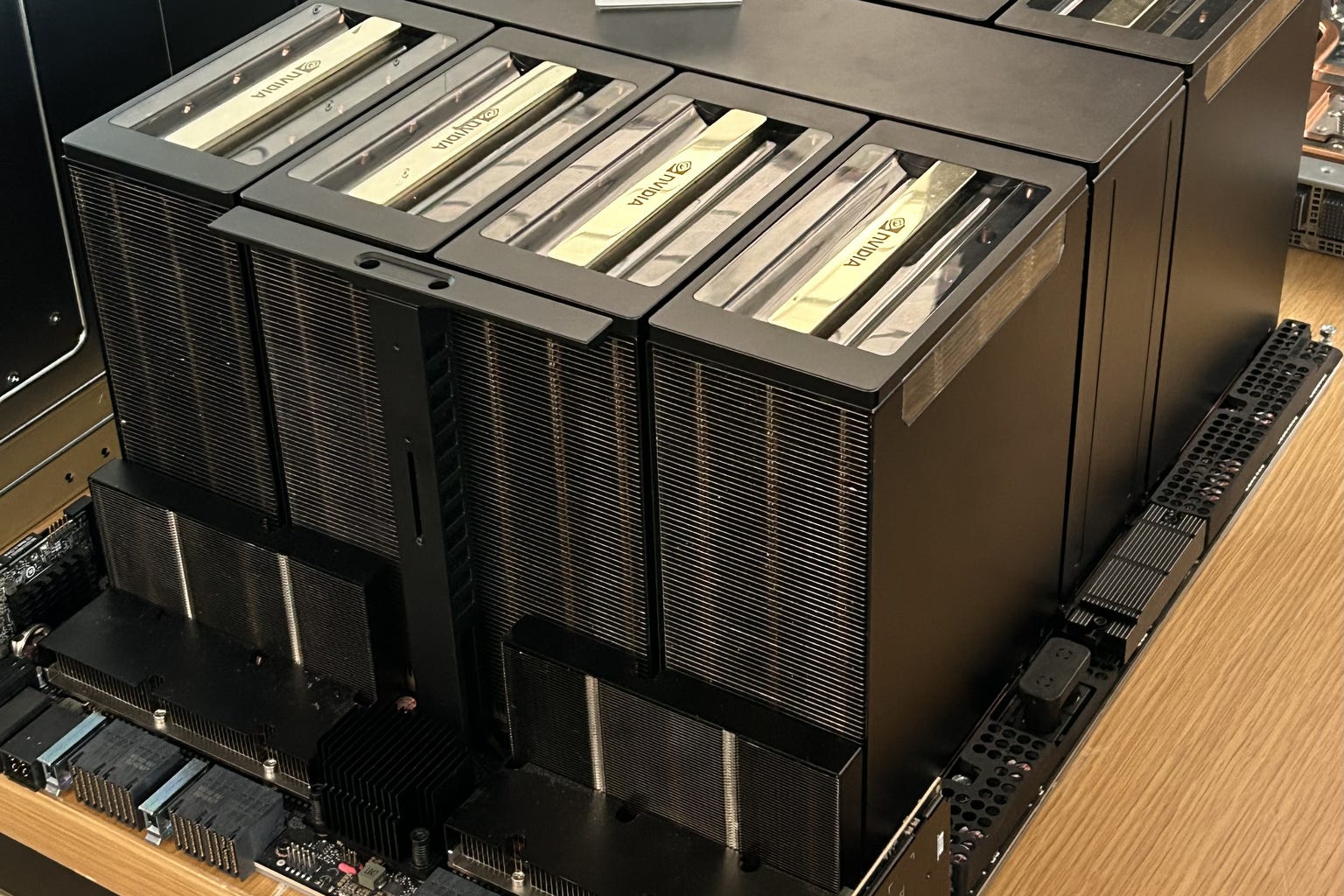
Cover photograph: Pokiiri, CC BY-SA 4.0, via Wikimedia Commons.