


This is a detailed research piece. If you find value in institutional-quality hedge fund analysis, support this work on Patreon.
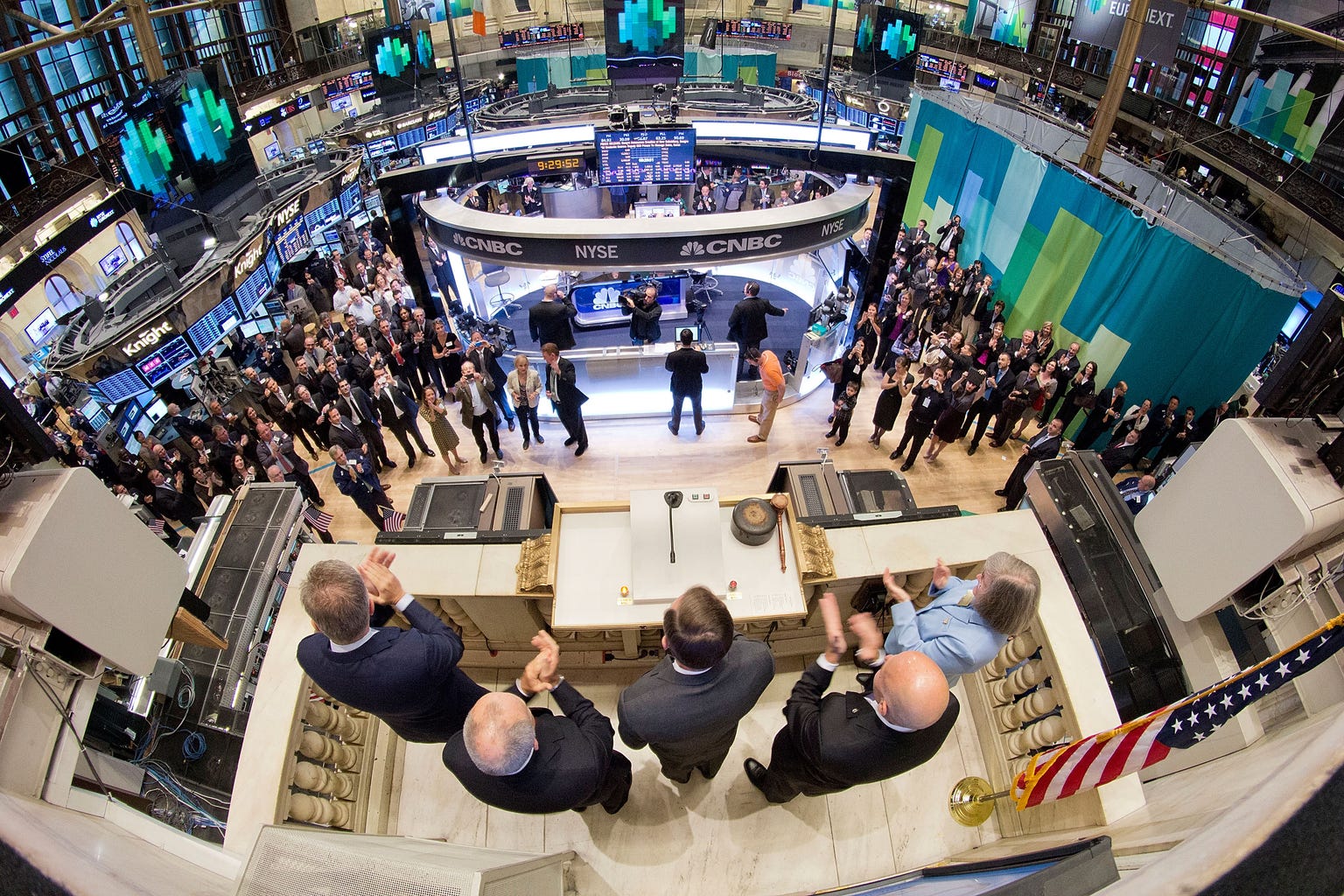
On June 28, 2024, $219.6 billion in U.S. stocks traded at the market close during Russell Reconstitution — the single largest predictable liquidity event in global equities.¹ Trading volume spiked 220% higher in the final 30 minutes compared to typical days.²
For years, elite multi-strategy hedge funds — Millennium, Citadel, ExodusPoint, Balyasny, Point72 — extracted massive returns by front-running these predictable flows. Then June 2022 exposed the strategy’s fatal flaw: when timing becomes overcrowded, the edge inverts catastrophically.
The Setup: Predictable Flows Meet Timing Arbitrage
$10.6 trillion is benchmarked to Russell U.S. indexes, with $2 trillion tracking passively.³ Every June, FTSE Russell reconstitutes its indexes based on market cap rankings from April 30 “Rank Day.” Preliminary addition/deletion lists are published in late May with weekly updates through mid-to-late June (2024: May 24, May 31, June 7, 14, 21).⁴
The changes are ~95% predictable weeks in advance because Russell uses objective market cap cutoffs. Index funds minimize tracking error by executing at the 4:00 PM ET closing auction on reconstitution day, creating massive concentrated demand.
Passive fund holdings by float:
Large-caps: 21% of float held by Russell 1000 and S&P 500 trackers
Small-caps: 10% held by Russell 2000 funds
Combined: Up to 27–28% for stocks in multiple indexes⁵
Trade Structure: Liquidity Provision as Alpha
Long/Short Equity Timing: Buy projected additions, short projected deletions, starting up to 5 months before reconstitution. Liquidity for Russell 2000 additions increases 5 months prior as hedge funds accumulate positions to sell to index funds on rebalance day.⁶
Execution Concentration: In 2022, the closing auction traded 10 days of normal volume in the instant of the 4:00 PM close, while pre-close minutes were just 1% of daily volume.⁷ Index funds concentrate 90%+ of rebalancing in Market-On-Close orders.
The Counterparty Trade: Hedge funds warehouse inventory for months, then sell liquidity to passive funds executing $200B+ in minutes. The profit: bid-ask spread × massive flow × predictable timing.
P&L Mechanics: The Wealth Transfer
Academic research quantifies the cost: Russell 2000 index fund investors lose 1.84% annually to arbitrage — approximately $800 million per year with $43 billion indexed (estimates from early 2000s data).⁸ This wealth transfers directly to arbitrageurs who time execution correctly.
Historical Returns: From 1996–2001, the strategy produced “economically and statistically significant abnormal returns” by supplying immediacy to passive funds.⁹ Millennium’s SRBL team, led by Glen Scheinberg, “quietly minted billions of dollars” in returns, becoming the firm’s top performer through index arbitrage.¹⁰
The June 2022 Blowup
Success attracted copycats. By 2022, Citadel, ExodusPoint, Balyasny, Schonfeld, and Point72 had all built dedicated index arbitrage teams.¹¹ The trade became overcrowded.
The preliminary list dropped June 3, 2022. Russell 2000 additions fell 11.1% after announcement instead of rising (Wells Fargo data).¹² Energy sector concentration amplified losses: many 2022 additions were energy stocks. Energy had gained 30% YTD but then crashed 21% from its June 8th peak through late June. The broader market also declined sharply in this period.
The Reversal: Prospective index additions — which typically rally pre-reconstitution — instead fell sharply in June 2022, with the most affected names heavily concentrated in volatile sectors. The losses breached drawdown limits and “capsized a number of teams” at Millennium, ExodusPoint, and other multi-strats.¹³
Millennium’s SRBL team, despite being well-hedged, experienced swings exceeding $500 million from peak to trough.¹⁴ Industry-wide, the trade was described as a “bloodbath” as forced selling from breached risk limits amplified the move.¹⁵
The 2025 Sequel
In March 2025, two Millennium index rebalancing teams lost approximately $900 million — the firm’s first monthly loss exceeding 1% since 2018.¹⁶ The losses came from “missed bets on index rebalancing” during heightened market volatility.¹⁷
Key Quant Insight: Timing Without Infrastructure
Russell arbitrage is pure execution timing arbitrage — no co-location, no microsecond latency, no HFT infrastructure required. The alpha derives from:
Predictability: Rule-based reconstitution enables 95%+ forecast accuracy
Forced Flow: Passive funds must execute at close to minimize tracking error
Timing Compression: 220% volume spike in final 30 minutes creates extreme price pressure
Liquidity Provision: Earning the spread on warehousing inventory for predictable institutional flows
The edge isn’t speed — it’s willingness to hold concentrated positions for months and execute opposite to massive, predictable flows at a specific time window.
Lesson: When Timing Becomes Consensus
The strategy demonstrates how predictable institutional flows create timing-based alpha that scales with capital, not technology. But once capital floods in, the timing advantage inverts.
Crowding Math: When multiple multi-billion dollar pods hold identical positions for months, exit becomes impossible. In 2022, everyone positioned to sell liquidity found no buyer except other hedge funds unwinding. The June 2022 blowup wasn’t a model failure — it was a liquidity cascade when timing execution became overcrowded.
Academic research predicted this: “There is evidence that this kind of trade made money in the past…But…this so-called ‘index effect’ has been disappearing” due to “increasing liquidity around index change events” as Wall Street allocated more resources to the strategy.¹⁸
Russell arbitrage reveals a fundamental tension in quantitative finance: strategies based on predictable flows work until they don’t. The timing edge exists only while capital allocation remains sub-optimal. Once the industry piles in, the very predictability that created the opportunity ensures synchronized exits — transforming a timing advantage into a crowded trap.
Sources
2025 Russell US Indexes Reconstitution Recap — FTSE Russell/LSEG (Official reconstitution data: $219.6B traded June 28, 2024)
Into the Close: U.S. Closing Auction Dynamics and Russell Reconstitution — BMLL Technology, June 24, 2025 (220% volume spike data)
FTSE Russell Begins 37th Annual Russell Reconstitution — LSEG, 2025 ($10.6T benchmarked, $2T passive)
Russell Reconstitution — FTSE Russell (Official timeline and methodology)
Analyzing the Russell Indexes Last Annual Reconstitution — Nasdaq (Passive ownership data: 21%/10% float holdings)
Russell Recon Is a Big Day for Small-Cap Companies — Nasdaq (5-month liquidity buildup, 10-day volume concentration)
Russell Recon Is a Big Day for Small-Cap Companies — Nasdaq (Closing auction mechanics)
Index Changes and Losses to Index Fund Investors — Chen, Noronha & Singal, Financial Analysts Journal (1.84% annual loss estimate)
The Russell Reconstitution Effect — Madhavan, SSRN, July 2001 (Academic foundation)
The 2022 Russell Rebalancing: What You Need to Know — Business Insider, June 2022 (Millennium SRBL performance)
An Overcrowded Russell Rebalance — Resonanz Capital, June 12, 2023 (Multi-strat index arb team proliferation)
Russell Rebalance: Jittery Markets Switch Winners and Losers — Bloomberg, June 24, 2022 (11.1% addition decline, Wells Fargo data)
The 2022 Russell Rebalancing Is Causing Panic and Pain — Yahoo Finance, June 24, 2022 (Overcrowding, “bloodbath” reporting)
The 2022 Russell Rebalancing: What You Need to Know — Business Insider, June 2022 (SRBL $500M+ swings)
The 2022 Russell Rebalancing Is Causing Panic and Pain — Yahoo Finance, June 24, 2022 (Industry-wide losses)
Millennium Loses $900 Million on Strategy Roiled by Market Chaos — Bloomberg, March 8, 2025 (Primary source: $900M loss)
Multistrategy Hedge Funds’ Haven Appeal Tested — BNN Bloomberg, March 13, 2025 (Context on 2025 losses)
Why a No-Drama Approach Helps Russell Index Users — LSEG Insights (Academic research on disappearing index effect)
Verification Note: All trading volumes, loss figures, dates, and academic estimates have been cross-referenced against primary sources including FTSE Russell official releases, Bloomberg terminal data, academic papers (Chen et al., Madhavan), and exchange announcements from Nasdaq and NYSE. The 2022 event details are corroborated by contemporaneous financial reporting from Bloomberg, Business Insider, and Yahoo Finance. The March 2025 Millennium losses are sourced from Bloomberg’s primary reporting.
📊 Support this research: https://www.patreon.com/c/NavnoorBawa
Cover photograph: The Central Intelligence Agency, public domain, via Wikimedia Commons.