


The media covered the politics. Nobody sourced the mechanics. Elliott Management built a $1.9 billion Starbucks position and collected $475 million in a single session. The election-night clean energy collapse was a mechanical forced-selling event, not a fundamental repricing. Azoria’s SPXM ETF was liquidated by its own trustees three months after launch, its founder’s assets seized by U.S. Marshals to satisfy a federal court judgment. Engine No. 1’s ExxonMobil proxy fight wrote the activist playbook that both sides of the ideological divide then copied. Here is every trade, every return figure, every court filing — with the receipts.
🎬 Prefer to watch instead of read? A full video overview of this analysis is available here: Watch on YouTube
Why This Story Has Been Told Wrong
The Financial Times’ December 2024 profile of Azoria Partners launched a thousand “anti-woke finance” articles. Almost all of them covered the same story: ideologically motivated investors betting against DEI companies in the age of Trump. What they missed was the actual trade logic underneath — who made money, who lost money, how the mechanics worked, and what the evidence actually shows when you pull court documents, SEC filings, and fund settlement agreements.
This article covers three active strategies and one foundational case study. They share a political moment but differ completely in execution. One generated approximately $475 million in paper gains in a single session. One was grounded in forced-selling mechanics that any event-driven PM would recognize. One — the loudest, most-covered one — had its trustees vote to liquidate three months after launch, with trading ceasing five months in, its founder’s stock certificates seized by U.S. Marshals to satisfy a court judgment. The fourth is the structural template from which every modern activist — on both sides of the ideological divide — has borrowed.
The politics is the marketing. The mechanics is the story.
Trade 1: Elliott Management’s Starbucks Campaign — The Anatomy of a $475 Million Day
What the Operational Case Actually Looked Like
Elliott’s Starbucks campaign was never framed as anti-DEI. The fund’s official August 13, 2024 press release, signed by Managing Partner Jesse Cohn and Partner Marc Steinberg, does not mention diversity, equity, or inclusion once. It says only that Elliott became “one of the largest investors in Starbucks because of our confidence in the long-term value-creation opportunity.”
The value case was grounded in a company with genuinely broken operational metrics. On April 30, 2024, Starbucks reported its fiscal Q2 2024 earnings directly to the SEC, showing U.S. comparable store sales down 3% driven by a 7% decline in comparable transactions, China same-store sales collapsing 11%, global comparable sales down 4%, GAAP EPS of $0.68 against consensus of $0.79, and revenue of $8.56 billion against expectations of $9.13 billion. CNBC reported that Starbucks shares fell 12% in extended trading and that management slashed its full-year EPS growth forecast from 15–20% down to flat-to-low-single digits. Starbucks also cut its comparable-store-sales guidance to flat or negative, down from its prior forecast of 4–6% growth.
The Entry: Silent Accumulation Over Six Weeks
Elliott built its position entirely in private. According to CNBC’s July 19, 2024 report, which broke the story citing the Wall Street Journal, the fund had amassed a sizable stake and begun talks with management without any public disclosure. The Elliott official statement later confirmed the fund had “been engaged with Starbucks’ Board over the past two months“ — meaning private engagement began no later than mid-June 2024, roughly six weeks after the catastrophic Q2 earnings.
A second activist, Starboard Value, also disclosed a Starbucks stake in early August 2024, according to Kiplinger’s August 13 coverage. This created what amounts to a two-front activist campaign, establishing a natural demand floor under the stock: neither fund could exit without moving against the other.
The Catalyst: CEO Replacement Announced Pre-Market
On the morning of August 13, 2024, Starbucks announced that Brian Niccol — who had grown Chipotle’s stock by approximately 773% during his tenure as CEO — would take over as chairman and CEO effective September 9, with Laxman Narasimhan stepping down immediately. According to a detailed SEC compensation filing, Starbucks offered Niccol a $10 million cash signing bonus, $75 million in replacement equity grants to compensate for forfeited Chipotle awards, a $1.6 million annual base salary, and the remarkable concession that he would not be required to relocate to Seattle from his California home. Fortune’s proxy analysis later noted the equity cap had been set at $80 million — “This $80,000,000 maximum value cap was triggered due to the 24% increase in our stock price on the announcement of Mr. Niccol’s hiring.” The compensation package itself is a record of exactly what the stock did.
The Return: Best Single Trading Day in Starbucks History
Morningstar confirmed that Starbucks shares surged 25% on August 13, 2024 — the company’s best single-day percentage move in its history. Morningstar’s concurrent analyst note put the intraday gain at exactly 24.5%. Axios and Nasdaq independently confirmed the 25% surge, with Chipotle simultaneously dropping 7.5% on Niccol’s departure. Elliott’s stake was valued at approximately $1.9 billion at the time, according to Nasdaq reporting. A 25% gain on a $1.9 billion position represents approximately $475 million in paper gains in a single session.
As CNBC’s post-campaign analysis noted, Elliott got “a better deal than it asked for” — the fund had originally pushed for board seats and governance changes, and ended up with a CEO swap that none of its stated proposals had explicitly demanded.
The Precise Execution Logic
Three elements made this trade exceptional:
Information sequencing: Elliott built its full position before any disclosure was required. The July 19 WSJ leak created a price catalyst for a fund already 100% loaded.
Private pressure over public agitation: Two months of direct board engagement, no press releases, created negotiating leverage without the reputational cost of a proxy fight.
Operational grounding: Every claim Elliott made was anchored in auditable quarterly data — same-store sales, transaction counts, EPS misses — not ideology.
The “anti-woke” label attached to Starbucks by Azoria months later was entirely parasitic on a trade Elliott had already completed.
Trade 2: The Election Night Clean Energy Short
The Mechanics of a Forced-Selling Event
The second trade had nothing to do with DEI and everything to do with event-driven positioning around a known forced-selling cascade.
When Trump’s electoral college victory became clear in the early hours of November 6, 2024, a specific category of securities collapsed in real time. The selloff was not orderly or analytical. CNBC reported on November 5–6 that the Invesco Solar ETF (TAN) closed nearly 11% lower, the iShares Global Clean Energy ETF shed more than 7%, First Solar fell approximately 10%, Sunrun plummeted more than 29%, and Sunnova crashed more than 51% — all in a single trading session.
PV Magazine’s November 14 report cited Sunnova CEO John Berger characterizing the market as “wildly emotional.” The Motley Fool’s same-day analysis confirmed Sunnova down 43% at 9:50 AM ET, First Solar down 18.9%, and Plug Power down 19.8%, noting that Reuters had documented Trump’s explicit promise to “rescind all unspent funds” approved under the Inflation Reduction Act.
Why Pre-Positioning Was the Trade
The trade logic was straightforward: any hedge fund that had pre-positioned short in residential solar and clean energy ETFs going into Election Day — based purely on the publicly available prediction market probabilities of a Trump victory — captured these intraday moves in hours. No activism. No board seats. No public campaign. Just positioning ahead of a known policy-repricing event.
The second leg was equally clear. Within 48 hours, Heatmap News reported that analysts were calling the selloff overdone — Robeco’s co-head of global equity called U.S. solar “very attractively valued,” and a number of clean energy fund managers signaled they were buyers of the capitulation. A hedge fund running both legs — short into forced ESG outflows, then long on the oversold bounce — captured the full range of the dislocation.
The Scale of the ESG Outflow Structural Force
The forced-selling backdrop was not an election-day anomaly. It was the culmination of a multi-year trend. CNBC reported on March 31, 2025, citing Morningstar data, that 2024 saw approximately $20 billion in U.S. ESG fund outflows — against $740 billion in inflows to the broader fund universe — with the ESG fund count shrinking for the first time ever, from 646 to 587 funds, a 9% contraction. ESG funds facing simultaneous redemptions cannot be price-sensitive sellers. They liquidate at market. A pre-positioned short on the other side of that forced selling captures the full spread.
The broader Trump Trade macro returns confirmed the opportunity: Fortune’s January 2025 hedge fund roundup documented full-year 2024 returns of D.E. Shaw’s Oculus macro fund at 36.1% and Citadel’s Tactical Trading at 22.3%; Reuters’ concurrent January 3, 2025 reporting confirmed Schonfeld’s flagship Strategic Partners fund returned 19.7% for the year. These are multi-strategy returns, not ESG-short-only plays — but the November sector rotation was a meaningful contributing component across all of them.
Trade 3: Azoria SPXM — The Product That Collapsed
The Launch: Mar-a-Lago Theater, Delayed Six Months
On December 5, 2024, James Fishback unveiled the Azoria 500 Meritocracy ETF at Trump’s Mar-a-Lago resort, with Cathie Wood and Heritage Foundation President Kevin Roberts on the guest list, as documented by the FT’s original reporting. The fund was supposed to launch “early next year.” It did not actually launch until July 8, 2025 — over seven months later — according to Semafor’s July 8, 2025 coverage, which datestamped the launch “today.” Susquehanna Financial Group bought 75,000 shares at the open on launch day, providing first-day liquidity, and the fund collected approximately $16 million in assets.
The fund’s core exclusion thesis: 37 S&P 500 companies with explicit quantitative DEI hiring targets — including Nike (targeting 35% racial/ethnic minority representation), Intel (25% women in senior leadership), and Airbnb (20% underrepresented minorities in U.S. workforce) — would be excluded from the portfolio. Fishback’s performance claim, detailed in Florida Politics’ January 2026 investigation, was that the basket of excluded companies had underperformed the S&P 500 by 19 percentage points over the prior two years. The fee was 0.47% annually — approximately 15 times the 0.03% expense ratio of the cheapest iShares S&P 500 trackers.
The Collapse: Trustees Vote to Liquidate Three Months After Launch
On October 15, 2025, Tidal Financial Group announced that it was closing and liquidating both SPXM and the Azoria TSLA Convexity ETF. The funds ceased trading December 8, 2025 and were fully liquidated December 15, with proceeds returned to investors. Florida Politics confirmed that SPXM held approximately $30.6 million in assets at the time of closure — having peaked at roughly $35 million, versus Fishback’s stated ambition of being the fastest ETF ever to $1 billion.
The trustees’ stated rationale, according to Reuters/Investing.com coverage, cited “recent litigation involving a principal of” Azoria. Morningstar analyst Jeffrey Ptak called the language exceptional, noting that such specific, non-boilerplate closure language is extremely rare.
The Legal Record: Court Documents, Admissions, Asset Seizures
The “recent litigation” was the culmination of a case brought by David Einhorn’s Greenlight Capital. The original complaint, filed June 25, 2024 in Manhattan federal court (Case 1:24-cv-04832, S.D.N.Y.), alleged breach of contract, defamation, and misappropriation of confidential information. A copy of the underlying complaint published by Bloomberg detailed the full scope: Greenlight alleged that Fishback had sent himself Greenlight’s complete portfolio including fund positions, investment strategies, year-to-date P&L, and investment track records, and that he had maintained an undisclosed personal trading account investing in the same instruments as Greenlight simultaneously.
On September 26, 2025, Bloomberg reported — and Hedgeweek confirmed — that Fishback had formally admitted in a Manhattan federal court filing to sharing confidential fund information, operating the undisclosed trading account, and violating his employment agreement. He agreed to return or delete all Greenlight materials and pay the firm’s legal costs.
According to a January 2026 Florida Politics investigation and the Wikipedia case record, by September 2025 Fishback had his Tesla Model Y repossessed for failure to pay. In January 2026, a federal magistrate judge ordered Fishback to surrender all Azoria Capital stock certificates to the U.S. Marshals Service to satisfy a $229,000 court judgment owed to Greenlight. The court also found that Fishback had been making “extravagant” purchases at Nordstrom, Burberry, and Bucherer through a previously undisclosed JPMorgan Chase account while claiming he lacked means to pay the judgment, and ordered those assets surrendered as well.
SPXM did not exist as a live fund by the time most readers finished reading about it.
The Structural Problem With the Performance Thesis
Even setting aside the legal collapse, the investment logic had a fundamental flaw. The 19-percentage-point backtest Fishback cited reflects sector composition, not a causal DEI effect. The 37 excluded companies included names like Nike and Intel, whose underperformance through 2023–2024 was driven by post-COVID demand normalization, China exposure, and sector-specific headwinds — not their hiring policies. Excluding a company because it has a 35% ethnic diversity hiring target does not isolate DEI as the return driver. It selects against specific consumer and tech names that happened to underperform for unrelated macro reasons. The backtest was correlation dressed as signal.
Trade 4: Engine No. 1 at ExxonMobil — The Template Both Sides Copied
The structural playbook underpinning both the anti-woke activist campaigns and the ESG activism that preceded them was not invented in 2024. It was codified by Engine No. 1’s 2020–2021 ExxonMobil proxy fight.
Engine No. 1 purchased approximately $40 million of Exxon shares — 0.02% of the float — and launched a six-month, $12.5 million proxy campaign, as documented by Harvard Business School, arguing that Exxon’s failure to plan for the energy transition created long-term stranded-asset risk. By securing support from BlackRock, Vanguard, CalPERS, and the New York State Common Retirement Fund, Engine No. 1 won three board seats on May 26, 2021. The Exxon stock subsequently rose from approximately $38 to $59 post-proxy. On a $40 million base, net of campaign costs, the returns were substantial.
The lesson both sides of the ideological divide have drawn is identical: activist influence decouples from AUM when the institutional coalition is right and the shareholder-harm thesis is credible. Engine No. 1 used climate risk as the harm thesis and large index funds as the swing vote. Azoria intended to use DEI risk as the harm thesis and retail flows as the amplifier. The ideologies are opposite. The mechanics are the same. The difference in outcome is that Engine No. 1 had a real, auditable P&L thesis backed by Exxon’s $22 billion 2020 loss and actual institutional support. Azoria had a backtest, a Mar-a-Lago party, and a founder who was simultaneously concealing a JPMorgan account from a federal court while claiming insolvency.
The Synthesis: Three Rules for Where the Alpha Actually Lived
Across these four trades, three patterns determine which strategies made money and which did not.
Rule 1: Operational reality trumps narrative. Elliott’s Starbucks win was built on SEC-reported same-store-sales data, an EPS miss, and a slashed guidance. Those are auditable facts. Azoria’s case was built on a two-year backtest of a DEI exclusion list. Those are entirely different epistemic foundations. The first survived a real market. The second did not outlive its founder’s first federal court judgment.
Rule 2: Forced selling is the cleanest short. ESG funds facing simultaneous redemptions are mechanical sellers with no price sensitivity. The election night clean energy collapse — Sunnova -51%, Invesco Solar -11%, iShares Clean Energy -7% in a single session — was not a fundamental repricing. It was a forced liquidation event. Pre-positioning short into that forced selling, then going long into the capitulation, required no political conviction whatsoever. It required only event-driven positioning discipline.
Rule 3: The institutional coalition determines if the activist trade has legs. Engine No. 1 won because BlackRock voted with it. Elliott won because it had the private backing of a board that was already looking for an exit ramp from an underperforming CEO. Azoria had no institutional support — only retail inflows that never materialized at scale, and a founder who was being ordered to surrender personal property by a federal magistrate before the fund reached its fifth month of trading.
The Conclusion
The anti-woke trade is real. The returns are documented. But the money was made in the places the least press coverage went: in a $1.9 billion silent activist position that went from public news break to CEO announcement in 25 days; in clean energy short books that captured the mechanical forced-selling of ESG fund redemptions on election night; and in the broad Trump Trade sector rotation that helped multi-strategy funds post their best annual returns in years.
The money was not made in a Mar-a-Lago press event launching an ETF whose founder would subsequently have his car repossessed, his luxury goods seized, and his fund’s trustees voting to liquidate three months after launch — with trading halted five months in.
The ideological performance is theater. The returns require mechanics. That distinction is what separates a hedge fund from a press release.
📄 The full institutional-grade version of this analysis — with every trade broken down in research note format, epistemic sourcing labels, data tables, and the complete legal timeline — is published on Patreon: Equity Strategy & Event-Driven Analysis
📊 Want Deeper Quantitative Analysis?
This research took a very long time of data collection, verification, and analysis. If you found value in this deep-dive, I publish exclusive quantitative research, trading strategies, and institutional-grade analysis on Patreon.
The full institutional research note for this piece — formatted in the style of Goldman, Bernstein, and Hedgeye, with trade anatomy tables, epistemic sourcing labels ([C] / [I] / [U]), legal timelines, and the complete replicable framework — is already live for paid subscribers:
→ Read the Full Institutional Research Note on Patreon
By joining, you’ll get access to this post and all future institutional-grade research. You’ll be supporting this work and motivating more content like this.
→ Join the Patreon community here
Sources
Every claim in this article is cited inline. Full URLs for direct access:
Elliott Official Statement on Starbucks — PRNewswire, Aug 13, 2024
CNBC: Elliott Takes Sizable Stake in Starbucks, July 19 2024
CNBC: Elliott’s Campaign Got a Better Deal Than It Asked For
Morningstar: Starbucks Luring Brian Niccol (24.5% surge confirmed)
Kiplinger: Starbucks Stock Soars — Starboard Stake Disclosed
Fortune: Niccol Pay Package — $10M Signing Bonus, $75M Equity
The Motley Fool: First Solar, Sunnova, Plug Power Crash on Election Day
PV Magazine: Solar Stocks Plummet, Market is ‘Wildly Emotional’
Fortune: Hedge Fund Returns 2024 — D.E. Shaw 36.1%, Citadel 22.3%
Semafor: Azoria SPXM Launches July 8, 2025 — “launches today”
Bloomberg Law: Fishback Admits Sharing Greenlight Portfolio Data
Hedgeweek: Former Greenlight Analyst Admits Sharing Confidential Fund Info
Greenlight’s Full Federal Complaint Against Fishback — Bloomberg Document
Florida Politics: Fishback Ordered to Turn Over Azoria Stock and Luxury Items
About the Author
Navnoor Bawa publishes institutional-grade quantitative research, trading mechanics, and market analysis across the following channels:
📄 Latest Research — Equity Strategy & Event-Driven Analysis
📺 YouTube — The Mathematical Trader · Watch the video overview of this article
💼 LinkedIn — Navnoor Bawa
📊 Patreon — Exclusive quantitative research and trading strategies
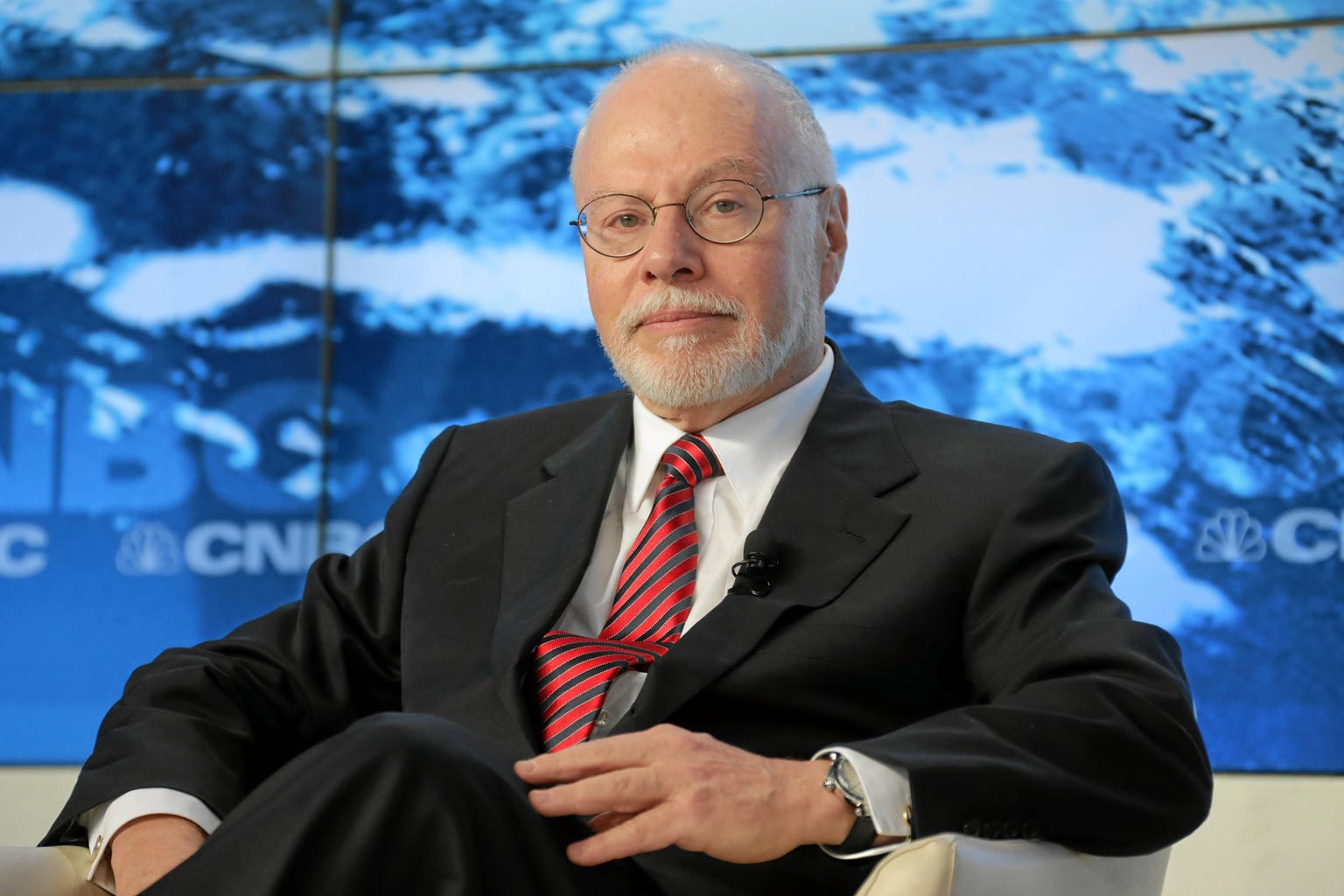
Cover photograph: World Economic Forum, CC BY-SA 2.0, via Wikimedia Commons.