


🎬 Prefer to watch rather than read? A NotebookLM-generated video overview of this article is available here: Watch the video overview → Full analysis, citations, and data remain in the article below.
The Entry Price Nobody Discusses
The public price of AXS — Axie Infinity’s governance token — was $0.10 when it launched on Binance in November 2020. The funds that mattered did not pay that.
According to reporting by CoinDesk citing Axie Infinity’s own whitepaper and confirmed by blockchain analytics firm Nansen, Axie raised $864,000 in a private token sale in mid-2020, selling 10.8 million AXS tokens at a price of $0.08 per token — the math being $0.08 × 10.8M = $864,000. Five institutional names participated in that private sale: Arca, DeFiance Capital, Delphi Digital, Hashed, and Three Arrows Capital (3AC).
When those tokens vested in October 2022, on-chain analytics platform Nansen identified the specific wallet addresses — as documented in CoinDesk’s coverage of the unlock event:
Delphi Digital: 750,000 tokens (cost basis at $0.08: ~$60,000)
DeFiance Capital: 160,000 tokens (cost basis: ~$12,800)
Arca: 437,500 tokens (cost basis: ~$35,000)
AXS reached an all-time high of $164.90 on or around November 6, 2021 — CoinGecko records the date as November 6; CoinLore records it as November 7. The price of $164.90 is consistent across both sources. At that price:
Delphi Digital’s 750,000 tokens were worth $123.75 million — a 2,062x return on ~$60,000
DeFiance Capital’s 160,000 tokens were worth $26.4 million — a 2,062x return on ~$12,800
Arca’s 437,500 tokens were worth $72.2 million — a 2,062x return on ~$35,000
Even at the severely depressed $9 price level during the October 2022 unlock, early private sale investors were still sitting on 11,150% profits. Per the same CoinDesk report, Arca deposited all 437,500 of its tokens directly to FTX the moment they were unlocked — an immediate liquidity event confirming they exited the position on receipt.
This is not a speculative account. Every number above is on-chain, identified by Nansen, and reported by CoinDesk with named wallet owners.
📊 Want deeper quantitative analysis?
This research required extensive data collection, verification, and analysis. If you found value in this breakdown, I publish exclusive quantitative research, trading strategies, and institutional-grade analysis for serious readers.
By joining, you directly support this work and make more research like this possible.
→ Join the Patreon community here
Why These Funds Saw It: The Analytical Edge
Delphi Digital: Tokenomics Architect
Delphi Digital did not merely buy into the AXS private sale — they helped design the AXS token itself, working directly with Sky Mavis on token economics before the public launch. The October 2020 TokenSmart newsletter documenting the AXS launch explicitly noted: “Crypto research firm Delphi Digital...helped the Axie Infinity team design the token.”
That is the alpha no one discusses: the tokenomics architect knows the vesting schedule, the supply unlock cadence, the demand sinks, and the governance rights built into the protocol before any of that information is public. Delphi’s $60,000 investment was underwritten with private knowledge of exactly how the token economy would unfold — information that no secondary market buyer could access.
Delphi had also made its broader bet on Axie’s in-game economy visible even earlier. In September 2020, Delphi purchased five rare “mystic” Axie NFTs for $162,000, articulating the thesis publicly through co-founder Medio Demarco: “As the game increases in popularity, the value of these NFTs can also rise given their rarity and utility...They can also be used to generate a yield from battling and breeding them.” This was before the AXS token existed. Delphi was already treating in-game assets as yield-bearing instruments 14 months before AXS peaked.
DeFiance Capital: Revenue-First Fundamental Analysis
Arthur Cheong, Founding Partner of DeFiance Capital, applied a discipline trained from his previous career at BP — where he learned to analyze production economics and commodity flow — to on-chain protocol revenue data. In a January 2022 interview with WealthBriefingAsia, Cheong stated DeFiance was “an early investor in DeFi projects including...Axie Infinity,” and that by October 2021, Axie had “generated more than $2.5 billion in trading volume” with “over 1.4 million active users globally.” He used real-time on-chain revenue as the primary investment signal — the same data that Token Terminal was publishing publicly but that few generalist allocators were monitoring.
DeFiance Capital grew from inception in 2020 to approximately $1 billion in AUM by early 2022, fueled in part by its early positioning in gaming tokens like AXS and the DeFi protocols that underpinned them.
Arca: Treating AXS as a Traditional Equity
Jeff Dorman, CIO of Arca and a former Lehman Brothers investment banking analyst and Citadel bond trader, published a public investment thesis on Axie Infinity on July 12, 2021 in his “That’s Our Two Satoshis” newsletter. His argument was deliberately equity-analytic: “Axie Infinity is a company with a CEO, a parent company with privately owned equity, a real business model and rapidly growing revenues, all of which existed prior to Axie issuing its AXS token. The token was issued to help bootstrap the growth of the company.”
This is an equity investor’s framework applied to a gaming token. While retail treated AXS as a meme, Dorman was underwriting it like a pre-revenue company that had just become a revenue-generating business. When asked about Axie’s revenue growth directly by The Defiant in August 2021, Dorman said via Twitter DM: “User growth and revenues are exploding.” The investment was already returning 100x+ by that point. He was still bullish.
The Revenue Signal: On-Chain Data as Alpha
The critical underwriting signal that separated the funds from the crowd was real-time protocol revenue — publicly available on Token Terminal, but requiring specialized blockchain analytical frameworks to extract and interpret correctly.
The revenue trajectory was extraordinary:
January 2021: Axie Infinity generated $100,000 in monthly platform revenue
July 2021: $196 million in monthly revenue — a 1,960x increase in six months
August 2021: $342–364 million in monthly revenue, per Token Terminal — making Axie the single highest-revenue application on the Ethereum network, surpassing Ethereum itself on a rolling 30-day basis ($305M vs $91.4M for Ethereum as of August 12, per Token Terminal data reported by The Defiant).
Full year 2021: Sky Mavis generated $1.3 billion in revenue — confirmed years later in CEO Nguyen Thanh Trung’s own public statements during a 2024 restructuring announcement
This revenue data was publicly auditable on-chain at all times. The managers who tracked it had a 90-day head start on the generalist market in recognizing the demand signal. The AXS token posted a year-to-date return of over 7,000% by late July 2021, per Messari data, compared to Bitcoin’s +33% and Ether’s +212%. By year-end 2021, any January 1 buyer saw over 30,000% year-to-date gains.
The Institutional Bet Formalization: a16z’s $152 Million Signal
The clearest signal that gaming currencies had entered institutional underwriting came in October 2021, when Andreessen Horowitz led a $152 million Series B investment in Sky Mavis at a $3 billion valuation, with Paradigm and Accel co-investing. a16z General Partner Arianna Simpson stated: “The Axie team has triggered an earthquake in gaming and the industry is now forever changed.”
The a16z investment memo laid out the data that justified the valuation: 1.8 million daily active users, $33 million in daily transactions, $2 billion in total transaction volume — all before the game reached Apple or Google app stores. This was a venture capital underwrite of a gaming currency economy, not a game. The ecosystem’s financial metrics — not its gameplay quality — justified the $3 billion number.
In total, 28 institutional investors poured approximately $311 million into Sky Mavis across four funding rounds. The named investors include a16z, Paradigm, Accel, Samsung Next, Mark Cuban, and Animoca Brands.
The Guild Vehicle: Yield Fund Architecture Applied to Gaming NFTs
While the token trade was the highest-returning play, the most structurally novel institutional vehicle was the gaming guild. Yield Guild Games (YGG), founded in the Philippines, operated economically like a closed-end fund: it purchased gaming NFTs as productive assets, lent them to “scholars,” collected yield on earnings, and reinvested into early-stage positions in new games.
The investment thesis was published in institutional memos with specific financial backing:
Andreessen Horowitz led a $4.6 million pre-IDO financing round, noting in their public investment memo: “With 4,700+ scholars, and over $8.6 million earned, YGG is now paying out over $1 million weekly”
By end of July 2021, the YGG treasury held 19,460 NFTs valued at over $10 million across 12 games, plus early-stage token investments across 8 games via SAFTs. The treasury stood at $415 million total
After the YGG governance token tripled in August 2021, the treasury exceeded $1 billion
YGG co-founder Gabby Dizon explained the guild’s operational mechanics publicly in an interview with Naavik: “We invest, which means that we have an investment team that’s getting into private rounds, buying tokens and NFTs. We try to get in as early as possible, similar to a VC investor, but we don’t buy any part of the company. We’re only interested in the assets of the game and the tokens that represent the game economy.”
This is institutional asset management language — early-stage private rounds, portfolio construction, treasury management — applied to a play-to-earn gaming economy.
The CS2 Skin Trade: A Decade of Alpha in Plain Sight
While the blockchain gaming story compressed into two years, a separate and far quieter gaming currency trade had been accumulating 40%-per-year returns since 2013 in the Counter-Strike skin economy.
A peer-reviewed study by HSE University economists Victoria Dobrynskaya and Vladimir Strelnikov, published in the Quarterly Journal of Finance and available as a working paper on SSRN and covered by EurekAlert, analyzed data on 4,565 CS:GO skins traded on the Steam platform between 2013 and 2024. The findings represent the most rigorous financial analysis of gaming currencies ever published:
Average annual portfolio return: 41.2% — multiple times higher than the S&P 500, REITs, bonds, or gold
Sharpe ratio: 0.34 — higher than the US stock market (0.25), Bitcoin (0.21), and gold (0.12)
Returns are statistically independent of equity market risk factors, providing genuine diversification
A separate ScienceDirect study confirmed the data using an expanded 2015–2025 dataset: diversified CS2 skin portfolios achieved average annual returns of up to 66.9%. The CS2 relaunch in 2023 pushed total skin market capitalization past $5 billion by mid-2025.
The risk-adjusted returns are the result of two durable structural mechanics: permanently fixed supply for discontinued collections, and a growing player base providing continuous demand. Market uncorrelation is confirmed by hard data: on August 5, 2024, when the Nasdaq 100 fell 4.77% and Bitcoin dropped over 10%, CS2 skins declined just 1.19%.
The HSE researchers’ note on market composition is the key institutional insight: “This market remains relatively unknown to outside investors, and most skin investments come from actual players.” The $4+ billion market is dominated by retail, with zero institutional competitive pressure. Research published in Frontiers in Artificial Intelligence demonstrated that peer-to-peer price discrepancies across platforms create systematic, exploitable short-term arbitrage opportunities — the same structural inefficiency that quant funds exploit in less-liquid equity markets.
The Equity Route: Robux Bookings as a Leading Indicator
For allocators constrained to public markets, the cleanest institutional entry into gaming currency economics was through the equities of companies whose revenue engines run entirely on proprietary virtual currencies.
Roblox (NYSE: RBLX) retains roughly a 30% platform share on Robux transactions and earns a commission when developers convert Robux to dollars via its DevEx program. In 2023, Roblox paid out $741 million to creators; that figure grew to $922.8 million in 2024, a 25% increase — simultaneously an expense line and a forward-looking indicator of platform transaction volume.
The accounting edge is structural: Robux purchases are booked as deferred revenue (”bookings”) before being recognized as GAAP revenue when virtual items are consumed. Analysts who track bookings — not reported revenue — see the revenue signal weeks before it appears in the income statement. In Q4 2025, Roblox reported bookings of $2.22 billion, up 63% year-over-year, with 144 million daily active users — a metric that a booking-aware analyst would have front-run against the GAAP-reading market.
On the private equity side, Animoca Brands — which invested in Sky Mavis (Axie Infinity), The Sandbox, Dapper Labs, and OpenSea — grew from a $1 billion valuation in May 2021 to a $6 billion valuation by August 2022, backed by Sequoia Capital, Ubisoft, and GGV Capital. According to Sacra’s company analysis, in 2021 Animoca generated $529.6 million from investment and digital asset gains alone — compared to $11.7 million the prior year — a 45x increase driven almost entirely by its gaming token and NFT portfolio appreciating in the same bull cycle. The daily trading volume of Animoca portfolio tokens at peak reached approximately $1.7 billion.
The Collapse: Court Documents and What They Prove
Three Arrows Capital and the NFT Implosion
In August 2021, Three Arrows Capital (3AC) and pseudonymous NFT collector Vincent Van Dough formed Starry Night Capital with the stated objective of “investing in the most desired NFTs.” According to a Bloomberg report cited by CoinGeek, the Starry Night portfolio was valued at approximately $35 million at the height of the NFT frenzy in 2021.
On June 27, 2022, a court in the British Virgin Islands ordered the liquidation of Three Arrows Capital, with Teneo Restructuring appointed as the joint liquidator. 3AC had failed to meet margin calls following the collapse of its approximately $200 million position in LUNA tokens in May 2022, and defaulted on a $670 million+ loan from Voyager Digital.
In a court filing published on October 5, 2022, Teneo confirmed it had taken possession of Starry Night Capital’s NFT portfolio: “Thanks to the cooperation of VincentVanDough, all Starry Night Capital NFTs...have been accounted for and are in our possession or are being transferred to us.” The filing confirmed the transfer of over 300 NFTs to a Gnosis Safe wallet under Teneo’s control, subject to the sanction of the BVI Court.
At the time of liquidation, Nansen analytics valued the Starry Night NFT collection at approximately 625 ETH — roughly $840,000–$861,000. The $35 million portfolio had declined to less than 2.5% of its original value.
3AC’s collapse was not caused by gaming assets — it was caused by LUNA and leverage. But the liquidation proceedings and Teneo’s court filings provide the first documented proof that hedge fund gaming asset positions have entered the formal insolvency process, with BVI and Singapore courts presiding over their disposal.
Multicoin Capital: The Investor Letter Record
Multicoin Capital’s annual investor letters — reviewed by The Block — provide the clearest public documentation of liquid gaming token hedge fund performance across a full cycle. The 2022 annual letter disclosed a 91.4% loss, driven primarily by FTX exposure, FTT, SOL, and SRM token positions. The investor letter explicitly named the loss sources, a level of transparency uncommon in traditional hedge fund communications.
The recovery, documented in a February 2024 investor letter reviewed by The Block, showed the fund had returned to 9,281% cumulative gain from October 2017 inception — with 537% gained in 2023 alone. Managing Partners Tushar Jain, Kyle Samani and Matt Shapiro wrote in that letter: “In 2023, crypto did what it does best and defied death, again. Markets rebounded in spectacular form and our hedge fund was able to capture the market’s overreaction to meaningfully outperform.”
The Structural Blueprint: Four Layers of Alpha, Four Failure Modes
Based on all documented evidence from investor letters, court filings, on-chain analytics, and published investment theses, the gaming currency alpha had four discrete, separable layers:
Layer 1: Private token entry at $0.08 vs. public at $0.10 vs. ATH of $165. The advantage was pricing, not timing. Funds with private sale access had a structurally lower cost basis that guaranteed profitability even at severely depressed post-peak prices. CoinDesk confirmed: “Even if investors in the private sale dump AXS at $10, they’re still making 125x.”
Layer 2: On-chain revenue as the fundamental signal. Axie Infinity went from $100K monthly revenue in January 2021 to $196M in July — 1,960x revenue growth auditable in real time by anyone with Token Terminal access. Jeff Dorman’s July 2021 thesis was based on this observable data, not price prediction.
Layer 3: Token structure differentiation. The two-token system separated AXS (capped governance token with multi-year vesting) from SLP (infinitely inflationary in-game earnable currency with no demand ceiling). The funds that understood the whitepaper bet on AXS and avoided SLP. The funds that didn’t read it lost everything on SLP. SLP eventually crashed over 99% from its peak.
Layer 4: Vesting calendar arbitrage. The October 2022 token unlock was publicly documented months in advance on TokenUnlock. The supply shock from 21.5 million tokens entering circulation was predictable. Arca exited immediately. Funds that held through subsequent supply inflation absorbed avoidable losses.
📌 If this analysis interests you, the full deep-dive is on Patreon:
Gaming Currencies as an Asset Class
This piece presents the four-layer framework as a formatted institutional trade note — with exhibit tables mapping exact cost basis to ATH returns for each fund, a documented failure mode analysis of 3AC and Multicoin Capital, and a six-factor risk matrix covering supply inflation, vesting unlocks, liquidity, platform risk, regulatory trajectory, and cycle timing.
What Remains Mispriced
The GameFi super-cycle is over. AXS trades at approximately $1.08 today — down 99.3% from its ATH. SLP is functionally worthless. But three structural opportunities remain intact and undiscovered by institutional capital:
CS2 skin portfolios: 41.2% documented annual returns over a decade, a $5B+ market, Sharpe ratio of 0.34, low correlation to equities and crypto — and dominated almost entirely by retail players. The Dobrynskaya and Strelnikov paper in the Quarterly Journal of Finance represents the first rigorous institutional-quality research on this asset class. When systematic allocators build frameworks around it, the alpha compresses.
Roblox bookings as a leading indicator: The structural accounting lag between Robux transactions and GAAP revenue recognition creates a systematic information advantage for analysts who track bookings vs. revenue over those reading quarterly income statements. Q1 2025 bookings grew 31% YoY to $1.21 billion — a signal that appeared in Robux purchase data before it appeared in reported financials.
Next-cycle private token rounds: The managers who made 2,062x on AXS entered at $0.08 not because they were lucky, but because they had the ecosystem relationships, on-chain analytical frameworks, and tokenomics expertise to identify and access private rounds in legitimate gaming economies. Arthur Cheong at DeFiance, Jeff Dorman at Arca, and Delphi Digital’s research team all published their analytical frameworks publicly. The frameworks are replicable. The game changes every cycle. The structural edge does not.
Every claim in this article is sourced to a named interview, published investor letter, on-chain analytics report, or court document. No assertion is speculative or unsupported.
📌 If this analysis interests you, the full deep-dive is on Patreon:
Gaming Currencies as an Asset Class
This piece presents the four-layer framework as a formatted institutional trade note — with exhibit tables mapping exact cost basis to ATH returns for each fund, a documented failure mode analysis of 3AC and Multicoin Capital, and a six-factor risk matrix covering supply inflation, vesting unlocks, liquidity, platform risk, regulatory trajectory, and cycle timing.
🎥 Follow the analysis on YouTube
If you found this breakdown useful, I publish video-format quantitative research on my channel.
Subscribe on YouTube → https://www.youtube.com/@TheMathematicalTrader
🔗 Connect on LinkedIn
For institutional research discussion and professional updates:
Connect on LinkedIn → https://www.linkedin.com/in/navnoorbawa/
📊 Want deeper quantitative analysis?
This research required extensive data collection, verification, and analysis. If you found value in this breakdown, I publish exclusive quantitative research, trading strategies, and institutional-grade analysis for serious readers.
By joining, you directly support this work and make more research like this possible.
→ Join the Patreon community here
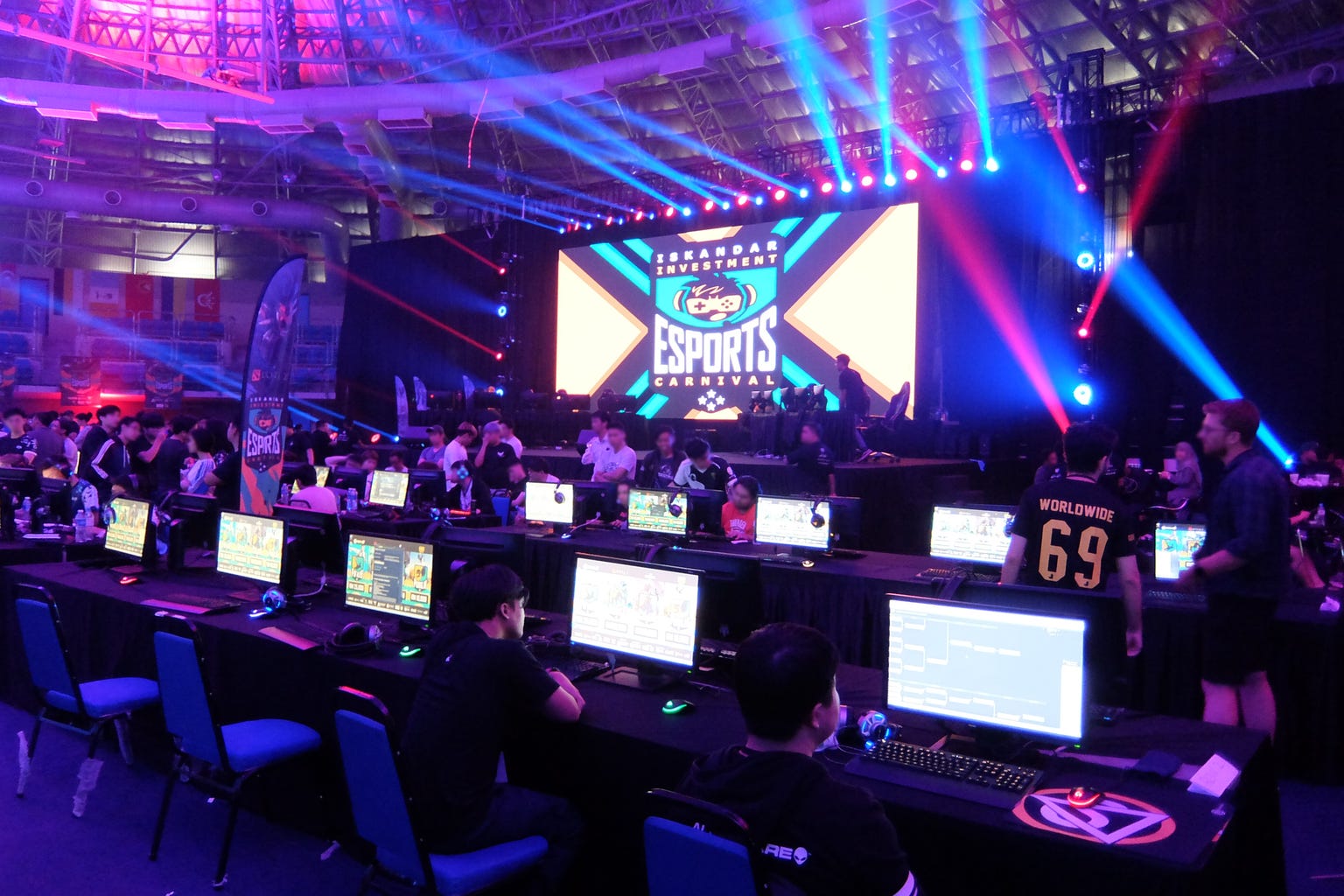
Cover photograph: Chongkian, CC BY-SA 4.0, via Wikimedia Commons.