


The post-IPO SpaceX alpha trade is not SPCX. It is a specific pair (long RKLB, short ASTS) built on the observation that the June 12 IPO-day rotation sold both names identically when one has a $2.22 billion government-contract backlog and the other has $1.2 billion in contracted MNO revenue that its own 10-K says won’t recognize before H1 2027.
For a decade, the clearest method of generating alpha from SpaceX was not owning SpaceX. It was owning the access-constrained proxies that held it by necessity, at premiums that reflected the structural gap between demand and supply. S3 Partners confirmed the mechanism in the week following the June 12 IPO: “SpaceX’s record IPO removes the central constraint of the space trade — for years it meant buying public proxies because the category leader wasn’t listed.” With Phase 1 fully captured and Phase 2 decaying on a disclosed calendar through December 9, 2026, the one alpha channel still open requires correctly disaggregating why space stocks sold off on IPO day, but that disaggregation only holds if you understand what the ASTS bear case actually rests on, which is not the satellite count.*
🎬 Prefer to watch rather than read? A NotebookLM-generated video overview of this article is available here: Watch the video overview → Full analysis, citations, and data remain in the article below.
Phase 1: The Proxy Access Alpha (2008–2026, Captured)
SpaceX’s private status imposed an access constraint that most institutional capital could not cross. Investors who needed exposure held it through vehicles that could reach the secondary market or had carried the position for years, while those vehicles traded at premiums reflecting the optionality of owning the category leader before it listed. The figures below are drawn from the best available primary sources: state regulatory filings, fund investor communications, and contemporaneous press releases, but none are audited returns, and that limitation applies to the entire section.
Google’s approximately $900 million investment in SpaceX’s January 2015 round, an amount consistently estimated across secondary sources including Bloomberg and Fortune but not disclosed in Alphabet’s SEC filings, produced a stake that a 2026 Alaska state filing reported by Bloomberg placed at 6.11% of SpaceX at end-2025, since diluted to approximately 5% following the February 2026 xAI merger. At the $1.75 trillion IPO price, that range represents a paper gain of approximately 97x to 120x on the estimated cost basis, with the cost basis itself unverifiable from any Alphabet filing.
Founders Fund invested approximately $20.4 million in SpaceX’s Series C in August 2008, confirmed in a contemporaneous SpaceNews press release. The firm last appeared in Alaska’s state shareholder disclosure at a 5.76% stake as of December 2023, per Bloomberg. The stake has since fallen below the 5% reporting threshold, meaning Founders Fund has sold down some portion and its current holdings are unverifiable from public records. Founders Fund partner Scott Nolan told Axios in May 2026 the remaining stake “could be worth more than $60 billion.”
Scottish Mortgage, Baillie Gifford’s flagship UK investment trust, invested GBP £151m (approximately $200m at time of purchase) in SpaceX between December 2018 and August 2021. Per its pre-IPO briefing note of May 2026 (an investor communication, not an audited filing) the stake carried a fair value of GBP £2.98bn as of March 31, 2026, a stated 19.7x return on invested capital. The same document describes SpaceX as “our biggest contributor to returns over 1, 3 and 5 years.”
For funds without direct secondary market access, DXYZ (Destiny Tech100) offered a publicly listed vehicle with SpaceX as its largest holding at 16.2% of portfolio. DXYZ reported a net asset value of $19.97 per share as of December 31, 2025, per its Business Wire press release, while trading at a substantial premium to that figure in the months preceding the IPO, reflecting the pure optionality value attached to pre-IPO SpaceX exposure.
Decay: Complete as of June 12, 2026. Forge Global states it no longer tracks SpaceX. Any fund still holding proxy vehicles at a premium to NAV for SpaceX exposure is paying the access premium for a structural constraint that no longer exists.
Capacity: Limited pre-IPO to the secondary market’s effective throughput, with individual institutional tender-offer participation capped by SpaceX’s own structure. The edge was access-constrained rather than market-impact-constrained.
Phase 2: The Float Mechanics Trade (June 12 to December 9, 2026, Decaying)
SpaceX listed with an initial float of approximately 555.6 million shares, expanded to approximately 638.9 million after underwriters exercised the full greenshoe on June 15, producing a public float of approximately 4.9% of 13.08 billion total shares. This float met an estimated $35 to $50 billion in forced MSCI passive buying concentrated into roughly $70 billion in tradeable shares. SPCX ran from the $135 IPO price to an intraday peak of $225.64 on June 16, a 67% move driven by supply-demand mechanics, not by any new information about the businesses. It now trades at approximately $154.
The staggered lock-up schedule is disclosed in the 424B4 prospectus: a first tranche releasing approximately 20% of the 180-day lock-up block on the second full trading day after August 6 earnings; staggered 7% tranches at days 70, 90, 105, 120, and 135 post-IPO; a Q3 earnings-triggered 28% release; full 180-day expiry on December 9, 2026. Musk’s approximately 6.4 billion Class B shares unlock June 12, 2027.
Decay: Mechanical and calendar-driven. S&P 500 exclusion is structural: the index requires GAAP profitability in both the most recent quarter and cumulatively over four quarters. SpaceX posted a $4.94 billion GAAP net loss in 2025 and approximately $4.3 billion in Q1 2026, a range reported as $4.27B to $4.30B across credible sources reading the same prospectus. The GAAP losses are driven by xAI’s $6.355 billion operating loss on $3.20 billion in 2025 revenue. The vast S&P 500-linked passive capital base, excluded from buying SPCX on inclusion criteria, remains a structural buyer waiting until SpaceX posts four consecutive GAAP-profitable quarters, not realistic on current trajectory before late 2027.
Capacity: Approximately $2B AUM before position sizing creates material price impact against the current float. Inaccessible to larger funds without moving the market.
Phase 3: The Post-Proxy Disaggregation Trade
S3 Partners identified a clean divergence in how capital moved through the space sector around the IPO. Short interest in Rocket Lab declined 22% year-to-date, while short interest in AST SpaceMobile built 41% year-to-date to approximately 54 million shares. S3 estimates only 22% of ASTS short interest is convertible-bond arbitrage, meaning approximately 78% is directional. The firm’s characterization: “Rocket Lab and Viasat, the cash-generating operators, ran the other way: shorts covered both over the past month and YTD. At the genuinely directional shorts, AST SpaceMobile’s +41% build and Virgin Galactic’s +86%, the short side outran the long.”
The IPO-day rotation sold all space stocks simultaneously. Rocket Lab fell approximately 10.8%. Analysts called it capital rotation. That characterization is correct for RKLB and structurally incomplete for ASTS, where the rotation and a genuine fundamental repricing arrived simultaneously, priced as a single event when they are not the same trade.
Why the two names have different exposures to SpaceX
Rocket Lab is a launch services and space systems provider. Its Q1 2026 SEC 8-K filed May 7, 2026, reports record quarterly revenue of $200.3M (+63.5% year-over-year), record backlog of $2.22B (+108% year-over-year), and Q2 2026 guidance of $225M to $240M against a consensus of $207.5M. Its backlog includes an $816M Space Development Agency Tracking Layer Tranche 3 contract for missile warning and defense satellites and a $515M SDA Transport Layer-Beta Tranche 2 program, totaling more than $1.3 billion in contracted SDA work awarded competitively from a field that did not include SpaceX on TRKT3 specifically. SpaceX competed in the same SDA ecosystem via the $2.29 billion SDN Backbone award and a $4.16 billion Air Moving Target Indicator contract in May 2026, both representing a separate and larger program enclosure. The medium-term risk is real: as SatNews reported, the week of those SpaceX awards was “the seven days in which American military space lost its remaining alternatives,” and RKLB’s SDA pipeline beyond its current contracted work faces a genuine consolidation risk. What is not at risk from SpaceX competition today is the existing contracted backlog of $1.3B in SDA work already awarded. RKLB joined the Nasdaq-100 on June 22, 2026, creating structural passive buying demand. Neutron, targeting a Q4 2026 debut at $50 to $55M per mission versus Electron’s approximately $8M, represents a step-change in unit economics if it delivers.
The pair trade is not a bet that RKLB is immune to SpaceX competition in government space. It is a bet that the existing contracted backlog, Nasdaq-100 inclusion demand, and Neutron optionality constitute a fundamentally different risk profile from ASTS, and that the IPO-day rotation priced them identically.
The ASTS Bear Case: What It Actually Rests On
The satellite count argument (9 operational BlueBirds today versus Starlink’s 650-plus DTC satellites) is true but insufficient as a thesis anchor on its own, because ASTS is assembling satellites at 6 per month and announced BB11–13 launching in the first half of August from Cape Canaveral, per a BusinessWire release on June 23. At the August 6 catalyst date, ASTS will likely have 12 operational BlueBirds, a ratio of roughly 54:1 against Starlink, better than the current 72:1, but directionally the same. By year-end 2026 at the targeted 45 satellites, the ratio is approximately 14:1. A directional short seller reading the satellite count will immediately ask whether ASTS’s trajectory invalidates the thesis. It doesn’t, but the reason why is not the satellite count.
The correct anchor is ASTS’s 10-K revenue recognition policy, which states verbatim: “Revenue for SpaceMobile Service will be recognized over the life of the contract, beginning when AST provides MNOs access to its satellite network. To date, the Company has not recognized any revenues from its SpaceMobile Service.” The $1.2 billion in contracted MNO revenue commitments does not recognize on satellite deployment milestones. It does not recognize on carrier infrastructure investment by partners. It recognizes when ASTS provides network access, meaning commercial service launch, which the company targets for H1 2027 and requires reaching a minimum constellation density of 25-plus satellites for limited non-continuous service. The 45-satellite year-end target is necessary for that commercial launch, not sufficient in itself for revenue recognition.
This means the Q1 2026 revenue miss requires a more precise interpretation than its surface appearance suggests. The $14.7 million in Q1 came from gateway equipment deliveries and government contract milestone achievements, not from SpaceMobile Service. ASTS’s own Q1 press release described the result as “consistent with plans for quarterly revenue ramp.” The miss was against Wall Street consensus, not ASTS’s internal plan. Q2 will test something more specific: whether gateway deliveries and government milestones can accelerate enough to reach the $40 to $50 million quarterly run-rate implied by the $150 to $200 million full-year guidance, with the additional variable of whether initial commercial service activations in targeted markets generate any SpaceMobile Service revenue recognition in H2 2026.
The structural bear case: even at 45 satellites and commercial service launch in H1 2027, Starlink DTC will have 18 months of commercial data with T-Mobile, multiple carrier partnerships, and a proved product. The moment ASTS’s $1.2B in contracted MNO revenue starts recognizing, those same MNOs face a choice between a committed supplier and a proven incumbent. The satellite trajectory accelerating through year-end is a necessary operational milestone, not a revenue event. These are different things, and conflating them is how the bull case overstates the near-term.
As of December 31, 2025, ASTS carried $227 million in deferred contract liabilities (cash received from partners including a $175 million prepayment from stc Group), sitting on the balance sheet because the performance obligation (network access) has not yet been satisfied. That $227M represents commercial demand. It also represents revenue that won’t hit the income statement until ASTS crosses the commercial service threshold in 2027.
ASTS Q1 Earnings in Context
ASTS’s Q1 2026 results showed revenue of $14.7M against estimates of $37.5M to $39M, with net loss of $191M against an expected $86.8M loss, EPS of -$0.66 against a -$0.21 to -$0.24 estimate, and total operating expenses of $164.1M. The 60%-plus miss against consensus was driven by the inherently lumpy nature of gateway delivery timing and government milestone achievements, not by SpaceMobile Service revenue failing to materialize; that revenue doesn’t start until commercial launch. The company targets full-year 2026 revenue of $150 to $200 million, implying a significant ramp in Q2 through Q4 from gateway sales and milestones. That ramp is the August 6 test, not whether the 12-satellite constellation has commercialized.
The three-scenario expected-value model, position sizing at 10% ADV participation, stop-loss triggers, borrow mechanics, and the specific falsification condition that forces an immediate exit before August 6 are in the full institutional note on Patreon.
The Morningstar Reference: What the $62 Includes
Morningstar’s $62 fair value estimate for SPCX was published in the context of the Cursor acquisition analysis, revised down from $63 at IPO to $62 after the $60 billion all-stock deal. The estimate accounts for Cursor dilution. The market price of approximately $154 also reflects post-Cursor trading. Both figures are post-Cursor, making the 2.5x premium ratio consistent on the same basis. Morningstar’s methodology yields $40 per share for core space and connectivity operations, $16.50 probability-weighted for the AI segment, and $5.51 net cash less debt, totaling $62.51 before rounding. The ratio of approximately 2.5x at current prices reflects the gap between that sum-of-parts math and the market’s implied valuation of the Starship and orbital computing optionality.
The Strongest Objection
The investor community Juxtaposed on TipRanks published the opposite position as of June 21: bullish on ASTS, hold on RKLB. The ASTS bull case: $3.5 billion in cash, cash equivalents, and restricted cash as of Q1 2026, per the ASTS 10-Q, against $2.97 billion in long-term debt, plus $1.2 billion in contracted revenue commitments from AT&T, Verizon, Vodafone, Rakuten, and others, and BB11–13 launching in early August with production already through BB37. If carriers treat ASTS and Starlink DTC as complementary, and if ASTS reaches commercial launch in H1 2027 as planned, the contracted revenue begins recognizing and the deferred $227M starts flowing.
There is also a material valuation concern on the long side. RKLB trades at approximately 45x forward price-to-sales against SpaceX at roughly 30x, despite RKLB’s substantially lower revenue base, per Seeking Alpha’s post-IPO analysis. On this metric, RKLB is priced more expensively than the category leader. RKLB’s SVP and General Counsel disposed of $9.5M in shares on June 18, 2026, per SEC Form 4 disclosures. And RKLB’s $3.0B at-the-market equity offering creates ongoing dilution. Separately, SpaceX’s growing role in SDA military space, specifically the SDN Backbone and AMTI wins in May 2026, represents a medium-term encroachment on RKLB’s government revenue pipeline beyond the current contracted backlog.
The pair trade survives this objection only if RKLB’s Nasdaq-100 inclusion and government contract backlog provide structural support against its valuation premium and dilution headwind, while ASTS misses its Q2 gateway and milestone run-rate target by enough to cast doubt on full-year guidance. If ASTS demonstrates a clean Q2 acceleration to $40M-plus in revenue driven by gateway deliveries, the timing-miss narrative is validated and the directional short fails.
Decay and Capacity
Long RKLB: Decays if Neutron’s Q4 2026 debut fails or is delayed; if Q2 earnings miss the backlog-implied revenue trajectory; or if RKLB’s SDA pipeline beyond current contracts erodes as SpaceX consolidates military space. The June 18 insider disposal is a monitoring signal. Approximate capacity: at standard 10% participation over five trading days against RKLB’s approximate 20-day average daily volume of $350M to $450M, a position of roughly $175M to $225M stays below standard single-name impact thresholds. These are estimates based on stated participation assumptions, not hard figures; actual market impact depends on execution strategy and prevailing liquidity.
Short ASTS: Decays if ASTS Q2 2026 revenue accelerates materially toward the full-year guidance run-rate, demonstrating the Q1 miss was execution timing rather than structural failure. Per S3 Partners via Yahoo Finance, approximately 30M shares are available to borrow with borrow costs below the squeeze threshold at last report. At the same 10% participation rate against ASTS’s approximate 20-day ADV of $100M to $150M, a position of roughly $50M to $75M is the practical impact threshold; above that level, the short begins moving the price. Total combined capacity for the pair at these participation assumptions: approximately $225M to $300M. Larger positions require longer execution windows and higher cost.
Why the edge persists: The IPO-day rotation was mechanical. Capital exited all space stocks without fundamental differentiation. The RKLB/ASTS fundamental divergence (a $2.22B defense-anchored backlog against a 60%-plus consensus revenue miss, with ASTS revenue recognition structurally deferred to 2027) has been visible in public filings since May 2026. The market priced both names identically on June 12. The S3 short interest data shows that informed directional positioning had already diverged before the IPO. The question is whether August confirms or invalidates that divergence.
What Would Change This View
Three conditions flip the thesis. ASTS Q2 2026 revenue materially beats the $40M to $50M quarterly run-rate implied by full-year guidance, demonstrating that gateway deliveries and government milestones can accelerate beyond Q1’s rate. Starlink DTC adoption stalls from spectrum interference challenges or carrier resistance to the T-Mobile exclusivity structure. Neutron’s Q4 2026 debut fails or is delayed, removing the primary RKLB re-rating catalyst.
A fourth condition that would change the broader three-phase framework: evidence that ASTS’s MNO revenue recognition begins earlier than H1 2027 because network access is provided to carriers for limited commercial use before the full 45-satellite constellation is reached. The 10-K language (”beginning when AST provides MNOs access to its satellite network”) is not satellite-count specific; it triggers on network access provision. If ASTS activates limited commercial service in one or two markets in late 2026 with fewer than 45 satellites, some portion of the $1.2B in contracted revenue begins recognizing sooner than the H1 2027 base case.
The Actionable Implication
Phase 1 alpha is fully captured. It is not replicable. Phase 2 decays mechanically through December 9, 2026, accessible only to funds below approximately $2B AUM. Neither has residual alpha available to a reader who was not already positioned.
Phase 3 is the only channel that does not require timing the float mechanics or taking direct SPCX exposure at a 2.5x fundamental premium to Morningstar’s $62 sum-of-parts estimate. Its combined capacity of approximately $225M to $300M at standard participation rates keeps it from being fully arbitraged by platforms that would otherwise close it immediately, and that ceiling is the structural reason the divergence persists.
The August catalyst is specific: RKLB and ASTS both report earnings within days of the first SPCX lock-up tranche release. Three information streams become simultaneously observable: RKLB Q2 versus its $225M to $240M guidance, ASTS Q2 versus its $40M to $50M implied quarterly run-rate, and the initial insider selling decision from SPCX insiders who for the first time can reveal their private price discovery. Each is analytically distinct. Together, they constitute the most information-dense calendar event between now and December 9.
The pair trade is long a launch company with a record $2.22B contracted government backlog, Nasdaq-100 inclusion demand, and a Q4 Neutron launch option, against short a direct-to-device satellite operator whose $1.2B in contracted MNO revenue is structurally deferred to 2027, whose Q1 revenue was consistent with its own plan but 60%-plus below Wall Street consensus, and whose 12 operational satellites at the August window face a 54:1 disadvantage against Starlink DTC. It is not a bet on valuation convergence. It is a bet on fundamental divergence that IPO-day rotation priced as the same position.
📊 Want Deeper Quantitative Analysis?
This research took a very long time of data collection, verification, and analysis. If you found value in this deep-dive, I publish exclusive quantitative research, trading strategies, and institutional-grade analysis on Patreon.
By joining, you’ll be supporting my work and motivating me to publish more content like this.
→ Join the Patreon community here
Full institutional note — three-scenario EV model, stop-loss triggers, borrow mechanics, capacity ceiling, and all primary SEC sources: Patreon.
Primary sources: Rocket Lab Q1 2026 SEC 8-K (May 7, 2026); AST SpaceMobile 10-K FY2025 (revenue recognition policy); ASTS Q1 2026 press release via SEC (March 31, 2026 quarter); ASTS BB11-13 launch announcement, BusinessWire (June 23, 2026); ASTS Q1 2026 earnings, Yahoo Finance; S3 Partners post-IPO space sector analysis, Yahoo Finance; SpaceX prospectus xAI financials, Yahoo Finance; Rocket Lab SDA Tranche 3 contract, SEC press release (December 19, 2025); SpaceX SDN Backbone $2.29B contract, SpaceNews (May 2026); SatNews military space consolidation analysis (June 2026); Morningstar $62 SPCX fair value, post-Cursor (June 14, 2026); Scottish Mortgage pre-IPO briefing note, Baillie Gifford; Alaska state filing on Alphabet stake, Bloomberg; Founders Fund 2008 investment, SpaceNews; Scott Nolan interview, Axios; S&P 500 exclusion, Yahoo Finance; SpotGamma index flow analysis. Investor letters and fund communications are marketing materials, not audited statements, and are attributed accordingly. This article does not constitute investment advice. The author holds no position in any securities mentioned.
Follow the research: YouTube — The Mathematical Trader · LinkedIn · Patreon
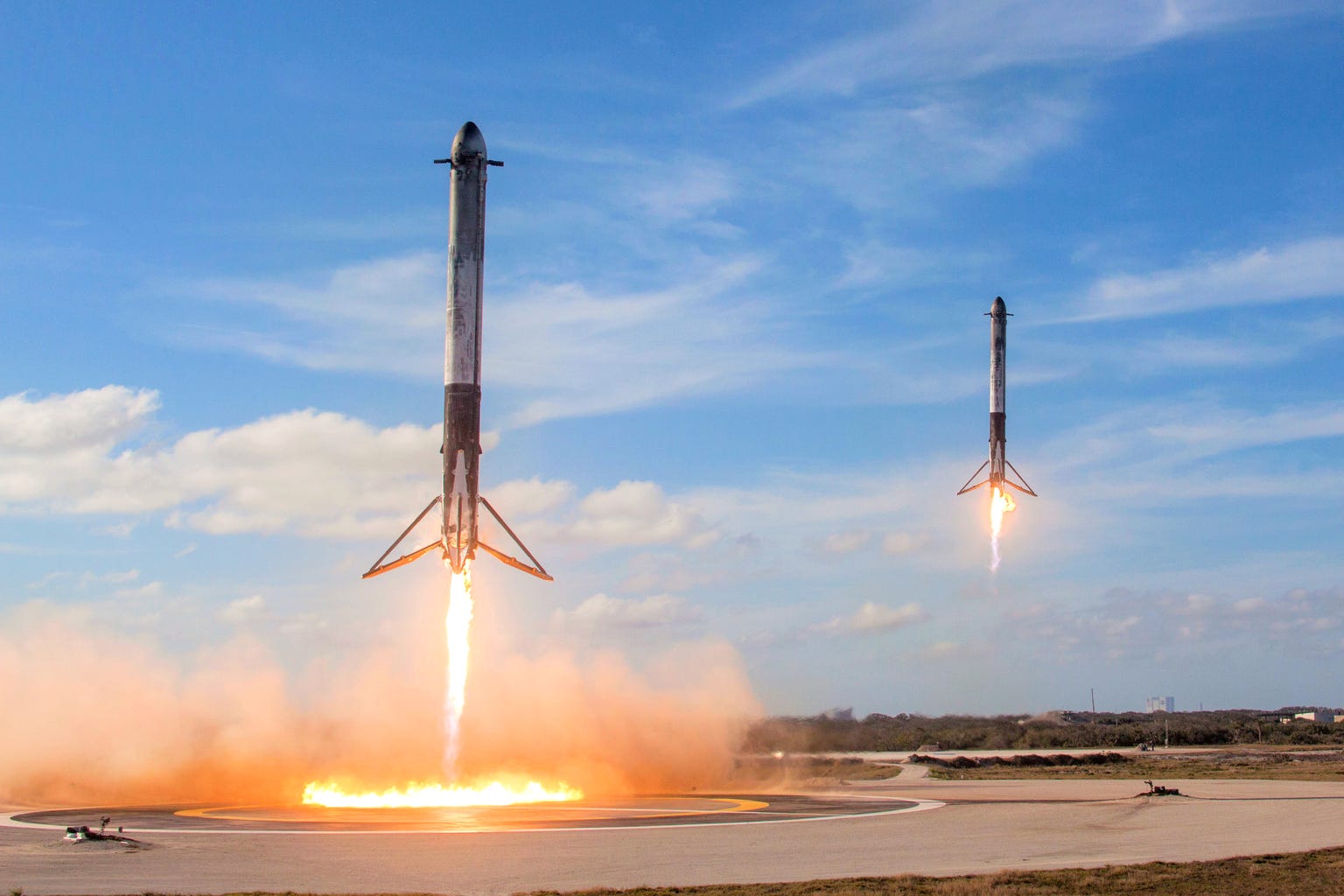
Cover photograph: SpaceX, CC0, via Wikimedia Commons.