

A Nomura managing director spent five hours manufacturing order book pressure with more than ¥400 billion in phantom JGB futures orders. Regulators caught it three years later. Hedge funds spent the better part of two years trying and failing to hire him. Then BlueCrest did — and the regulatory filings explain exactly why.
When Bloomberg reported on May 19, 2026 that BlueCrest Capital Management had hired Takushi Sawada as a portfolio manager, most readers filed it as an eyebrow-raising personnel note. It is, in practice, a precise signal about where the most defensible fixed income alpha available in 2026 resides — and about why the structural features of Michael Platt’s operating model allow him to access expertise that every regulated competitor cannot.
This article traces the full chain: the regulatory record, the surveillance gap that Nomura admitted in writing, the months Sawada spent unemployable in coffee shops, and the JGB market regime that makes the hire compound. The alpha case rests on three compounding elements: the talent arbitrage BlueCrest ran when every regulated competitor walked away, the primary dealer order book intelligence that inverts spoofing detection into a buy-side edge, and a structural JGB regime that makes that knowledge worth more now than at any point in the post-YCC era.
🎬 Prefer to watch rather than read? A NotebookLM-generated video overview of this article is available here: Watch the video overview → Full analysis, citations, and data remain in the article below.
What Sawada Did: Every Number from the Primary Record
The trades occurred on a single session. The SESC’s official recommendation, published September 25, 2024, is the controlling document: on March 9, 2021, between 8:45:49 a.m. and 2:16:59 p.m. on the Osaka Exchange, Sawada, operating through Nomura’s proprietary account, ran a dual-direction layering strategy in the March 2021 10-year JGB futures contract.
The JPX disciplinary notice of December 2024 provides the exact execution counts:
Sell-side leg: 2,466 units of sell orders placed at the best offer or inferior prices, layering the ask book. While these orders stood, Nomura bought 462 units at the artificially suppressed prices they had helped generate.
Buy-side leg: 1,619 units of buy orders placed at the best bid or inferior prices, creating the appearance of demand. As other participants adjusted, Nomura sold 462 units at the elevated prices.
Each unit carries a face value of ¥100 million. At peak, Nomura’s orders dominated approximately 70% of the top bids and offers in the JGB futures market. Total profit from five hours of operation: ¥1.48 million, approximately $10,284.
The SESC classified this under Article 159(2)(i) of Japan’s Financial Instruments and Exchange Act as “a series of derivative transactions that would potentially mislead others into believing that derivative transactions are thriving and cause fluctuations in prices.”
The timing was not coincidental. The trades occurred on March 9, 2021 — ten days before the BOJ’s March 18–19 policy meeting at which it formally expanded the 10-year JGB yield band from ±0.2% to ±0.25%. Markets were rife with speculation the BOJ would allow yields to move at a wider range around its 0% target in its upcoming March review, and 10-year JGB yields were trading near the top of their permitted band. This policy uncertainty injected genuine directional ambiguity into a market that had been surgically suppressed — expanding volume and driving participants to seek price signals. Sawada supplied manufactured ones.
Sawada was terminated September 30, 2024, as recorded in his FINRA BrokerCheck filing. He has contested the finding throughout, arguing the trades were hedging strategies. As confirmed by Bloomberg, he subsequently wrote anonymous blog posts defending his conduct before removing them from public view.
The Surveillance Blind Spot Nomura Admitted in Writing
This is the detail that has appeared nowhere else and carries the most analytical weight.
In Nomura’s official remediation statement, published the day the FSA penalty was paid — October 31, 2024 — the firm disclosed the following under its section on “Prevention Measures in Compliance”:
“While at the time of the incident Nomura Securities’ trading surveillance system could detect cancellation of trades exceeding a certain volume, the system was not designed to detect a series of layered transactions like the one in this incident.”
Japan’s largest brokerage — a primary dealer in sovereign debt auctions — had no automated system capable of detecting the specific pattern Sawada was running in real time. Its surveillance was calibrated for volume-threshold cancellations, not for simultaneous multi-level bid-ask layering followed by execution on the opposite side. The risk was entirely retrospective. That is partly why it took until September 2024 — three and a half years after the trades — for termination to follow.
This is not an isolated failure. Reuters confirmed at the time of the SESC recommendation that “there have been four previous instances of alleged market manipulation by securities firms trading in Japanese government bond futures, with the FSA imposing fines on Citigroup in 2019 and Mitsubishi UFJ Morgan Stanley Securities in 2018.” The SESC’s 2019 enforcement filing against Citigroup Global Markets Limited reveals near-identical mechanics: layered orders in 10-year JGB December 2018 futures on the Osaka Exchange, across two overnight sessions, with executions of 311 units bought and 277 units sold against more than 11,900 units of phantom orders (7,603 on the buy side, 4,341 on the sell side).
The pattern across multiple firms in the same contract on the same exchange is structural, not coincidental. After the Nomura case, Japan Exchange Group revised its derivatives trading guidelines in November 2025 to clarify the criteria for reviewing transactions — an implicit acknowledgment that the prior rules were ambiguous. As Bloomberg reported, carried by The Japan Times: “some Japanese government bond traders have noted Japan Exchange Group’s rules were opaque enough that almost anyone could be tripped up and lose their job.”
The JGB futures market on the Osaka Exchange was a persistent venue for layering because its detection architecture — at both the firm and exchange level — lagged the practice by years. A trader who managed a primary dealer’s proprietary JGB futures book across that period accumulated knowledge not just of price dynamics, but of detection lag.
The Full Regulatory Cost — and Why It Created the Hire
The total documented regulatory cost to Nomura from the 2021 trades:
¥21.76 million FSA administrative monetary penalty, paid October 31, 2024
¥30 million JSDA fine for the same transactions
¥60 million fine from the Osaka Exchange, imposed December 16, 2024
Three-day suspension of Nomura’s proprietary JGB futures trading (December 25–27, 2024)
One-month suspension of primary dealer status in government bond auctions (October 15 – November 14, 2024)
Total direct monetary penalties: ¥111.76 million, approximately $730,000 at prevailing rates. For Sawada personally: no criminal charge, no market exclusion, no trading prohibition. His FINRA BrokerCheck filing contains only the termination disclosure. Unlike the US CFTC — which criminalized spoofing under the 2010 Dodd-Frank Act and has issued individual bars — the SESC operates solely through civil administrative penalties levied against the firm, not the trader.
For Sawada, the regulatory outcome was professional stigma without legal prohibition — which is where the market dynamics of the hire become visible.
The Year He Spent Unemployable — and What That Tells You
The eFinancialCareers article published July 3, 2025 captures the pre-BlueCrest state with precision:
“The Japanese macro trading space is currently one of the hottest labour markets in the world — stories abound of traders being dragged into hotel rooms so that prospective employers can give them a two-hour pitch on why they should accept a new role on exorbitant pay. So if someone has a career history which includes time as a Managing Director on Nomura’s JGB trading desk, but they still can’t find a job, then you know there’s a story there.”
As of July 2025, ten months before the BlueCrest hire was confirmed, Sawada had been writing his defense in coffee shops between trading equities for his own account. Hedge funds had come close to hiring him, but offers had fallen through or been withdrawn. The same article notes that other JGB futures market participants had limited sympathy, and that Sawada himself acknowledged: “Looking at the numbers alone, one would naturally conclude, ‘Yeah, this guy was clearly doing it.’”
That July 2025 employment context is the quantified basis of the talent arbitrage. Sawada carried knowledge of the JGB futures order book — its microstructure, flow patterns, surveillance blind spots, and auction cycle behaviors — ordinarily worth a significant premium in a market where, per the same article, JGB traders were being pursued by competing employers willing to make hotel-room pitches at exorbitant pay. His regulatory history deflated his clearing price to zero in the conventional market. BlueCrest cleared it.
BlueCrest’s Operating Model Is Specifically Built for This Trade
When BlueCrest announced its conversion to a private investment partnership in December 2015, the official press release was direct: the new structure would “give it greater flexibility to compete aggressively for trading talent.” That phrase — from the firm’s own announcement — is the mandate under which Sawada was hired a decade later.
The trading structure that mandate enabled is documented in Platt’s own interview with Jack Schwager, quoted in Hedge Fund Market Wizards and reproduced in practitioner summaries: portfolio managers receive a capital allocation, keep a substantial share of PnL, and face a strict asymmetric stop: “If a trader loses 3 percent, he has to give me back half of his trading line. If he loses another 3 percent of the remaining half, that’s it. His book is auctioned.” The ideal hire, Platt explains, is someone who gets up “at seven o’clock on Sunday morning when his kids are still in bed, and logs onto a poker site so that he can pick off the U.S. drunks coming home on Saturday night” — a pure edge-seeker, permanently without institutional constraint.
The firm running this model has generated net returns of 50% in 2016, 54% in 2017, 95% in 2020, 153% in 2022, 20% in 2023, 38% in 2024, and 73% in 2025, compounding to an estimated 7,858% cumulative gain since going private. As reported by Bloomberg and confirmed across multiple outlets, court documents from 2022 suggested BlueCrest was running around $3.9 billion in capital, leveraged to provide roughly $15 billion in trading capacity. Michael Platt’s personal fortune is estimated at $18.8 billion as of December 2024.
The family office structure also eliminates the compliance filter that blocked every other potential employer. Multi-manager platforms managing third-party capital must run hiring decisions through LP due diligence, compliance committees, and reputational risk frameworks that are categorically incompatible with a PM who carries an SESC layering finding. BlueCrest, with no external investors, runs no such process. The family office model was explicitly designed to enable aggressive talent acquisition.
BlueCrest’s own regulatory precedent reinforces the structural logic. The SEC’s December 2020 administrative order (Investment Advisers Act Release No. 5642) found that from 2011 to 2015, BlueCrest transferred a majority of its highest-performing traders from its client fund (BlueCrest Capital International) to a proprietary internal fund (BSMA Limited) trading exclusively for BlueCrest personnel, while replacing them with an underperforming replication algorithm — and failing to disclose any of it to external investors. BlueCrest paid $170 million in disgorgement, interest, and penalties. The FCA subsequently secured $101 million in redress for non-US investors after a multi-year legal battle concluding October 2025. The structural logic of both enforcement actions: BlueCrest insulated its best trading talent from external accountability and routed their alpha exclusively to internal capital. The Sawada hire extends that same logic.
The Academic Framework: Why LOB Knowledge Inverts into Alpha
Do and Putnins’ 2023 SSRN paper on detecting layering and spoofing identifies the empirical indicators that distinguish manipulative order book behavior: “unbalanced order book quotes, high order activity, abnormal order cancellations, as well as cyclical patterns in market depth and cancellations.” Their machine-learning models achieve high out-of-sample detection accuracy.
The inverse of that detection framework is the alpha framework. A practitioner who spent years building and canceling thousands of JGB futures orders — including the dual-direction layering pattern that generated 2,466 sell orders and 1,619 buy orders against only 462 actual fills in each direction — has experiential knowledge of exactly when displayed order book depth is manufactured rather than genuine. That knowledge cannot be recovered from historical data or academic literature. It exists as pattern recognition built through thousands of sessions of execution in the specific microstructure of the Osaka Exchange JGB futures contract.
For a hedge fund PM, this translates into: distinguishing genuine directional signal from manufactured book pressure; fading false depth and positioning around the reversals that follow cancellation waves; and execution advantage in knowing how and when primary dealer desks are likely to layer around BOJ purchase operations and MoF auction outcomes — events Sawada would have traded around for years. That LOB intelligence compounds fastest precisely in markets where genuine price discovery has just replaced years of central bank suppression.
Why the JGB Market Is the Correct Venue to Deploy This Now
Following the BOJ’s effective abandonment of yield curve control, the BOJ has slashed ¥21 trillion from its balance sheet and has been cutting JGB purchases by ¥400 billion per quarter, targeting a halving of monthly purchases to ¥3 trillion by March 2026. From April 2026, that pace slows to ¥200 billion quarterly reductions — but the direction is unmistakable. The June 2025 BOJ financial markets report identified “significant market fragmentation” in JGB markets and cited distortions in the yield curve, particularly in the CTD (cheapest-to-deliver) relationship with the futures contract.
Since the BOJ’s March 2024 YCC exit, as documented by Wolf Street’s yield curve analysis: the 10-year yield has risen 152 basis points, the 30-year by 165 basis points, and the 40-year by 181 basis points — with the short end rising only 56 basis points. The curve is bear-steepening in a way that creates persistent relative value opportunity at every tenor junction. The May 2025 20-year auction produced the lowest bid-to-cover ratio since 2012, signaling structural weakness in the domestic buyer base that previously provided artificial price stability.
For a JGB futures PM, this environment produces at least four live alpha sources:
Auction event volatility. Each MoF auction now carries genuine tail risk in the post-YCC era. Pre-auction duration fades, post-auction gamma trades, and calendar spread positioning are the core primary dealer playbook — precisely what a former Nomura JGB prop desk MD would have executed hundreds of times.
CTD-futures basis dislocations. The BOJ’s June 2025 report explicitly flagged that its disproportionate holdings of CTD issues have caused distortions in the cash-futures basis. A practitioner who managed basis positions around BOJ operations for years will recognize when the futures contract is mispriced relative to its deliverable basket more quickly than a model can.
Curve steepener structuring. The structural bear steepening creates persistent carry in 2s/10s and 10s/30s steepener positions that extends through the normalization cycle.
Flow-toxic LOB navigation. The JGB futures order book remains a venue where displayed depth is periodically manufactured. A PM who understands both the practice and the detection patterns has a systematic execution advantage on every trade.
BlueCrest is not alone in reading this thesis. Point72 hired Takahiro Suzuki, BNP Paribas’s former JGB trading head, as a portfolio manager for the same structural reasons. But BlueCrest is the only firm that acquired the specific microstructure knowledge that comes from years of running a primary dealer’s prop book in that contract — including the surveillance edge cases.
→ The full institutional trade note on this thesis — including the 10s/30s DV01 sizing framework, four dated catalysts with quantified impact ranges, three risk scenarios with specific stop logic, and the execution note on why the 30-year JGB futures order book cannot be trusted around BOJ operation windows — is published on Patreon:
JGB 10s/30s Structural Steepener: Full Trade Note
Bottom Line
📊 Want Deeper Quantitative Analysis?
This research took significant time of data collection, verification, and analysis. If you found value in this deep-dive, I publish exclusive quantitative research, trading strategies, and institutional-grade analysis on Patreon.
By joining, you’ll be supporting my work and motivating me to publish more content like this.
→ Join the Patreon community here
Three compounding propositions, each verifiable from primary sources.
Talent arbitrage at maximum discount. Ten months of failed attempts by other funds — documented by eFinancialCareers in July 2025 — established that Sawada’s clearing price in the conventional hedge fund industry was zero. BlueCrest, operating under no external LP constraints, acquired at that price a trader whose JGB market knowledge would otherwise command a significant premium in the hottest rates talent market in the world.
Structural regime alignment. The BOJ’s exit from yield curve control has transformed the JGB market from a suppressed, artificially stable regime into a high-dispersion, structurally uncertain environment where deep execution knowledge of the futures order book, the cash-futures basis, and the auction cycle compounds fastest. The evidence from the regulatory and market record is comprehensive on this point.
Operating model alignment. BlueCrest said in 2015 that the family office structure would give it flexibility to compete aggressively for trading talent. The Sawada hire is that sentence executed to its logical conclusion, a decade later, in the precise market where the alpha is.
The ¥1.48 million profit from more than ¥400 billion in phantom orders is the footnote. The primary dealer order flow intelligence, the surveillance gap awareness, and the years of JGB futures execution experience surrounding it are the asset.
Platt already knew that when he signed the term sheet.
Navnoor Bawa is an independent quantitative researcher and financial content creator.
Published work at navnoorbawa.substack.com | Twitter: @navnoorquant | LinkedIn: linkedin.com/in/navnoorbawa | YouTube: @TheMathematicalTrader | Patreon: patreon.com/NavnoorBawa
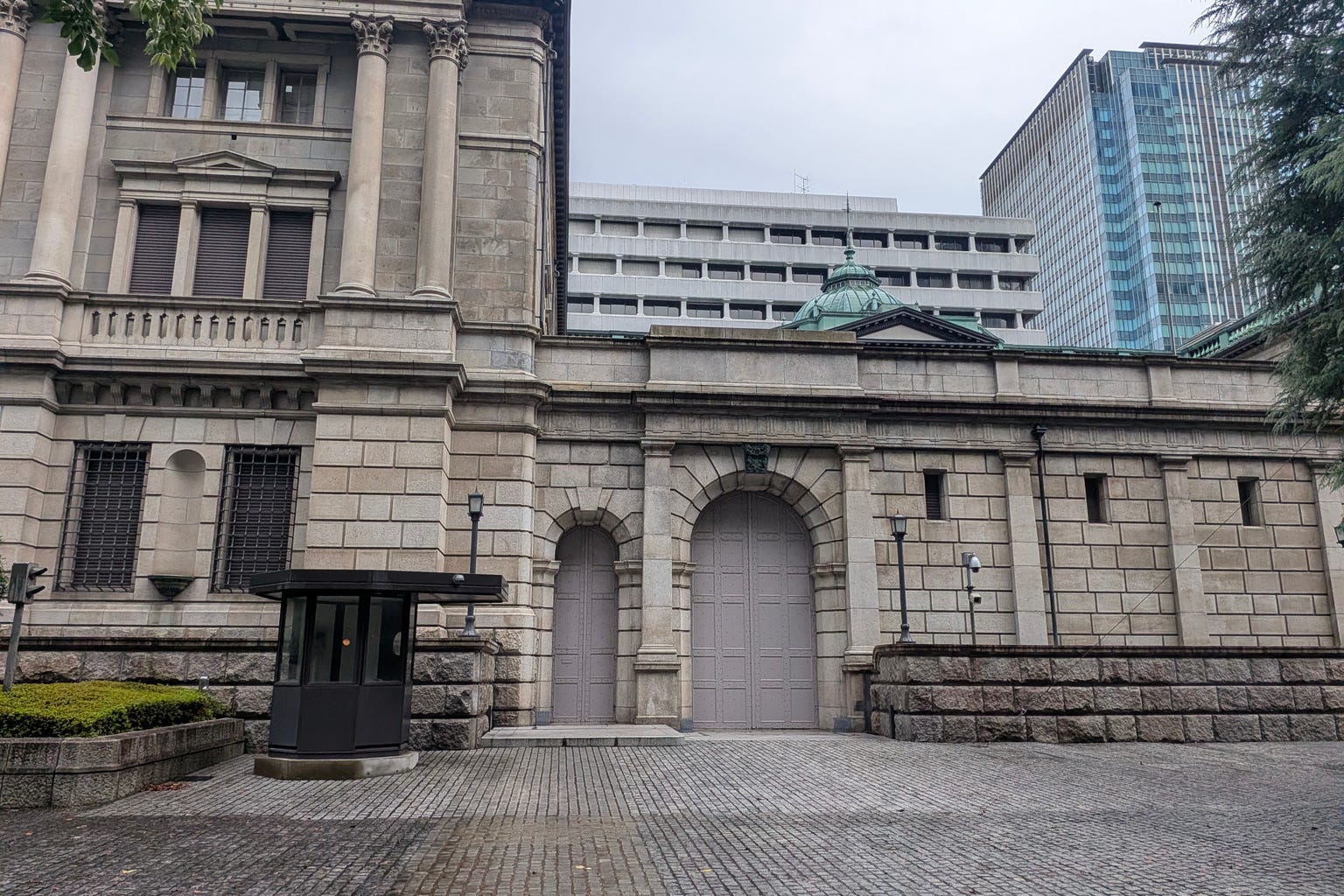
Cover photograph: Syced, CC0, via Wikimedia Commons.
Cover photograph: Syced, CC0, via Wikimedia Commons.